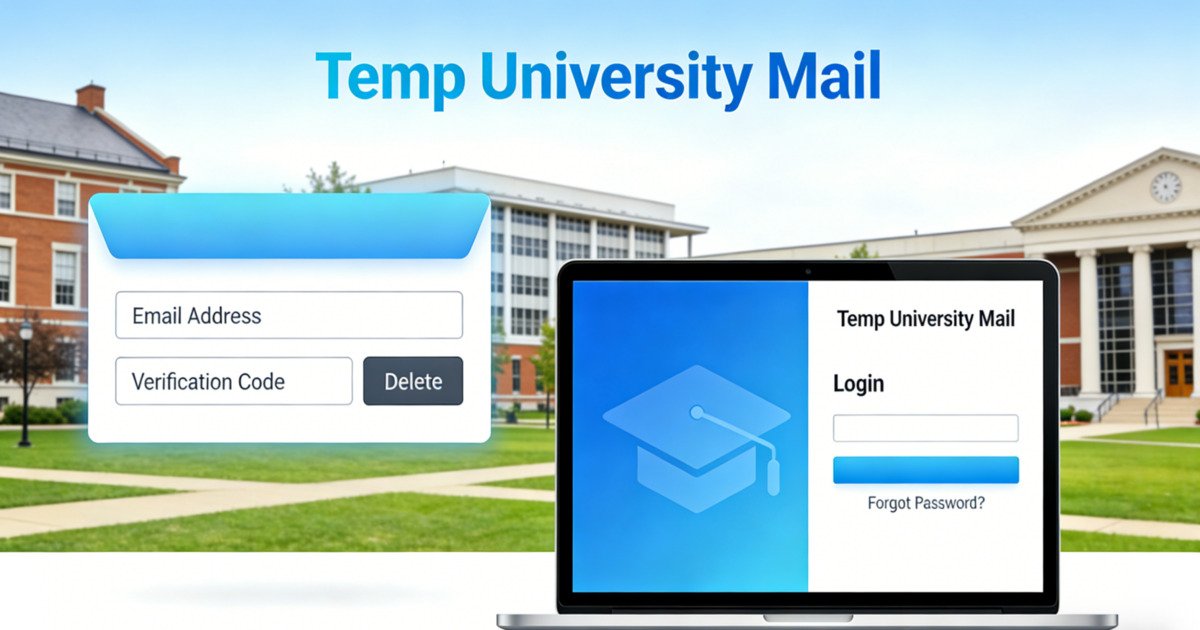
Being a university student in 2026 means your email address is basically your digital ID. You hand it out to sign up for research databases, download lecture notes, join study groups, access AI tools, and apply for hackathons. Before you know it, your primary inbox is flooded with newsletters, tracking pixels, and spam that buries the important message from your professor.
This is where a temp university mail address becomes your best-kept secret. It is not about being dishonest; it is about being smart with your digital footprint. Whether you need a quick .edu email for a student discount or just a throwaway address to keep your main inbox clean, temporary email solutions are changing how students navigate the web.
In this guide, we’ll break down exactly how to use these tools effectively, where they fall short, and how to stay out of trouble with campus IT policies.
What is Temp University Mail?
A temp university mail is essentially a disposable email address that helps you receive verification messages without exposing your real inbox. Unlike your permanent school-issued account, these addresses are designed for short-term use.
You can generate one instantly, use it to verify an account or receive an OTP, and then let it expire—ensuring that countless marketing emails never hit your real inbox.
How Temp University Mail Actually Works
The mechanics are surprisingly simple. When you visit a temporary email service, the page loads and instantly generates a random email address for you—no registration, no password, no personal info required. You copy that address, paste it into whatever website needs verification, and then return to the temp mail page to view any incoming messages in real-time.
The magic happens after you're done. The email address and all its messages self-destruct after a set period—anywhere from 10 minutes to several days, depending on which service you use. Once deleted, they're gone for good. Servers don't keep backups, and data brokers can't scrape what no longer exists.
Different Types of Temporary Email for Students
Not all temp mail is created equal. Understanding the variations helps you pick the right tool for each task:
- Throwaway accounts: These are designed for one-time use. You generate an address, use it once, and let it expire within hours. Perfect for downloading a single whitepaper or grabbing a discount code.
- Forwarding accounts: These redirect emails to your real inbox but with filtering rules. You can see which forwarding address is getting spam and kill it without affecting your main account.
- Reusable temp addresses: Some services let you save an access token to reopen the same mailbox later. This is gold for semester-long projects where you might need to reset a password or re-verify an account months down the road.
Why You Need a Temp University Mail
Why is this blowing up right now? Because educational paywalls are everywhere. Want to read a white paper? Hand over your email. Testing a new coding platform? Hand over your email. Trying to get that student discount on Spotify or Amazon Prime? You guessed it—they want that email. If you use your personal or school email every single time, you're guaranteeing a cluttered, chaotic inbox.
1. Protect Your Primary Inbox from Spam
 Your main email—especially your official school account—is for important stuff: professor communications, financial aid notices, grades, and internship offers. Every time you use it for a one-off download or contest entry, you're inviting spam into that sacred space. Temp mail acts as a bouncer, keeping marketing detritus away from what matters.
2. Prevent Data Tracking and Profiling
Here's something they don't tell you: every time you hand over your email, you're paying with your data. Marketing teams use tracking pixels to see when you open emails, what links you click, and how often you engage. A temp university mail breaks that data trail.
When you read emails through a temp mail web interface, those tracking pixels often get blocked because images don't load in a personalized context.
3. Reduce Your Digital Footprint
The fewer places your real email appears, the lower your risk in case of a data breach. If some random forum or sketchy download site gets hacked, the only thing is a temporary address that self-destructed weeks ago. You remain completely unassociated.
4. Speed Up Access to Learning Resources
How many times have you abandoned signing up for a useful tool because you didn't want to deal with another account? Temp mail removes that friction. Generate an address in three seconds, get your verification code immediately, and move on with your work.
Top Scenarios for Using a Disposable Educational Email Address
Understanding when to use a disposable address is just as important as knowing how. Based on common student pain points, here are the high-value use cases where a temp university mail excels.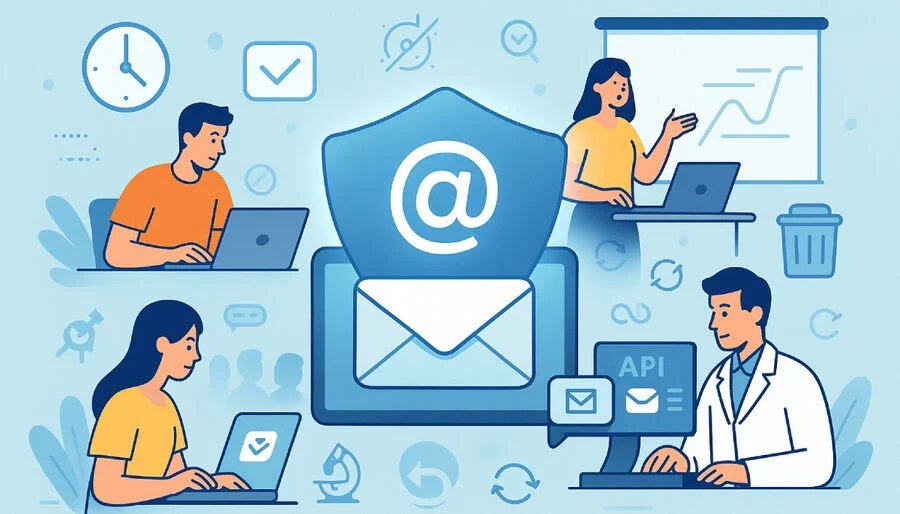
1. Instant Access to Student Discounts and Free Trials
This is the heavy lifter of temporary email use. Many services require email verification to unlock "free trials" or "student pricing." While you should absolutely use your real school email for official software you intend to keep (like the full Adobe Suite), a temp address is perfect for testing the waters.
Is that new AI study tool worth the hype? Use a temporary address to sign up for the trial. If it’s garbage, you don't have to worry about them sending you "We miss you" emails for the next five years.
2. Research and Whitepaper Downloads
Professors often assign research that requires downloading PDFs from vendor sites. These sites almost always gate the content behind a form. Instead of burning your primary academic email on a database you will use once, deploy a disposable address. It gets you the PDF, and the vendor gets a burner contact. It’s a fair trade.
3. Hackathons and Short-Term Projects
Hackathons are chaotic. You are spinning up new APIs, testing beta software, and creating dummy accounts left and right. Using a temp university mail for these temporary logins prevents your development environment from getting tied to your permanent identity. When the weekend is over, you can ditch the emails without worrying about missing administrative messages.
4. Protecting Your Institutional Reputation
Believe it or not, the way you handle your school email matters. If you use your official .edu to sign up for forums, controversial sites, or services that get hacked, it reflects on your university. Data breaches happen. By using a temporary educational-style address for low-stakes signups, you protect the reputation of your actual academic institution.
How to Choose the Right Temp Mail Tool for Educational Use
Not all temporary email services are created equal, especially when you need something that looks and feels like an educational domain. If you are searching for a reliable temp university mail generator, you need to look for specific features rather than just grabbing the first link you see.
First, prioritize services that offer high deliverability. Nothing is worse than waiting for a verification email that never arrives because the service provider's domain has been blacklisted by major platforms. Look for tools that rotate their domains frequently or use high-reputation infrastructure to ensure your OTP comes through.
Second, consider the lifespan and reusability. For a quick 10-minute task, a standard burner is fine. However, for a semester-long group project, you need a service that allows you to "save" or "recover" the inbox using a token or password. This allows you to come back to it weeks later if you need to reset a password for a shared project account.
Finally, keep it simple. A tool like tempemail.cc nails the basics: it generates addresses instantly, keeps things private, and ensures you can receive those crucial confirmation links without jumping through hoops. The best tools are the ones you don't have to think about—they just work when you need to unblock some content.
How to Use Temp Mail for Student Verification
Ready to try it out? Here is a step-by-step playbook for using temp university mail safely and effectively without losing access to the things you need.
Ready to put this into practice? Here's a step-by-step playbook for using temp university mail safely and effectively.
Step 1: Match the Tool to the Timeline
Assess how long you need access. For a "use today, forget tomorrow" situation, a standard 10-minute or 24-hour inbox works fine. For collaborative projects spanning months, choose a service that offers recovery keys so the whole team can access shared accounts later.
Step 2: Generate Your Temporary Address
Open your chosen temp mail service. The page will automatically generate an address—copy it immediately. Keep this tab open while you complete your signup.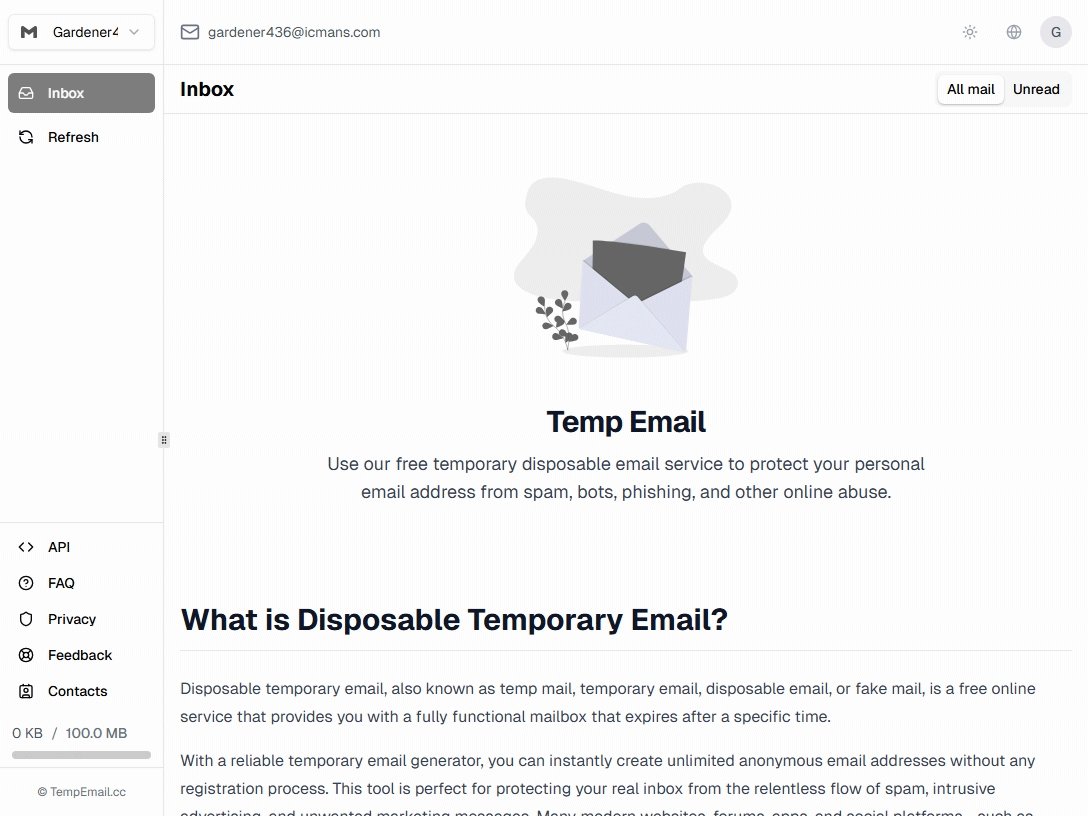
Step 3: Document Everything for Project Accounts
If you're creating accounts for group projects, don't keep login details in your head or scattered across chat messages. Store the email address and any recovery token in a team password manager like Bitwarden or LastPass. When the person who created the account graduates, your project shouldn't die with them.
Step 4: Act Quickly on Verifications
Temporary inboxes are, by definition, temporary. Once you get that verification code or activation link, use it immediately. Don't save the email for later—save the confirmation page or account details, but assume inbox contents will vanish.
Step 5: Create an Exit Strategy
If a trial service proves essential to your studies, switch your contact email to your real school account during the trial period. This ensures continuity and prevents losing access down the road.
Step 6: Maintain a Service Inventory
For research projects or lab work, keep a simple log tracking which service uses which temporary address, who owns it, and where the recovery token is stored. This sounds like overkill until you're trying to figure out which email you used for that critical dataset six months ago.
When You Should Never Use a Temp Educational Email
While a temp university mail is incredibly useful, it's a tool with clear boundaries. Using it in the wrong situation can get you locked out of accounts or land you in academic hot water.
Official University Communications
This is non-negotiable. Your actual financial aid, grades, visa documents, HR paperwork, and any communication from the registrar must go to your official institutional email. Learning management systems like Canvas, Blackboard, or Moodle are tied to your real identity. Using a temp address there means missing critical deadlines and potentially violating campus IT policies.
Systems Requiring Long-Term Identity
Any account you'll need for multiple years—your primary cloud storage, professional networks, academic journals you access regularly—should use your permanent email from the start. Migrating an account from temporary to permanent later is a headache you don't want.
Financial or Legal Transactions
Banking, financial aid applications, scholarship portals, and any government-related services require verifiable, permanent contact information. Temporary email has no place here.
When You Need to Send Emails or Attachments
Most temp mail services are receive-only. They don't support sending messages or attachments. If your workflow requires two-way communication, stick with your school account.
Services You Know You'll Keep
Here's a simple rule: if you're trying a service and realize you'll actually use it long-term, update your contact email to your real address immediately while you still have access. Don't get caught with your thesis research locked behind a temp address you can no longer access.
FAQs about Temp Educational Email
1. Can I receive verification codes (OTP) with a temp university mail?
Yes. Most services reliably deliver standard verification emails. Some high-risk platforms may block disposable domains—if that happens, try a different domain from the same generator or fall back to your institutional email.
2. Is using temp mail allowed under university policies?
Policies vary widely. Many institutions require official systems to use institutional addresses. Use a disposable email only for low-risk, non-record activities, and check with your instructor when in doubt.
3. Can I reuse the same temp address later for password resets?
Yes—if you saved the access token. Some services let you reopen the same mailbox using a recovery token or PIN. Store this safely if you think you'll need future access.
4. Can I use temp mail for my LMS or grades?
Absolutely not. Use your institutional email for LMS, grading, advising, and any system storing education records or personally identifiable information.
5. How long do temporary emails last?
It depends entirely on the service. Some last 10 minutes, others 24 hours, some up to 8 days. Read the service specifications before committing to a task.
6. Will services always accept disposable email?
No. Acceptance varies by site. Some platforms actively block known disposable domains. This is normal—when blocked, use a different domain from your generator or your institutional account.
7. Can I attach files or reply to emails with temp mail?
Generally no. Most temp mail services are receive-only and don't support attachments. If you need those features, use your school email.
Final Words on Temp University Mail
Navigating the digital campus of 2026 requires more than just a laptop—it requires strategy. A temp university mail address is a legitimate tool in your digital toolkit. It keeps your primary inbox clean, protects your privacy from data-hungry vendors, and lets you access educational resources without strings attached.
The key takeaway? Use a temporary email for temporary tasks—trials, downloads, one-off signups, and short-term projects. Guard your official university email for what truly matters: your degree, your finances, and your formal communications.
When the job calls for speed and low-risk isolation, temp mail delivers. For quick throwaways, use services that generate instantly. For semester-long projects, choose reusable options and safely store your recovery tokens. And always, always know the boundary between convenience and commitment.
By understanding these distinctions, you'll browse faster, safer, and smarter through your academic journey—with a clean inbox waiting for what actually matters.