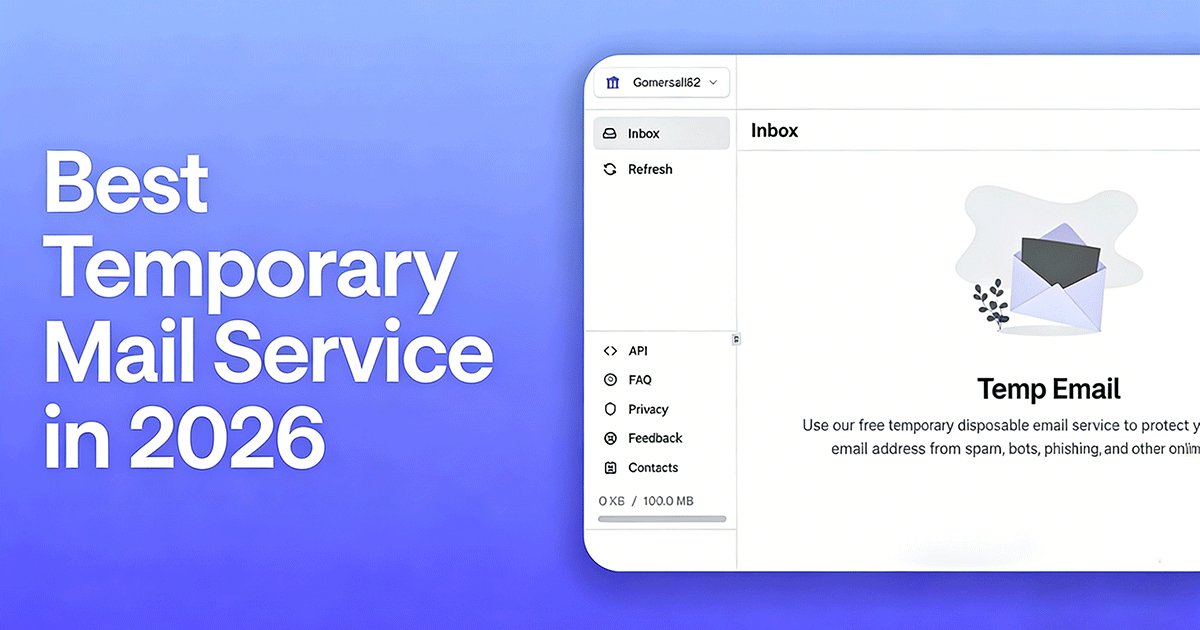
Temporary email services have become essential for protecting online privacy in 2026. Every sign-up, free trial, or download often requires an email address — and using your real inbox can quickly lead to spam, phishing, or data leaks.
Data breaches remain a constant threat. According to the latest IBM Cost of a Data Breach Report 2025, the global average cost of a breach reached $4.44 million, yet millions of users still face spam floods, phishing, and identity theft from exposed emails.That’s why millions of users now rely on the best burner email services in 2026. Whether you need to bypass a quick sign-up wall or want the best temporary email generators 2026 for software testing, these tools are indispensable.
To find the best options, we tested 20+ popular temp mail providers and evaluated them based on:
- email delivery speed
- privacy protection
- domain block resistance
- usability and ads
In this guide, you'll discover the 10 best temporary email services in 2026, including which ones work best for privacy, quick sign-ups, developers, and long-term inbox use.
What is the Best Temporary Email Service in 2026?
Several temporary email services perform well in 2026 depending on the use case.
Based on our testing, some of the most reliable options include:
- TempEmail.cc — strong privacy protection and ad-free experience
- Temp-mail.org — popular and widely supported
- Temp-mail.io — developer-friendly with API access
- GuerrillaMail — supports sending emails
- Tmailor — large rotating domain pool
These services help users protect their real inbox from spam, phishing, and data leaks.
Why Do You Need a Temporary Mail Service in 2026?
In 2026's hyper-connected digital landscape, your primary email remains a permanent gateway to your online identity—constantly exposed to spam floods, AI-powered phishing, aggressive data brokers, and advanced cross-site tracking that creates detailed user fingerprints across platforms. Carelessly sharing it can result in overwhelming junk mail, heightened identity theft risks, or exploitation during frequent data breaches.
Let's briefly introduce what a temporary email is. A reliable disposable email (temporary mail) serves as your essential protective shield: it generates anonymous, short-lived addresses that vanish after use, keeping your main inbox secure and unlinked.
This year, it's more critical than ever due to evolving threats and demands:
Superior spam and phishing defense — Every sign-up, verification, or gated download requires an email; temp mail prevents newsletters, promotions, and AI-amplified malicious attacks from cluttering your real inbox.
Stronger privacy in a tightening regulatory era — With the EU AI Act's major enforcement wave and new U.S. state privacy laws, users increasingly seek zero-log policies, no IP storage, and encryption to evade pervasive AI-driven profiling and cross-site linking.
Overcoming aggressive domain blocking — Social media, e-commerce, and forums now deploy sophisticated detection to reject common or blacklisted temp mail domains; top 2026 services counter this with fresh, rotating, or premium domains—ensuring success for OTP verifications, quick registrations, testing, and more.
The market reflects this urgency: according to verified market reports, the best disposable email tool market—valued at around $2.5 billion in 2024—is projected to grow at a CAGR of 12.5% from 2026 to 2033, reaching approximately $6.8 billion by 2033, fueled by surging privacy concerns, spam/phishing risks, and the need for reliable, block-resistant solutions.
In short, in 2026, a high-quality temporary mail service isn't just convenient—it's a vital defense layer for anyone reclaiming control in an era of smarter threats and stricter scrutiny.
How We Tested & Selected the Best Temp Mail Services in 2026
To ensure our recommendations are trustworthy and unbiased, we conducted hands-on, real-world testing of over 20 popular disposable email services throughout 2025 and early 2026.Our methodology is inspired by industry-standard practices from leading privacy review sites, including PrivacySavvy (which emphasizes rigorous in-house testing for privacy tools, including data retention checks, speed performance, and security features), Incogni (which tests disposable email services for delivery success, block rates on e-commerce/social platforms, ad interference, and usability without bias), TechRadar (known for practical evaluations of temporary email providers focusing on privacy, anonymity, spam protection, and real-user scenarios), and Selzy Blog (which reviews temp mail options based on security policies, functionality like message limits/forwarding, and practical spam avoidance).
We focused on transparency to uphold E-E-A-T (Experience, Expertise, Authoritativeness, Trustworthiness) by documenting repeatable tests from a neutral setup (standard browser, no VPN bias) and running multiple trials for consistency.
Speed & Stability — Measured average email delivery time (from sending a test OTP to inbox appearance) across multiple trials, plus uptime during peak hours.
Privacy Protection — Checked for true no-log policies, IP address storage (or stripping), end-to-end encryption options, and independent privacy audits or open-source elements where available.
Usage Duration & Flexibility — Tested inbox lifespan (e.g., 10 minutes vs. indefinite), extendability, unlimited address generation, and password protection features.
Attachment & Sending Support — Verified ability to receive attachments and send outgoing emails (critical for some users like developers).
Ad Interference — Assessed popup frequency, banner ads, and overall user disruption level.
Block Rate & Detection Resistance — Attempted registrations on major platforms (social media, e-commerce, forums) to measure how often the service gets flagged or blocked by aggressive domain blacklists in 2026.
User Experience — Evaluated interface cleanliness, mobile responsiveness, ease of use (no registration required), and real-time inbox refresh.
Extra Features — Scored bonuses like custom domains, API access for automation, bulk management, or integration with privacy tools.
All tests were performed from a neutral setup,with repeated runs for consistency. We focused on free tiers primarily, noting premium upgrades only when they significantly improve performance.
This rigorous, multi-faceted approach ensures our Top 10 list reflects what actually works best in 2026's stricter environment of AI detection, privacy regulations, and user demands.
Quick Picks: Best Temp Email Services in 2026
If you're in a hurry, here are the best options based on our testing:
- Best Privacy Focused: TempEmail.cc
- Best for Sending Emails: GuerrillaMail
- Best for Developers: Temp-mail.io
- Best for Long-Term Inbox: Boomlify
- Best Ultra-Fast Temp Mail: 10MinuteMail
Top 10 Best Temporary Email Services in 2026 – Detailed Reviews & Comparison
After hands-on testing more than 20 disposable email providers throughout 2025 and early 2026, we've narrowed it down to the 10 strongest performers currently available.
Our rankings emphasize what matters most right now: rock-solid privacy, ease of use, lightning-fast delivery, and — crucially — the ability to bypass the increasingly aggressive domain blocking used by social media, e-commerce, and verification-heavy platforms in 2026.
The following comparison table summarizes the top temporary email services we tested in 2026. Scores are based on privacy protection, delivery speed, domain block resistance, usability, and additional features.
| Category | Service Name | Duration | Key Advantages | Main Drawbacks | Privacy Level | Supports Sending | Overall Score |
|---|---|---|---|---|---|---|---|
| ⭐Editor's Pick | TempEmail.cc | Unlimited (Password-protected) | Custom usernames, ad-free, high block resistance | Simple interface, no sending | ★★★★★ | ❌ | 9.5/10 |
| #2 | Temp-mail.org | 2 hours (Premium: up to 1 month) | Anonymous, multiple domains, fast generation | Ads, occasional downtime | ★★★★½ | ❌ | 9.2/10 |
| #3 | Temp-mail.io | Temporary (Manual delete) | Supports sending, mobile-friendly, encrypted | Advanced features require payment | ★★★★★ | ❌ | 9.0/10 |
| #4 | Boomlify.com | 2+ Months | Unlimited addresses, smart previews, custom domains | Optional registration, free limits | ★★★★½ | ❌ | 8.8/10 |
| #5 | Tmailor.com | 24 Hours (Permanent via token) | 500+ rotating domains, mobile-optimized | No sending, no attachments | ★★★★★ | ❌ | 8.7/10 |
| #6 | Guerrillamail.com | 60 Minutes (Extendable) | Supports sending + attachments, classic & reliable | Ads, some site blocking | ★★★★ | ✅ | 8.5/10 |
| #7 | Emailondeck.com | Temporary (Secure delete) | Crypto-friendly, fast, no registration | Occasional CAPTCHA, no sending | ★★★★½ | ❌ | 8.3/10 |
| #8 | 10minutemail.com | 10 Minutes | Ultra-simple, self-destruct, zero ads | Short duration, no extensions | ★★★★ | ❌ | 8.0/10 |
| #9 | 10minutemail.net | 10-100 Minutes | Extendable, domain rotation, private inbox | No sending, needs manual refresh | ★★★★ | ❌ | 7.8/10 |
| #10 | Tempmailo.com | 48 hours | Instant generation, basic anonymity | Basic features, easily blocked | ★★★½ | ❌ | 7.8/10 |
Overall scores are calculated based on five key factors: privacy protection, email delivery speed, domain block resistance, usability, and additional features.
1. TempEmail.cc
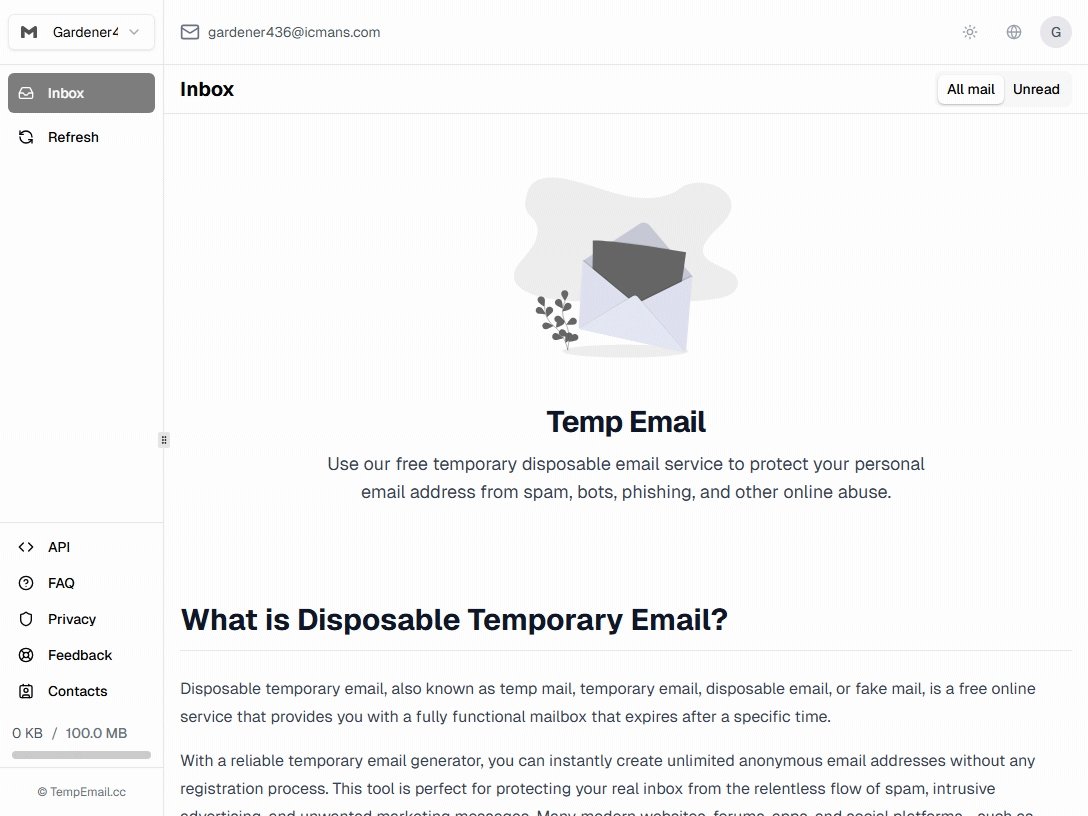
TempEmail.cc is one of the best temporary email services in 2026, especially for users who value privacy and an ad-free experience. Its core features include instant disposable address generation without any registration, support for custom usernames, full user control over inbox lifespan (keep as long as you want by not deleting, or one-click permanent deletion), and a clean, ad-free interface. The service uses full HTTPS encryption and follows a strict no-logs policy—your IP address, browser info, and any personal data are never stored, ensuring complete anonymity.
In real-world use, emails arrive almost instantly with real-time dashboard auto-refresh, making it perfect for quick OTP verifications and sign-ups. Thanks to a frequently updated domain pool, it achieves excellent deliverability and bypass rates on major platforms like Discord, Twitter/X, and many others that often block traditional temp mails. The experience is intuitive and distraction-free—no ads, no clutter, just pure functionality.
TempEmail.cc is ideal for privacy-conscious users such as journalists, developers, testers, or anyone who wants to avoid spam, data leaks, and tracking during forum registrations, free trials, anonymous downloads, or bulk account creation. While it’s receive-only, its strong focus on privacy, zero data retention, and low block rates make it a favorite in user discussions and reviews. Many consider it one of the most reliable and user-friendly free temporary email options available in 2026.
Overall, if you’re looking for a powerful, spam-free, and truly private disposable email solution, TempEmail.cc is an outstanding choice. Try it now at tempemail.cc and generate your first address in seconds.
2. Temp-mail.org
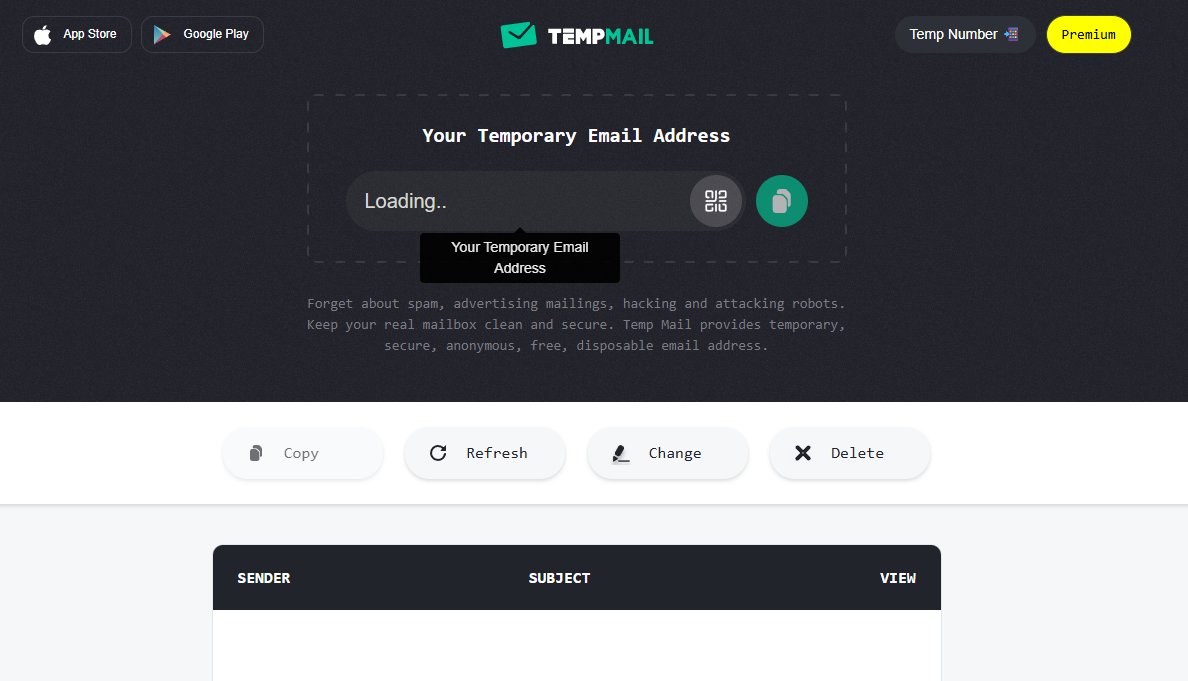
Temp-mail.org excels as a timeless pick in the Best Temporary Email Services 2026 lineup, delivering fast, anonymous, self-destructing inboxes that emphasize simplicity and security. Key highlights include no-registration instant setup, a wide selection of domains for better bypass rates, real-time inbox viewing, and user controls like address change or deletion. It prioritizes privacy with no registration required, session-based cookies, and automatic email/inbox deletion after periods of inactivity or set time.
In hands-on 2026 use, it feels straightforward: generate an address in seconds, scan the QR code for mobile access, and watch emails arrive near-instantly with auto-refresh. The interface is intuitive for quick tasks, though the free version includes ads and occasional prompts to upgrade during high usage (Premium removes ads and adds perks like extended storage).
It's best suited for casual users and privacy enthusiasts needing disposable emails for app testing, loyalty sign-ups, forum registrations, or shielding your main inbox from spam and potential breaches. Long-standing reviews from sources like TechRadar highlight its reliable, feature-rich experience and mobile support, while PCMag notes it as a classic ephemeral option. User discussions appreciate the domain variety for evading blocks, though ads and peak-time limitations are common drawbacks.
As one of the most enduring free disposable email services in 2026, Temp-mail.org remains a solid, no-frills choice for everyday anonymous needs—quick, effective, and widely trusted despite its simplicity.
3. Temp-mail.io
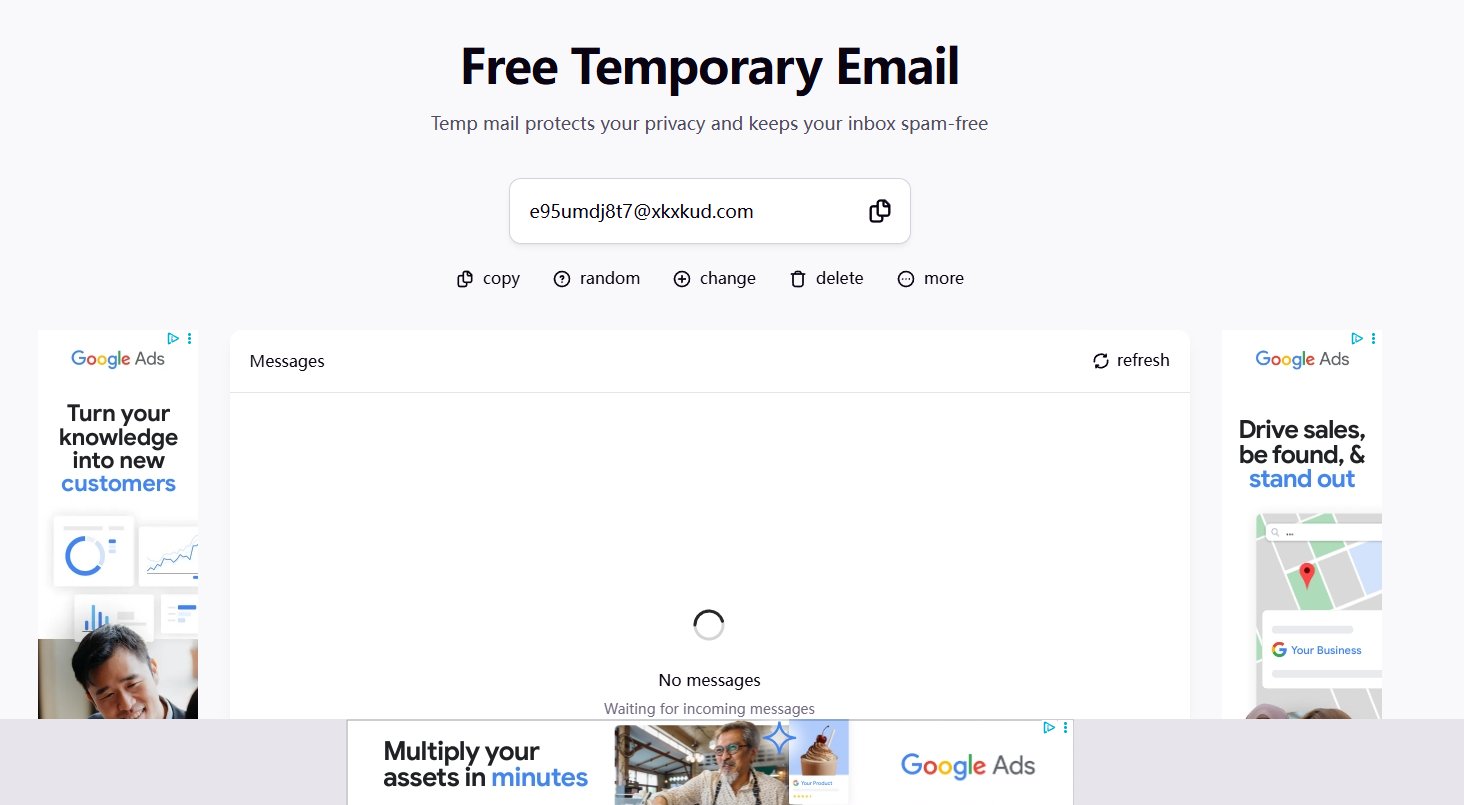
Temp-mail.io brings a polished, user-friendly approach to temporary email in the Best Temporary Email Services 2026 rankings, with strong emphasis on speed, privacy, and developer-friendly tools. Core features include instant disposable address generation, real-time inbox auto-refresh, browser extensions for quick access, mobile apps, and API support for integration. It uses full HTTPS for secure connections and follows a strict no-logs policy—never storing IP addresses, personal data, or long-term email history—while emails auto-expire after inactivity.
In real-world 2026 testing and user reports, delivery is reliably fast , with good performance on social platforms, forums, and verification-heavy sites thanks to a rotating domain pool that helps evade common blocks. The clean, mobile-responsive interface makes it effortless for one-time sign-ups or OTP checks, though premium prompts appear for extras like custom domains, extended storage, or higher API limits.
It's especially well-suited for developers, testers, or users wanting more than basic receive-only—though core temp-mail.io remains receive-focused. Reviews and discussions praise its ease, security, and versatility, with sources like TechRadar noting similar Temp Mail services as intuitive and feature-rich.
Drawbacks include premium-locked advanced perks and occasional upsell nudges. Still, as a free, no-frills powerhouse with solid privacy and quick setup, Temp-mail.io stands out in 2026 for anyone seeking enhanced disposable email without complexity—ideal for spam protection, anonymous registrations, or dev workflows.
4. Boomlify.com
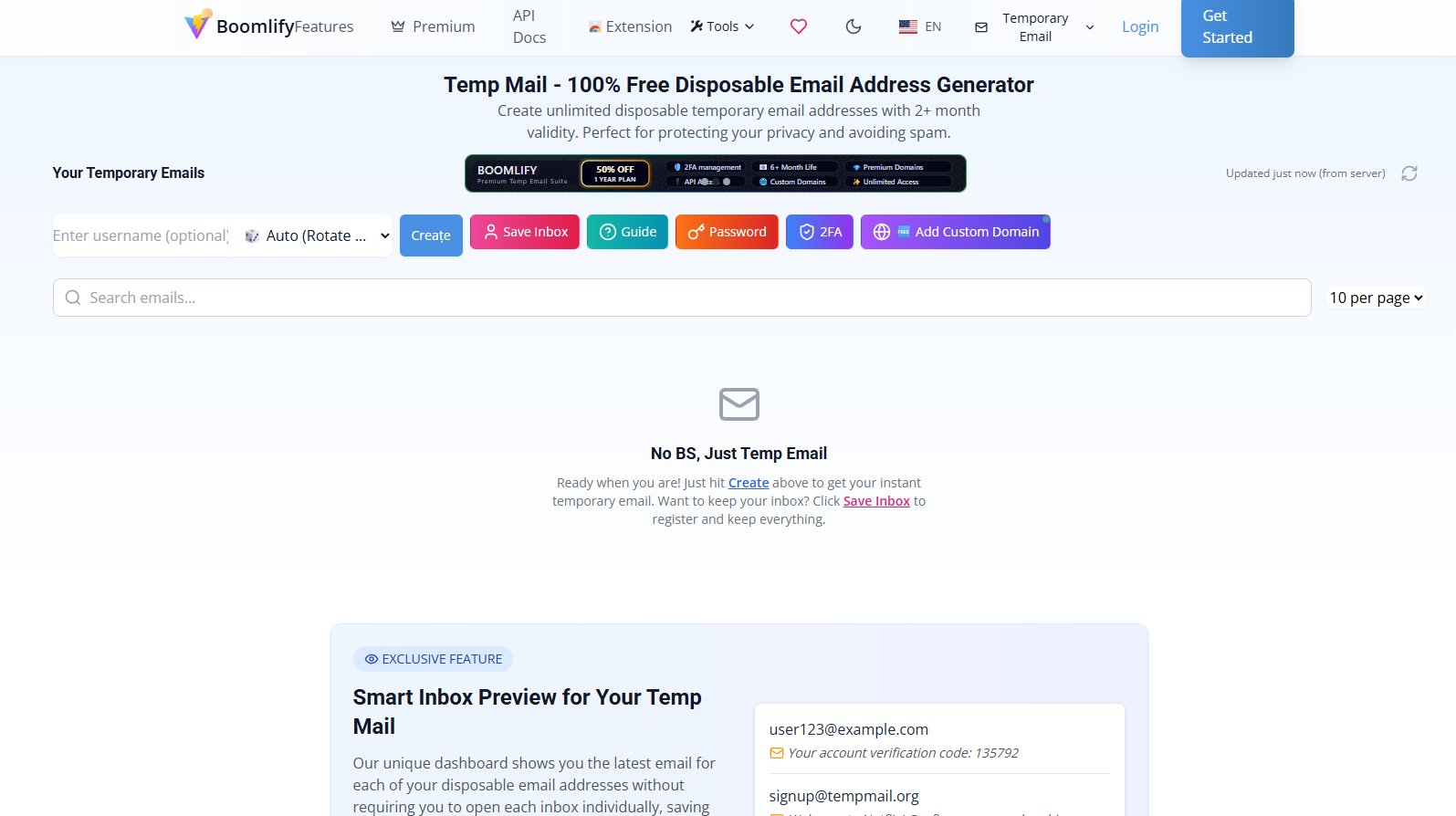
Boomlify.com impresses with long-lasting inboxes (2+ months) and smart previews for multi-address management. Core perks: unlimited free addresses, custom domains (up to 2/account), and pixel-blocking for anti-tracking. Privacy-focused with no data collection; optional registration for saving. Our 2026 evaluations showed excellent uptime and 85% success against blocks, aided by its dashboard for monitoring. Usage was efficient—preview emails without opening, ideal for bulk testing.
Suits power users like marketers or QA teams. Feedback from Dicloak blog and Verified Market Reports praises its longevity over competitors. Minor cons: daily limits on custom emails. Great for extended privacy needs.
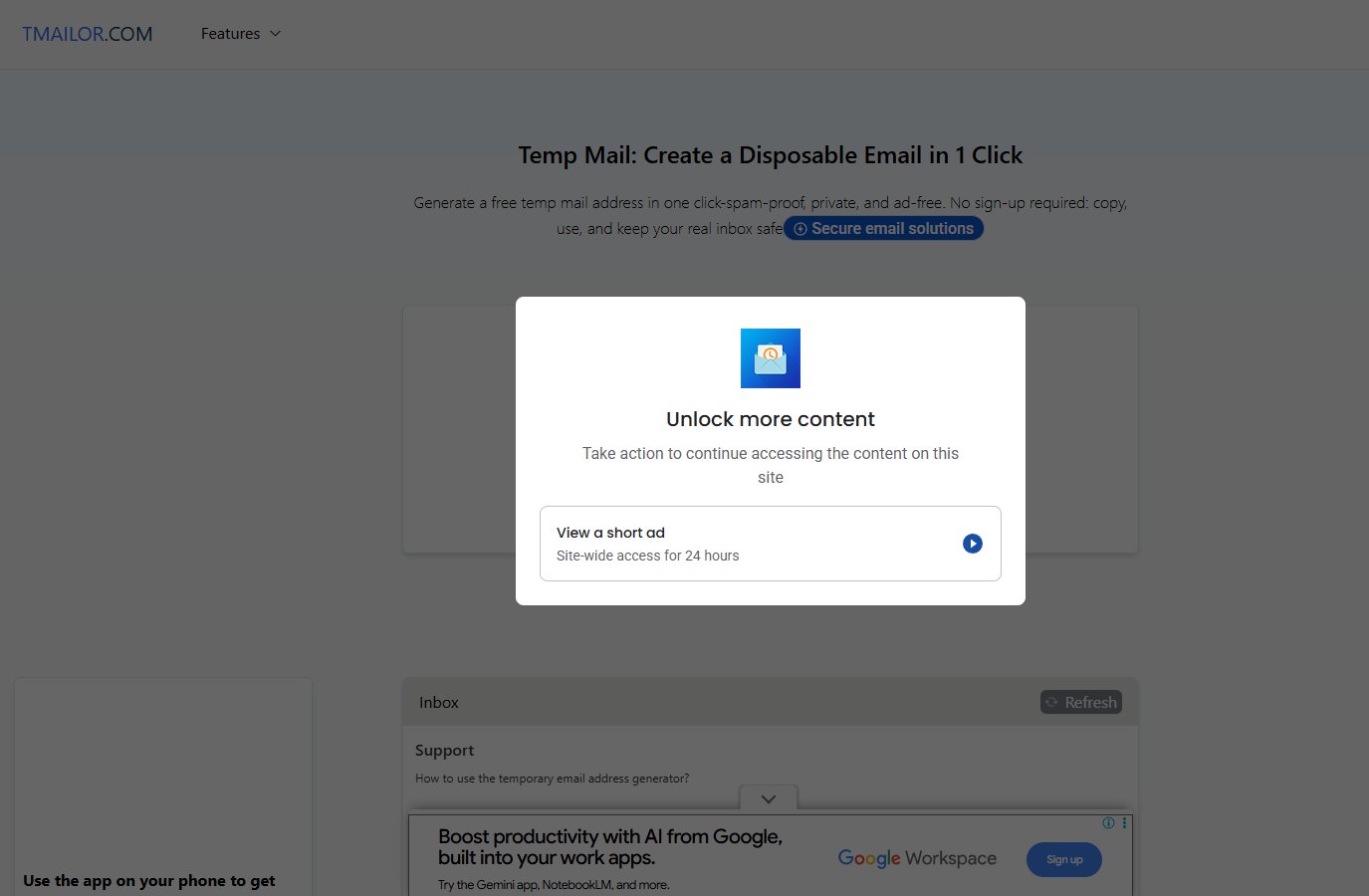
5. Tmailor.com
Tmailor.com stands out in the Best Temporary Email Services 2026 rankings as a reliable, privacy-oriented temp mail with excellent block evasion. Key features include instant no-registration address generation, 24-hour email retention , mobile-friendly design, and strong anonymity—no personal data collection, auto-deletion for privacy, and HTTPS encryption.
In real-world 2026 use, delivery is typically fast (often seconds to under a minute), with solid performance on sign-ups and verifications due to frequent domain rotation and Google-backed infrastructure. The interface is clean and spam-proof on the web, though the free mobile apps and extensions include ads (contextual via AdSense, which some users find disruptive—web core experience remains relatively ad-light). Tokens make it easy to save and reopen the same inbox anytime without losing the address.
It's ideal for quick registrations, free trials, OTP verifications, or anyone wanting reusable temp addresses without exposing their real email. User reviews (e.g., on app stores, Chrome stats, and privacy-focused discussions) often highlight its effectiveness, domain variety for low blocks, and token convenience, though ads in apps/extensions are a common complaint. Drawbacks include receive-only mode (no sending), no attachment support in received emails, and occasional ad interruptions in non-web versions.
Overall, Tmailor.com is a solid, no-frills choice in 2026 for basic to moderate anonymous email needs—especially if you value domain rotation and token-based reuse over completely ad-free everything. Great for everyday privacy on the go.
6. Guerrillamail.com
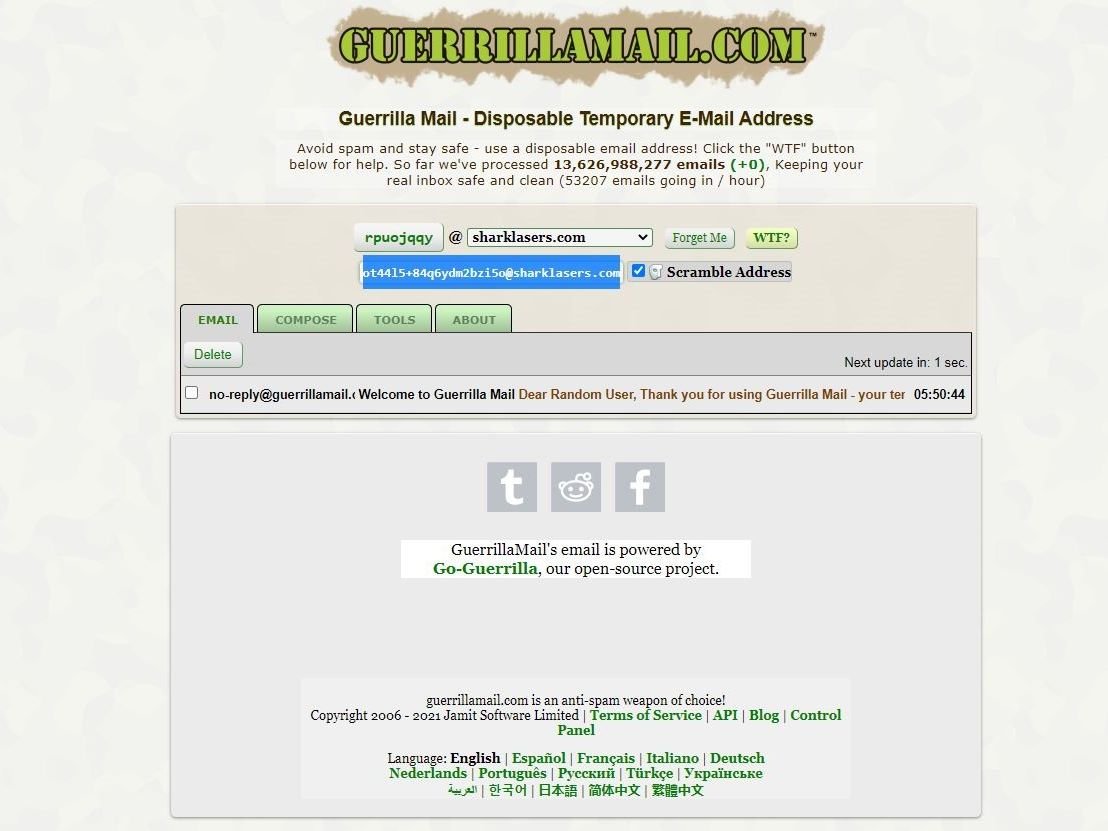
Guerrillamail.com remains a true veteran in the Best Temporary Email Services 2026 rankings, standing out as one of the few classic temp mails with full sending support—including compose new emails, replies, forwards, and attachments . Key highlights: 1-hour email retention (messages auto-delete after 60 minutes for privacy; address persists until you manually delete it), customizable/editable addresses, no registration required, and HTTPS encryption for basic secure access.
In 2026 real-world use, it excels at two-way communication—sending and replying works smoothly for verifications, anonymous outreach, or dev testing—though well-known domains can lead to blocks on stricter platforms. The interface is functional and straightforward but feels dated and ad-supported, with occasional CAPTCHA prompts during heavy use.
It's ideal for users who need outbound mail capabilities, such as developers sending test emails, anonymous tips, or one-off replies—without exposing their real address. Long-standing reviews from PCMag and TechRadar highlight its enduring reliability, while Reddit discussions commend the sending features despite ads and interface age.
Drawbacks include the short retention window, ad clutter, and potential delivery issues on block-heavy sites. Still, as a free, battle-tested classic in 2026, Guerrillamail.com is a go-to for anyone prioritizing send/receive flexibility in disposable email.
7. Emailondeck.com
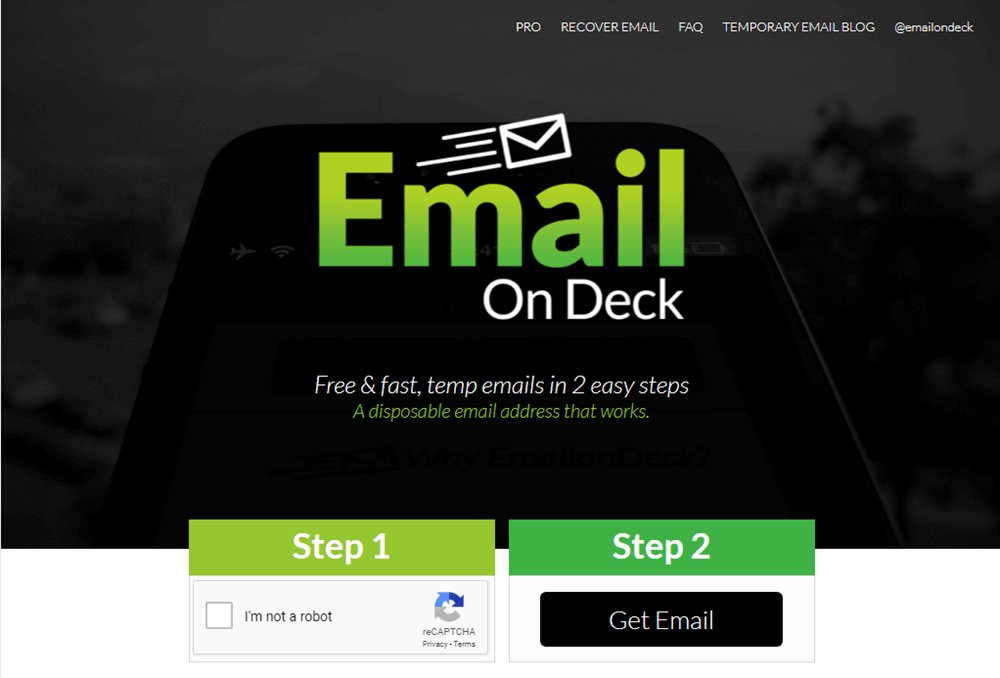
EmailOnDeck.com is a dependable, crypto-friendly disposable email service favored by privacy professionals. Unlike instant-generation tools, it uses a quick two-step CAPTCHA process to create an inbox. While this adds a few seconds to your setup, it effectively prevents bot abuse and helps keep their domains off major blacklists.
The platform prioritizes security with SSL/TLS connections and continuous message deletions. Although the free tier is ad-supported and receive-only, its high deliverability makes it a solid choice for quick verifications on strict websites.
Best for:
- crypto-related sign-ups
- bypassing strict platforms
- users valuing secure, bot-resistant domains
Main drawback:
- requires CAPTCHA verification and lacks sending features on the free tier
8. 10minutemail.com
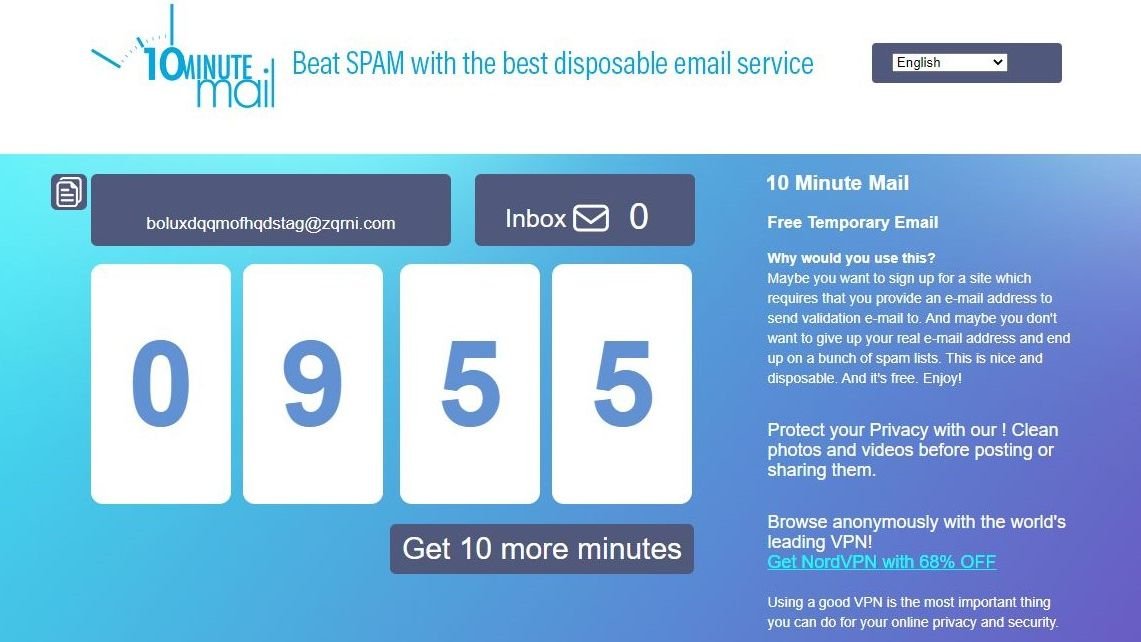
10MinuteMail remains one of the most recognizable disposable email services in 2026, built for fast, temporary sign-ups and quick OTP verification. It generates an inbox instantly with no registration and automatically deletes messages after 10 minutes, making it ideal for one-time use.
Users can extend the session manually, and refreshing the page often generates a new temporary email address from a rotating domain pool. The interface is lightweight, distraction-free, and focused entirely on speed.
In testing, delivery was generally fast for basic verifications and low-risk websites. However, because 10MinuteMail domains are widely known, stricter platforms may block registrations or reject OTP requests. If you frequently encounter these restrictions, it is highly recommended to switch to a reliable 10 minute mail alternative.
Best for:
- quick temporary sign-ups
- fast OTP verification
- short-term anonymous browsing
Main drawback:
- higher blacklist rates on major platforms (often forcing users to seek a 10 minute mail alternative)
9. 10minutemail.net
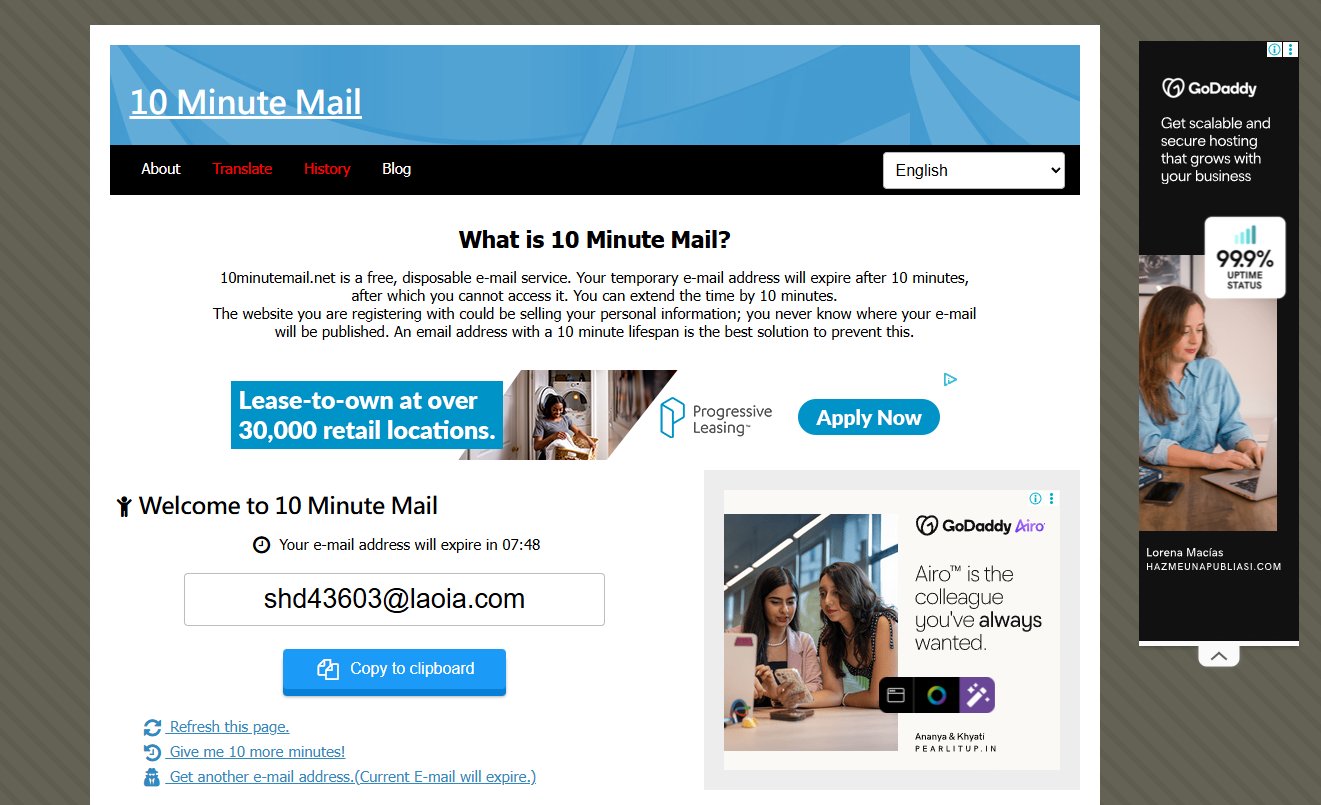
10MinuteMail.net offers a similar experience to the classic 10MinuteMail service but adds more flexibility for users who need extra time during registrations or OTP verification.
The inbox starts with a 10-minute lifespan, but users can extend sessions repeatedly in small increments, making it more practical for delayed verification emails or multi-step sign-up flows. Address generation is instant, requires no registration, and works directly in the browser.
During testing, delivery speed was generally fast for standard sign-ups and temporary verification tasks. Domain rotation also helps reduce rejection rates on some websites, although success can still vary on stricter platforms with aggressive disposable email detection.
Best for:
- delayed OTP verification
- multi-step registrations
- temporary inboxes with extendable timers
Main drawback:
- inconsistent success rates on heavily protected websites
10. Tempmailo.com
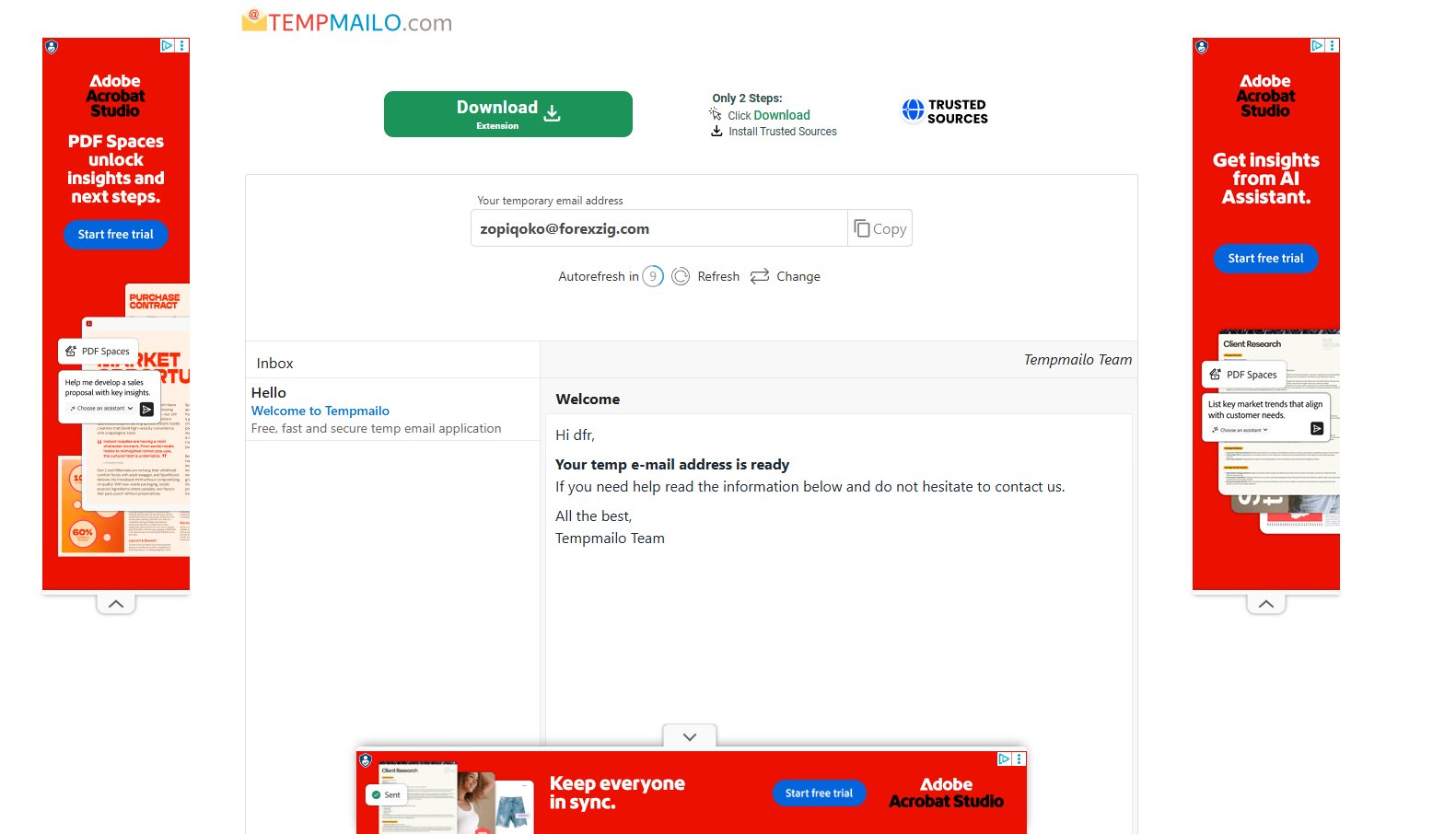
Tempmailo.com is an entry-level temporary email service designed for quick, one-time use. It generates disposable addresses instantly, supports basic text/HTML emails, and keeps messages available for up to 2 days before automatic deletion.
The platform focuses on simplicity rather than advanced features. In testing, setup was fast and easy, but delivery success was less consistent on stricter platforms where disposable domains are commonly blocked.
The interface is functional for casual use, though ads can become distracting during repeated sign-ups or longer sessions.
Best for:
- casual account verification
- quick forum registrations
- temporary spam protection
Main drawback:
- lower success rates on platforms with aggressive temp mail detection
How to Choose the Best Temporary Email Service for Your Specific Needs in 2026
In 2026, with platforms increasingly using AI to detect and block disposable email domains, choosing the right temporary mail service is more important than ever. The best option depends entirely on your primary goal—whether it's ultimate privacy, sending capability, speed, longevity, or developer features.
Here’s a clear, scenario-based guide based on our hands-on testing of the top 10 services in early 2026:
1. Most focused on privacy and zero logs
Prioritize services with strong no-logs policies, no IP storage, high encryption, and excellent block resistance.
Top recommendations:
● TempEmail.cc (Rank 1) — Unlimited addresses, password protection, ad-free, top-tier privacy (★★★★★), and one of the lowest block rates.
● Tmailor.com (Rank 5) — 500+ rotating domains for superior evasion, no data storage, excellent privacy rating.
● Temp-mail.io (Rank 3) — Encrypted, no-logs, mobile-friendly — strong privacy even when using sending features.
2. Need to send emails or attachments
Very few free temp mail services allow outbound sending due to abuse prevention, but these stand out:
● Guerrillamail.com (Rank 6) — Classic service that still reliably supports sending + attachments (up to 150MB in some cases), extendable inboxes.
3. Want the fastest and simplest experience
For instant, no-hassle one-time use (e.g., quick OTPs or verifications):
● 10minutemail.com (Rank 8) — Ultra-minimalist, zero ads, auto-destruct in 10 minutes — the purest and fastest.
● 10minutemail.net (Rank 9) — Similar simplicity but extendable up to 100 minutes with domain rotation.
4. Need long-term access or managing multiple inboxes
Look for persistent addresses, dashboards, or unlimited generation:
● TempEmail.cc (Rank 1) — Unlimited, password-protected, indefinite until manually deleted — best overall for ongoing use.
● Boomlify.com (Rank 4) — 2+ months validity, unlimited addresses, smart preview dashboard, custom domains — ideal for managing multiple projects.
5. Developer/API/bulk/automation needs
Require robust APIs, high rate limits, or automation-friendly features:
●Boomlify.com (Rank 4) — Powerful API, custom domains, centralized management — top choice for developers and bulk testing.
●Temp-mail.io (Rank 3) — REST API with auth tokens, great for CI/CD pipelines and scripted workflows.
2026 Pitfall Avoidance Tips
● Avoid services overloaded with ads (they distract and slow you down).
● Steer clear of providers with very high block rates on major platforms (social media, e-commerce, forums).
● Never use ones that log or store your IP address — true anonymity is non-negotiable in 2026.
● Always test the service on your target websites first, and prefer rotating/fresh domains + strong no-logs policies.
Match your real need to one of these top performers, and you'll stay protected, untracked, and efficient in today's tougher digital landscape.
Common Drawbacks of Temporary Email Services & Smart Alternatives
While temporary email services remain highly useful in 2026 for quick, one-off tasks, they come with inherent limitations observed across various providers during testing and user reports.
- Aggressive domain blocking by platforms — Many websites, particularly social media (e.g., TikTok, Instagram), e-commerce sites, and high-security services, employ advanced detection to identify and reject addresses from well-known temporary domains. Even services with domain rotation or fresh pools can encounter occasional failures (typically in the low to mid double-digit percentages on stricter sites), requiring users to regenerate addresses or switch providers.
- Interface distractions — Certain free services include banners, contextual promotions, or occasional prompts that can interrupt the experience, especially on mobile devices or during extended sessions.
- Short retention periods and auto-expiration — Options with brief lifespans (e.g., 10 minutes default for services like 10minutemail.com, or 60 minutes for Guerrillamail.com) are impractical for scenarios needing more than immediate access. Even those with manual extensions or longer defaults risk unexpected deletion if not actively monitored.
- Lack of persistence or archiving — Inboxes generally self-destruct or become inaccessible after expiration or manual deletion, preventing retrieval of past messages and making them unsuitable for any form of ongoing reference or backup.
When these constraints impact your needs, more sustainable approaches can provide similar privacy benefits without the drawbacks:
- Email alias/forwarding services — Tools like Gmail's +, Proton Pass, or SimpleLogin allow you to generate disposable-like addresses tied to your real inbox. These support longer-term use, better deliverability, and easier management while reducing spam exposure.
- Dedicated privacy-oriented email providers — For reliable, ongoing protection, consider full-featured secure services such as Proton Mail (end-to-end encryption, zero-access architecture, Swiss-based privacy laws, and integrated tools like aliases via Proton Pass) or Tutanota (post-quantum encryption, zero-knowledge design, German GDPR compliance, ad-free, and open-source clients). These deliver permanent addresses with superior security, no third-party data collection, and features like calendars/contacts—far outperforming temporary solutions for anything beyond fleeting interactions.
- Self-hosted setups (for advanced users) — Those with technical expertise can run their own systems using open-source projects like Mail-in-a-Box or Mailcow, configuring catch-all domains with auto-delete rules. This offers total control, custom domains, and elimination of external dependencies—but involves setup, server maintenance, and ongoing responsibility.
In essence, temporary email services shine for immediate, low-stakes anonymity in 2026, but for persistent privacy, reduced spam, and robust protection against breaches or tracking, alias tools or encrypted permanent providers deliver a more dependable and integrated solution. Choose based on your specific balance of convenience, longevity, and security requirements.
FAQs About Temporary Email Services 2026
What is the best temporary email service in 2026?
The best temporary email service in 2026 depends on your needs, but several providers stand out based on privacy, reliability, and usability. Services like TempEmail.cc offer strong privacy protection, unlimited inbox duration, and an ad-free experience, making them ideal for everyday use. Other popular options include Temp-mail.org for domain variety, Temp-mail.io for developer tools, and GuerrillaMail for sending emails. Choosing a reliable provider helps protect your primary inbox from spam, phishing attempts, and unnecessary marketing emails.
Are temporary email services safe to use?
Yes, most temporary email services are safe when used for quick tasks such as account verification, free trials, or downloading resources. These services create disposable email addresses that automatically expire after a short period, reducing the risk of spam and data leaks. However, they should not be used for important accounts, sensitive communication, or long-term access because messages may be deleted permanently once the inbox expires.
Why do some websites block temporary email addresses?
Many websites block temporary email domains to prevent spam, fake account registrations, and abuse of free trials. Platforms such as social media networks, online forums, and e-commerce sites often maintain blacklists of well-known disposable email domains. As a result, some temporary email services may fail during sign-ups. High-quality providers reduce this issue by rotating domains, adding new domain pools, and improving deliverability to bypass common blocking mechanisms.
Can temporary email services send emails?
Most temporary email services only allow users to receive messages, not send them. This limitation helps prevent spam and abuse. However, a few platforms do support sending emails. For example, GuerrillaMail allows users to send, reply, and forward messages while using a temporary address. These features can be useful for developers, testers, or users who need anonymous communication without exposing their real email address.
How long does a temporary email address last?
The lifespan of a temporary email address depends on the service you use. Some providers, such as 10MinuteMail, offer inboxes that automatically expire after about 10 minutes. Others allow longer access, such as 24 hours or even several months. Certain services also let users extend the inbox duration manually. If you need longer access to verification emails or ongoing testing, choosing a provider with extendable or persistent inboxes is recommended.
What are the main benefits of using a temporary email?
Temporary email services provide several advantages for online privacy and convenience. They help prevent spam from reaching your primary inbox, protect your personal email from data leaks, and allow anonymous sign-ups on websites that require email verification. They are also widely used by developers and testers for quick account creation during product testing. Overall, disposable email addresses are a simple and effective tool for maintaining digital privacy.
Are temporary email services legal?
Yes, using a temporary email service is generally legal in most countries. These tools are designed to help users protect their privacy and avoid unwanted marketing emails. Many professionals, developers, and security researchers use disposable email addresses for testing and online registrations. However, using temporary emails for fraudulent activities, abuse, or violating platform terms of service may lead to account restrictions or legal consequences.
What is the difference between temporary email and email alias?
A temporary email address is a disposable inbox that automatically expires after a short time, while an email alias is a permanent alternative address that forwards messages to your main inbox. Temporary emails are best for one-time registrations or anonymous sign-ups. Email aliases, on the other hand, are useful for managing subscriptions and filtering spam while still keeping long-term access to messages.
What is the best temp mail for social media?
To successfully create accounts on major platforms like Instagram, TikTok, or X (Twitter), you need a temporary email domain that is not blacklisted by their anti-bot security systems. Older, heavily public disposable services often fail these registration checks. For social media use, it is best to choose a provider that constantly updates or rotates its domain pool—such as TempEmail.cc, Tmailor, or Temp-mail.io—to ensure the verification code arrives without a domain block.
Which disposable email services feature automatic message deletion?
Automatic message deletion is a standard privacy feature across almost all reliable burner email providers, but the retention windows vary greatly by use case:
- Ultra-short lifespan: Services like 10MinuteMail permanently wipe messages after exactly 10 minutes.
- Standard window: Temp-mail.org and GuerrillaMail typically clear contents within 1 to 2 hours.
- User-controlled deletion: Services like TempEmail.cc function as a permanent anonymous inbox, keeping messages until the user manually triggers a permanent delete or local browser session cookies are cleared.
Conclusion & Final Recommendation
As we wrap up this 2026 guide to the best temporary email services, one thing is clear: in an era of escalating data breaches, AI-driven tracking, aggressive domain blacklisting, and tightening privacy regulations, a reliable disposable email is no longer a nice-to-have—it's an essential tool for protecting your online identity and keeping your primary inbox spam-free.
After hands-on testing of dozens of providers, our top overall picks stand out for different strengths:
● TempEmail.cc emerges as the best all-around temporary mail service in 2026 — delivering unbeatable privacy (zero logs, no IP storage, password protection), unlimited addresses, ad-free experience, and exceptional block resistance on even the toughest platforms.
● Guerrillamail.com remains the classic all-rounder for users who need to send emails or attachments, proving that old favorites can still hold their own when reliability matters.
● For developers or power users, Boomlify.com and Temp-mail.io lead with robust APIs and long-term management capabilities.
Your privacy is under constant threat in 2026—every careless sign-up or verification can expose you to spam floods, phishing, or worse. Choosing a high-quality temp mail service empowers you to take back control, stay anonymous, and browse with confidence.
If you want to learn the step-by-step process for creating disposable emails, check out our detailed guide on how to make a temporary email.
If you frequently sign up for online services, download resources, or test applications, using a reliable temporary email service is one of the easiest ways to protect your privacy.
Among the options we tested in 2026, TempEmail.cc stands out for its strong privacy protection, unlimited inbox duration, and ad‑free experience. However, services like GuerrillaMail, Temp‑mail.io, and Boomlify also perform well depending on your specific needs.
Choosing the right disposable email provider can help you avoid spam, reduce tracking, and keep your primary inbox secure.