You need to sign up for something online, but you don't want to hand over your real email address. It's a common situation. Temporary email seems like the obvious answer—quick, easy, and no spam later. But before you use one, there's a basic question worth answering: is temp mail safe?
Some people swear by disposable addresses. Others warn they're a security nightmare. The truth sits somewhere in the middle. Temporary email works well for certain tasks but creates real problems in others.
This article breaks down exactly when you can use them without worry and when you should keep them far away from your online activity.
What is a Temporary Email
Before we dive into the safety debate, let’s clarify what is a temporary email. A temporary email—also known as a disposable email, burner email, or 10-minute mail—is a short-lived email address that you can use without any registration. These addresses auto-destruct after a set period, ranging from ten minutes to a few days.
The concept emerged as a direct response to internet spam. Years ago, sharing your email online wasn’t a big deal. Today, your inbox is a battleground for marketers, scammers, and data brokers. Disposable emails became the shield that lets you interact with websites without sacrificing your long-term privacy.
Services like 10 Minute Mail and Guerrilla Mail dominate this space. They offer instant access, require no personal information, and automatically delete messages after expiration. For quick, one-off tasks, this sounds like a no-brainer.
But here’s where the question is temp mail safe starts to get complicated. The same features that make it convenient also create significant vulnerabilities.
Is Temp Mail Safe for Everyday Use? The Pros and Cons
To really answer whether is temp mail safe, you have to weigh the benefits against the risks. Let’s look at both sides honestly.
The Pros
- Spam Isolation: This is the biggest win. Using a disposable address for newsletters or free trials keeps your primary inbox clean and organized.
- No Commitment: Most services don’t require sign-ups or passwords. You get an address instantly and walk away just as fast.
- Privacy for Low-Stakes Tasks: If you’re signing up for a forum you’ll never visit again or downloading a one-time resource, a burner email prevents that site from linking back to your real identity.
The Cons
- No Account Recovery: This is the #1 danger. If you use a temporary email to register for an account and that email expires, you lose the ability to reset passwords. You’re permanently locked out.
- Public Inboxes: Many free disposable email services operate on shared domains. In some cases, anyone who guesses your address can read your incoming mail. Messages are often stored on publicly accessible servers with minimal protection.
- Domain Blacklisting: Because spammers abuse these services, many websites now block known temporary email domains. Your sign-up attempt may be rejected before it even goes through.
- Weak Security Model: Most temporary email services lack end-to-end encryption. While the connection might be secure in transit, your messages sit on their servers in plain text, accessible to whoever runs the service.
So, is temp mail safe? For a throwaway download link, yes. For anything you might need to access again, the answer might be no.
4 Best Temp Mail Generators in 2026
Not all temp mail services are created equal. Some are fast and reliable, while others are slow, ad-ridden, or blocked by half the internet. Based on real user feedback and technical performance, here are four of the best temporary mail services right now.
1. TempEmail.cc
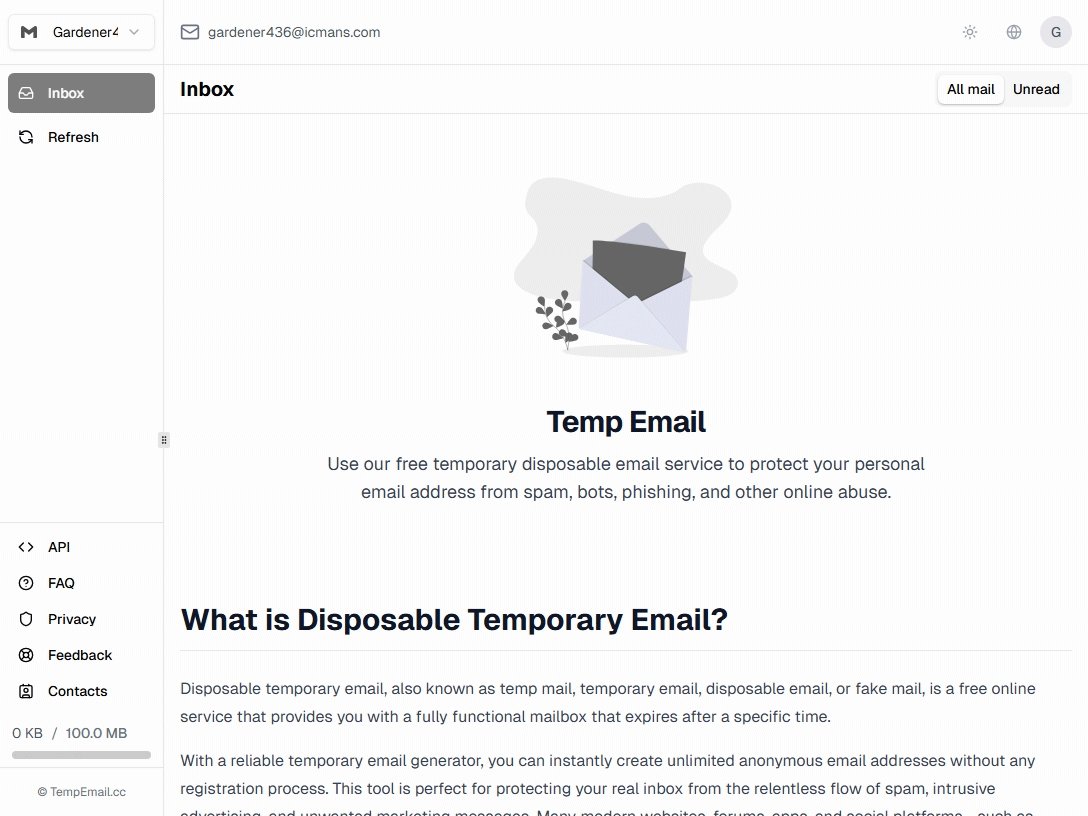 If you’re tired of addresses that expire in 10 minutes, TempEmail.cc is a breath of fresh air. Unlike most services that auto-delete your inbox after a set time, this one puts you in control. You can keep an address forever or delete it manually with one click—nothing disappears automatically. It also lets you create custom usernames instead of forcing random gibberish on you.
Privacy is taken seriously here: no logs, no IP tracking, and full data destruction when you delete an inbox. It’s a solid choice for both quick sign-ups and longer-term testing.
2. Temp-Mail.org
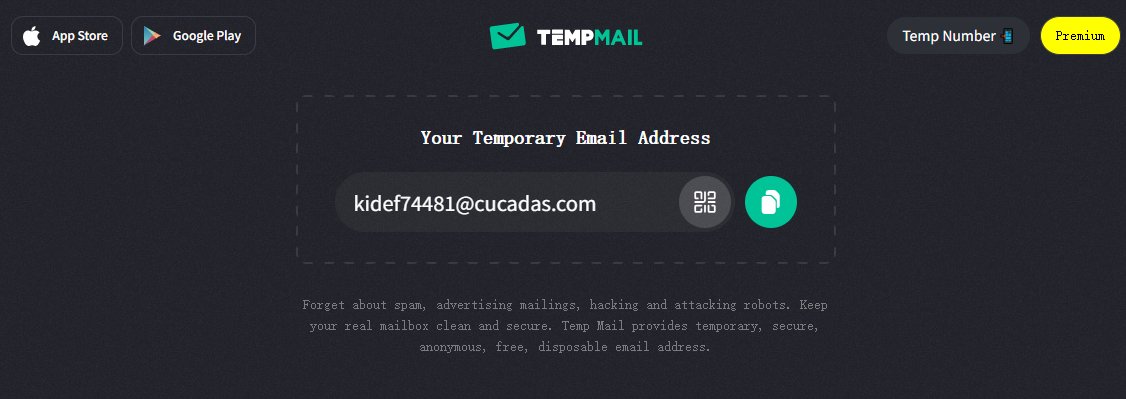 This is one of the most recognized names in the space. Temp-Mail.org offers a clean interface, mobile apps, and instant email generation. It’s reliable for most basic uses, though some of the more popular domains do get blocked by certain websites. The free version also has some rate limits, so if you’re generating addresses constantly, you might hit a wall.
3. Guerrilla Mail
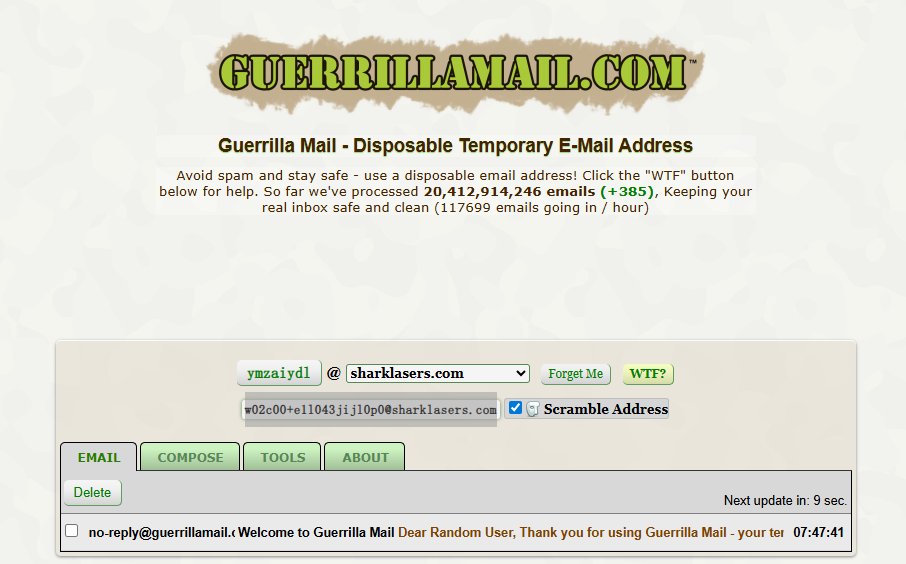 Guerrilla Mail has been around forever, and it’s earned its spot as a classic. One unique feature? You can actually send emails from it, which is rare among temp mail services. Addresses last for about 60 minutes, and you can even reply to messages. The downside is that the interface feels dated, and deliverability can be spotty—some emails just never show up.
4. 10 Minute Mail
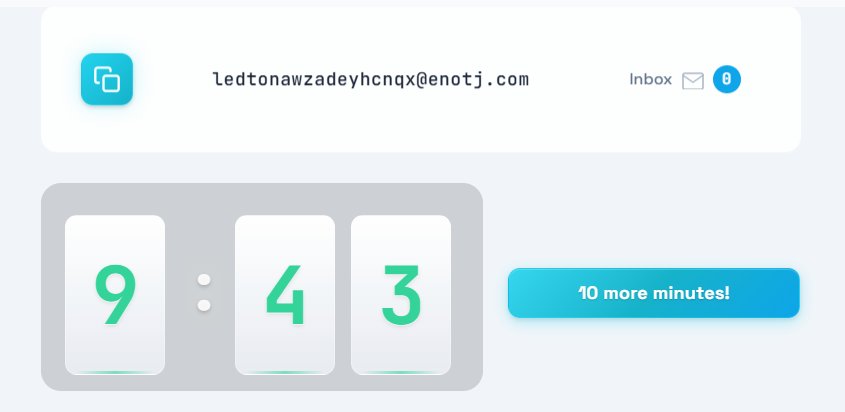 True to its name, 10 Minute Mail gives you an address that lasts exactly 10 minutes. It’s the definition of “no frills.” You land on the page, you get an inbox, you use it. There’s nothing to configure or learn. But that simplicity comes at a cost: if you need more time or miss the email, it’s gone forever. Great for one-shot verifications. Terrible for anything else.
When It’s Okay to Use a Temporary Email
There are plenty of situations where temp mail isn’t just okay—it’s actually the smart play. The key is knowing which situations those are.
Avoiding Spam Traps
You want to download a free guide, check out a competitor’s pricing page that requires registration, or get a coupon code. These are one-off interactions where you’ll never need to hear from that site again. Temp mail keeps your real inbox clean.
Testing and Development
If you’re a developer, product manager, or QA tester, temp mail is a lifesaver. You can test registration flows, email notifications, and account creation without creating a hundred fake Gmail accounts. It speeds up the work and keeps your test data clean.
Signing Up for Public Wi-Fi or Guest Access
Hotels, airports, and coffee shops often ask for an email to give you Wi-Fi access. Do you really want them to have your real address? Probably not. Temp mail gets you online without adding you to yet another marketing list.
One-Time Deals and Trials
Want to try a service for 30 days but don’t plan to stick around? Use temp mail. Just be aware that if you decide to continue, you’ll need to update it to a real address.
When You Should Absolutely Avoid a Temporary Email
On the flip side, there are deal-breaker situations where using a disposable address is genuinely dangerous.
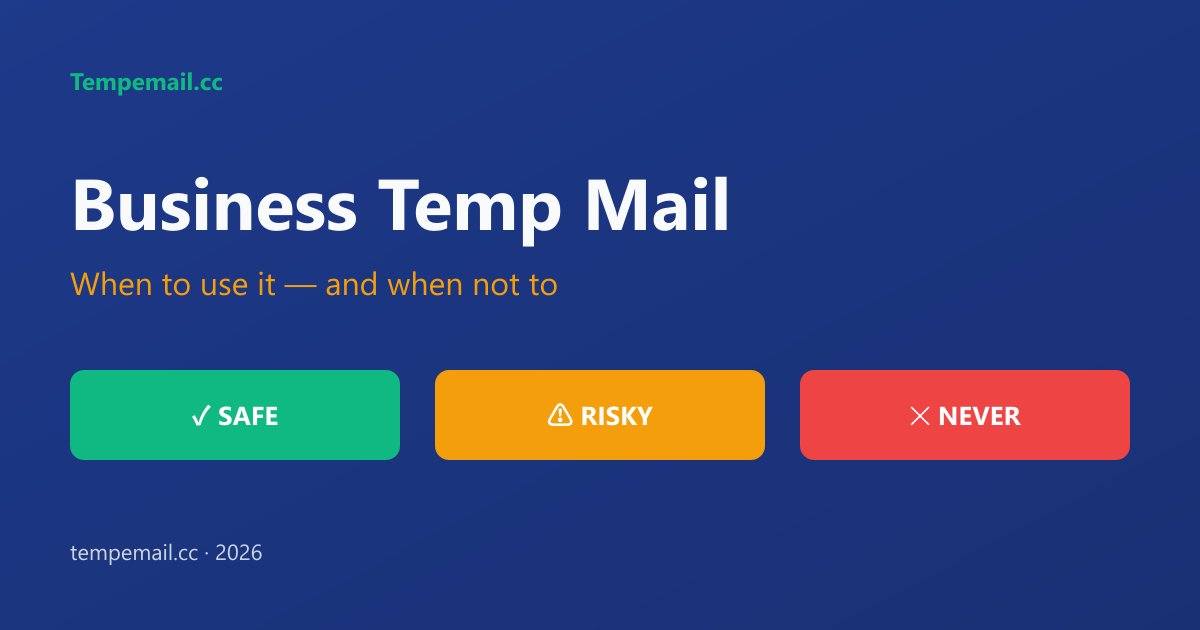
- Banking and Financial Services: Never, ever use a temp mail for your bank, PayPal, investment apps, or crypto accounts. You need guaranteed access to password resets and security alerts.
- Government and Healthcare Portals: Tax filings, healthcare records, and government benefit accounts require permanent contact methods. Losing access here creates real-world problems.
- Primary Email Accounts: This sounds obvious, but people do it. Don’t register your main email provider using a temporary address. If you lose access, you lose your entire digital identity.
- E-commerce and Shipping: If you order physical goods, you need access to order confirmations, shipping updates, and customer support threads. A temporary email guarantees you won’t see any of them.
- Accounts You Care About: This is the simplest rule. If you’ll be upset losing access to the account, use a real email.
How to Use Temporary Email More Safely
If you decide to use a disposable address after weighing the risks, you can take steps to protect yourself.
First, choose a provider with a clear privacy policy. Look for services that state they don’t log IP addresses or store messages longer than necessary. Some providers, like the premium version of TempEmail.cc, offer enhanced security features such as private mailboxes that aren’t publicly accessible.
Second, never send sensitive information through a temporary email. Don’t use it to receive bank statements, ID documents, or passwords.
Third, treat temporary emails as exactly that—temporary. Don’t use them for anything you might need six months from now. If you’re unsure, ask yourself: “Will I ever need to recover this account?” If the answer is yes, grab a permanent address.
Smarter Alternatives to Traditional Temp Mail
If you’re constantly asking is temp mail safe because you’re tired of spam but wary of the risks, there are better middle-ground solutions.
Email Aliases
Aliases are a game-changer. Unlike temporary emails that expire, aliases are permanent addresses that forward to your main inbox. You can create unique aliases for every site you sign up for. If one starts getting spam, you simply delete that alias.
Services like SimpleLogin, Firefox Relay, and even some email providers offer this functionality. You get the privacy of a disposable address with the permanence and control of a real account.
Dedicated Spam Inbox
Another approach is maintaining a secondary “spam” email address—a real, permanent address that you only use for newsletters, shopping, and forum sign-ups. It keeps your primary inbox clean, but you still own the account and can recover passwords.
Privacy-Focused Email Providers
If anonymity matters more than disposability, consider providers like ProtonMail or Tutanota. They offer strong encryption and don’t track you, but your account remains permanent and recoverable.
FAQs About Is Temp Mail Safe
1. Can temp mail be traced back to me?
No, most reputable services don't track you. They generate random addresses without asking for personal info. Just pick a provider that clearly states "no logs" in their privacy policy to stay anonymous.
2. Is it illegal to use a temporary email?
It's completely legal for normal use. The trouble starts only if you're using it for fraud, ban evasion, or violating specific site terms. Otherwise, you're fine.
3. Do temp mail services sell my data?
Some do, some don't. Stick with trusted names that have transparent privacy policies. If a site is covered in shady ads, they're probably the ones selling your info.
4. Why do websites block temp mail?
To stop fake sign-ups and spam. Many sites keep blacklists of disposable email domains and auto-block them during registration.
5. What if I lose access to an account linked to temp mail?
You're likely locked out forever. No email access means no password reset. If you might need that account later, use a real address.
Conclusion: So, Is Temp Mail Safe?
Let’s bring it home. Is temp mail safe? The answer isn’t black and white.
For quick, throwaway tasks—downloading a file, testing a service, grabbing a coupon—a temporary email is perfectly safe and incredibly useful. It protects your primary inbox from spam and keeps your real address out of marketers’ hands.
But for anything tied to money, identity, or long-term access, disposable email is a liability. The risk of permanent lockout, combined with weak security models and public inboxes, makes it a poor choice for accounts you value.
The smart approach is knowing the difference. Use temp mail for the low-stakes noise. Use a permanent, secure email for everything that matters. And if you want the best of both worlds, explore aliases or privacy-focused providers that give you control without compromise.
By understanding both the power and the limits of disposable addresses, you can navigate the web more safely—without letting spam rule your inbox.