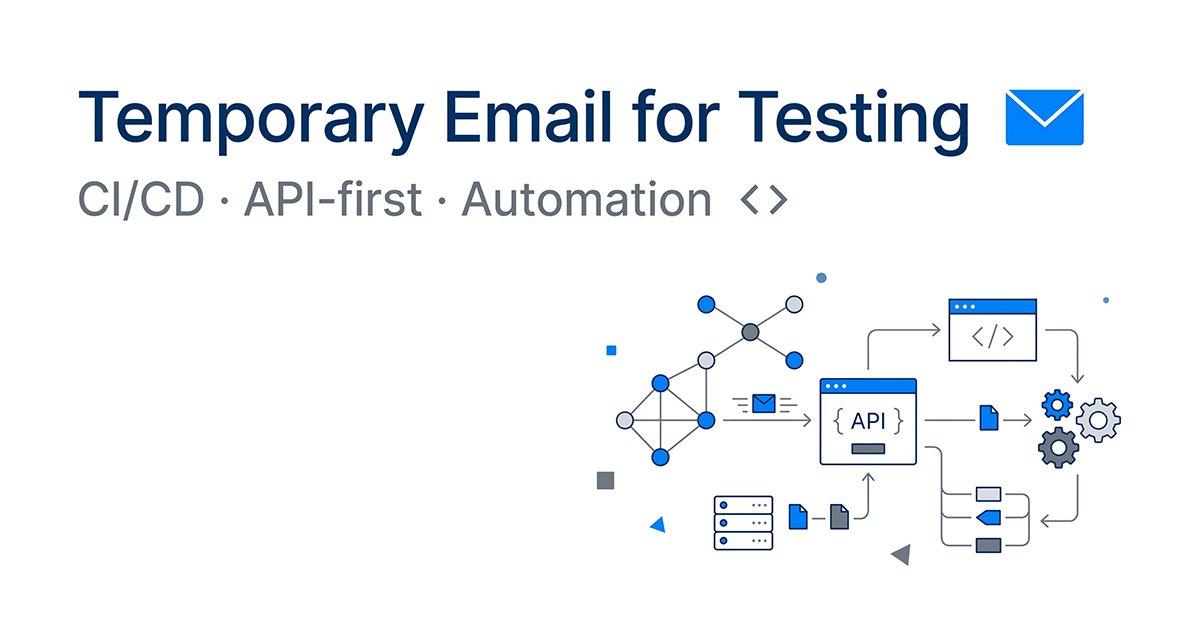
Testler için geçici e-posta, modern CI/CD süreçlerinde, özellikle Playwright ve Selenium gibi araçlar kullanan otomatik kalite güvence (QA) iş akışları için temel bir bağımlılık haline gelmiştir.
Ancak, geleneksel web tabanlı geçici e-posta hizmetleri aşağıdakiler nedeniyle giderek daha az güvenilir hale gelmektedir:
- bot algılama sistemleri
- alan adı itibarı filtrelemesi
- API düzeyinde gözlemlenebilirlik eksikliği
- öngörülemeyen teslimat gecikmesi
Sonuç olarak, e-posta tabanlı test süreçleri, aksi takdirde kararlı olan CI/CD sistemlerinin en zayıf halkası haline gelmektedir.
Bu makale, güvenilir CI/CD testleri gerçekleştirmek için neden "API öncelikli" (API-first) geçici e-posta altyapısının gerekli hale geldiğini açıklamaktadır.
"API öncelikli" geçici e-posta mimarisine genel bakış
"API öncelikli" geçici e-posta testleri, e-posta tesliminin kullanıcı arayüzü tabanlı bir gelen kutusu etkileşimi yerine gözlemlenebilir bir olay akışı olarak ele alındığı yapılandırılmış bir model sunar.
Bu mimaride tüm e-posta işlemleri API'ler aracılığıyla sunulur; bu da OTP'ler ve doğrulama bağlantıları gibi kimlik doğrulama verilerinin deterministik (belirlenimci) bir şekilde alınmasını sağlar.
Bu model, e-posta testlerinin otomatik test altyapısının bir parçası olarak CI/CD sistemlerine güvenilir bir şekilde entegre edilebilmesini garanti eder.
CI/CD süreçlerinde e-posta testleri neden başarısız olur: kök nedenler ve çözümler
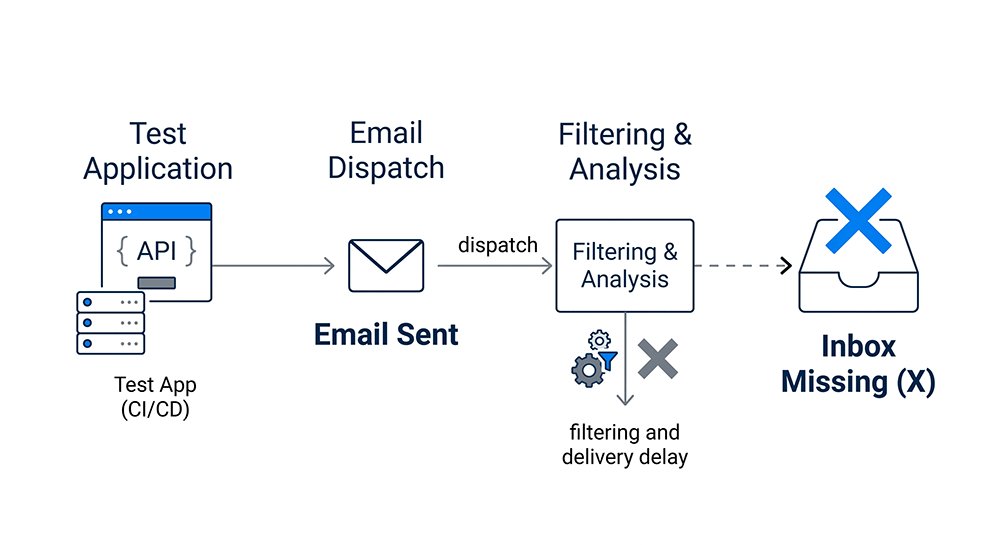
Otomatik testlerdeki en yaygın sorunlardan biri, başarılı bir API yanıtı (HTTP 200) gözlemlenirken beklenen doğrulama e-postasının gelen kutusunda asla görünmemesidir.
Bu rastgele bir hata değildir. Modern e-posta teslim sistemlerinin, mesajlar gelen kutusu katmanına ulaşmadan önce filtreleme ve sınırlama mekanizmalarını nasıl uyguladığının bir sonucudur.
CI/CD ortamlarında bu durum, "gönderilen e-posta"nın "alınan e-posta"yı garanti etmediği, deterministik olmayan bir davranış yaratır.
1. Kimlik sistemlerinde (Firebase, Auth0, vb.) alan adı itibarı filtrelemesi
Firebase Authentication ve Auth0 gibi modern kimlik sağlayıcıları, teslimatı tamamlamadan önce gelen e-posta trafiğini alan adı itibar puanlarını kullanarak değerlendirir.
Bu değerlendirme genellikle şunları içerir:
- gönderen alan adının itibar geçmişi
- alıcı alan adının güven düzeyi
- Spamhaus gibi kötüye kullanım veritabanları
- dahili spam sınıflandırma motorları
Çoğu ücretsiz geçici e-posta hizmeti, genellikle yüksek riskli olarak sınıflandırılan, kamuya açık bilinen tek kullanımlık alan adlarına (örneğin, mailinator.com, guerrillamail.com) dayanır.
Sonuç olarak, mesajlar:
- SMTP kabulünden önce sessizce reddedilebilir
- hata mesajı üretilmeden atılabilir
- gelen kutusuna teslim edilmek üzere asla kuyruğa alınmayabilir
Otomasyon perspektifinden bakıldığında bu durum, test betiklerinin e-posta tesliminin başarılı olduğu varsayımıyla çalışmaya devam ettiği bir hata modu yaratır.
2. Greylisting ve SMTP kabulündeki gecikme
Mesajlar itibar filtrelemesini geçse bile, birçok e-posta sunucusu RFC standartlarında tanımlanan iyi bilinen bir spam karşıtı mekanizma olan greylisting uygular.
Greylisting, bilinmeyen gönderen IP adreslerinden gelen ilk teslimat denemelerini geçici olarak reddeder ve gönderenin bir gecikmeden sonra tekrar denemesini gerektirir.
Uygulamada bu durum şunları beraberinde getirir:
- birçok e-posta sisteminde 5 ila 15 dakikalık bir teslimat gecikmesi
- sağlayıcılar arasında tutarsız yeniden deneme davranışı
- otomatik test ortamlarında öngörülemeyen bir zamanlama
Sıkı yürütme pencerelerinde çalışan CI/CD süreçleri için bu gecikme, deterministik varsayımları bozar ve OTP veya doğrulama tabanlı test akışlarında zaman aşımlarına (timeout) neden olur.
3. CI/CD kararlılığı üzerinde sistem düzeyinde etki
İtibar filtrelemesi ve greylisting birleştirildiğinde, temel olarak deterministik olmayan bir e-posta teslim modeli ortaya çıkar.
Bu durum, "gönderilen e-posta"nın "alınan e-posta"ya eşit olduğu varsayımını yıkar ve otomatik süreçlerde tekrarlayan hata modellerine yol açar:
- e-postalar başarıyla gönderilmiş gibi görünür ancak asla ulaşmaz
- test yürütmesi, doğrulama verilerini beklerken zaman aşımına uğrar
- ortamlar ve yürütmeler arasında tutarsız sonuçlar. Bu sorunlar teorik uç durumlar değil, gerçek CI ortamlarında tutarlı bir şekilde gözlemlenebilir durumlardır.
CI süreçlerimizde (GitHub Actions + Playwright), paralel yürütme ortamlarında 1.200'den fazla OTP doğrulama testi yürütmesi üzerinde ölçüldüğü üzere, deterministik olmayan SMTP koşulları altında test kararsızlığında yaklaşık %18'lik bir artış gözlemledik.
Paralel yürütme senaryolarında, zamanlama varyansı ve gelen kutusuna eşzamanlı erişim modelleri nedeniyle kararsızlık daha da artmaktadır.
4. Yapısal sonuç: deterministik olmayan bir bağımlılık olarak e-posta teslimi
E-posta teslimi bir mesajlaşma katmanı olarak değil, CI/CD sistemleri içinde olasılıksal bir dış bağımlılık olarak ele alınmalıdır.
- itibar tabanlı filtreleme sistemleri
- sunucu tarafı yeniden deneme politikaları
- ağ ve teslimat gecikmesi değişkenliği
Bu durum, API tabanlı ve gözlemlenebilir bir altyapı aracılığıyla soyutlanmadığı sürece, e-posta tabanlı doğrulamayı otomatik QA süreçlerindeki en az deterministik bileşenlerden biri haline getirir.
CI/CD testlerinde geçici e-posta hizmeti seçimi için mimari çerçeve
Otomatik testler için bir geçici e-posta hizmeti seçmek, bir özellik karşılaştırması egzersizi değildir. Bu, e-posta tabanlı iş akışlarının CI/CD süreçleri içinde deterministik bir şekilde davranıp davranamayacağını belirleyen mimari bir karardır.
Modern QA sistemleri, gelen kutusu kapasitesine veya kullanıcı arayüzü kolaylığına göre değerlendirme yapmak yerine, e-posta hizmetlerini dört altyapı düzeyi özelliği üzerinden değerlendirir:
- olay tabanlı teslim edilebilirlik
- yürütme izolasyon modeli
- yük altında deterministik davranış
- CI/CD ile entegrasyon derinliği
Bu boyutlar, bir sistemin ölçeklenebilir ve güvenilir otomasyonu destekleyip destekleyemeyeceğini tanımlar.
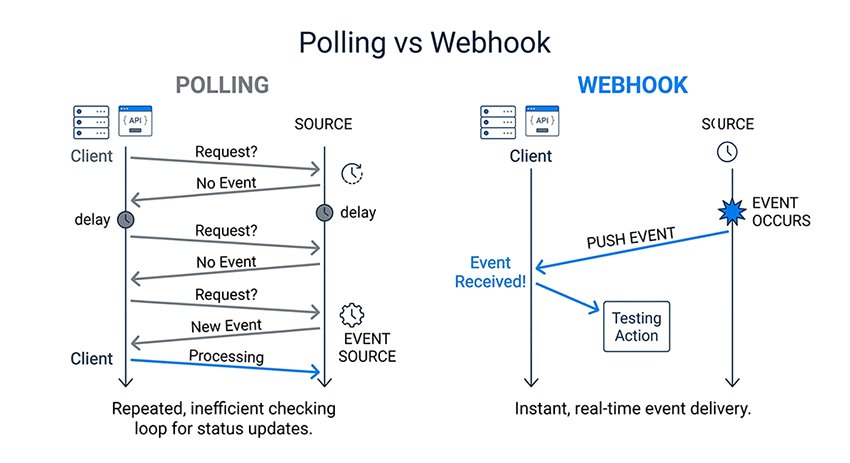
1. Yoklamadan (polling) olay tabanlı e-posta teslimine geçiş (API öncelikli mimariye geçiş)
Geleneksel e-posta test sistemleri, test betiklerinin yeni mesaj olup olmadığını kontrol etmek için API'yi sabit aralıklarla tekrar tekrar sorguladığı yoklama (polling) tabanlı almaya dayanır.
Bu model birkaç yapısal sınırlama getirir:
- CI süreçlerinde daha yüksek API yükü
- yoklama aralıkları nedeniyle gecikmeli mesaj algılama
- deterministik olmayan test zamanlama davranışı
Buna karşılık modern sistemler, e-posta tesliminin web kancaları (webhooks) veya gerçek zamanlı olay akışları aracılığıyla doğrudan test ortamına gönderildiği olay tabanlı bir mimariyi benimser.
Bu mimari değişim, e-posta testlerini istek tabanlı bir sistemden reaktif bir veri akışı modeline dönüştürür.
CI/CD perspektifinden bu durum şunları sağlar:
- neredeyse gerçek zamanlı mesaj gözlemlenebilirliği
- daha düşük yürütme gecikmesi
- daha öngörülebilir test sonuçları
2. API tabanlı e-posta test modeli (UI tabanlı iş akışlarının değiştirilmesi)
Eski e-posta testi yaklaşımları, tarayıcı tabanlı gelen kutusu incelemesine ve manuel doğrulama akışlarına dayanır.
Bu yöntemler, aşağıdakiler nedeniyle artık otomatik CI/CD ortamları için uygun değildir:
- UI seçicilerine ve DOM yapılarına bağımlılık
- bot algılama sistemlerine karşı savunmasızlık
- makine tarafından okunabilir yapılandırılmış çıktı eksikliği
Modern API tabanlı sistemler, kullanıcı arayüzü etkileşimini tamamen yapılandırılmış veri akışlarıyla değiştirir.
Temel yetenekler şunları içerir:
- API aracılığıyla programatik gelen kutusu oluşturma
- JSON formatında yapılandırılmış mesaj alımı
- OTP'lerin, bağlantıların ve meta verilerin doğrudan çıkarılması
- test çerçeveleri için entegrasyon uyumlu çıktı
Bu, kırılgan UI analizine olan bağımlılığı ortadan kaldırır ve otomasyonun kararlılığını artırır.3. Gelen Kutusu İzolasyonu ve Paralel Testlerde Eşzamanlılık Güvenliği
CI/CD ortamlarında, test yürütme işlemleri genellikle birden fazla çalışan, konteyner veya dağıtılmış düğüm arasında paralelleştirilir.
Uygun izolasyon mekanizmaları olmadan, e-posta test sistemleri şunlardan muzdarip olabilir:
- paylaşılan gelen kutularının kirlenmesi
- test senaryoları arasında yarış durumları (race conditions)
- testler arası mesaj karışıklığı
Bunu önlemek için, üretim seviyesindeki sistemler oturum veya UUID düzeyinde katı bir gelen kutusu izolasyonu uygular.
Her test yürütme işlemi, süreçler arasında paylaşılan durum olmaksızın bağımsız bir mesaj akışında çalışmalıdır.
Bu, aşağıdakiler için gereklidir:
- Playwright testlerinin paralel yürütülmesi
- büyük ölçekli yük testi senaryoları
- dağıtılmış CI/CD hatları
İzolasyon olmadan, test güvenilirliği eşzamanlılık altında katlanarak azalır.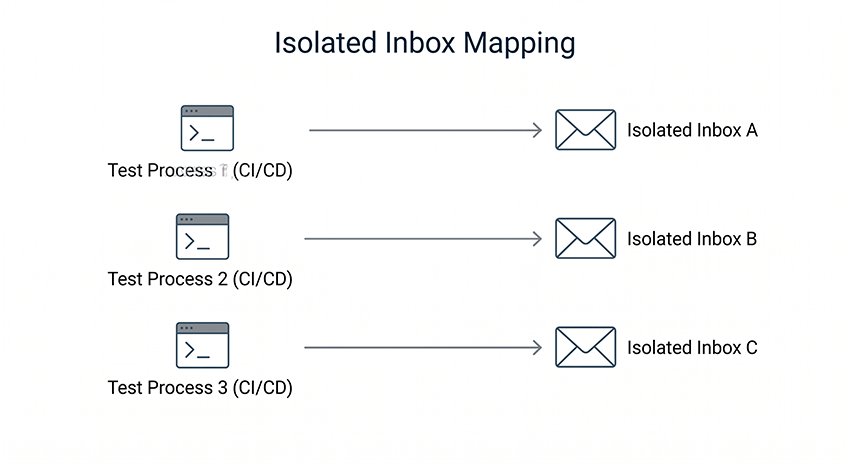
4. CI/CD kısıtlamaları altında deterministik teslimat davranışı
CI/CD'de e-posta testleri için kritik bir gereksinim, mesajların öngörülebilir bir zaman penceresi içinde deterministik (belirlenimci) olarak teslim edilmesidir.
Ancak, gerçek dünya e-posta sistemleri aşağıdakiler nedeniyle değişkenlik gösterir:
- gönderen itibar değerlendirmesi
- sunucu yeniden deneme mekanizmaları
- ağ gecikmesindeki dalgalanmalar
- greylisting davranışı
Bu faktörler, katı CI/CD yürütme pencereleriyle uyumsuz olan deterministik olmayan teslimat modelleri oluşturur.
Üretime hazır bir e-posta test sistemi şunları garanti etmelidir:
- tutarlı teslimat gözlemlenebilirliği
- sınırlı gecikme davranışı
- test yürütme döngüleri içinde öngörülebilir mesaj kullanılabilirliği
Bu, otomatik test hatlarında kararlı OTP doğrulama ve kimlik doğrulama iş akışlarını sürdürmek için gereklidir.
5. CI/CD entegrasyonu ve yürütme modeli gereksinimleri
Teslimat davranışının ötesinde, e-posta test sistemleri GitHub Actions, Jenkins veya GitLab CI gibi CI/CD ekosistemlerine yerel olarak entegre olmalıdır.
Temel mimari gereksinimler şunları içerir:
- API tabanlı gelen kutusu yaşam döngüsü yönetimi
- olay tabanlı veya webhook tabanlı mesaj kurtarma
- TTL tabanlı otomatik test verisi temizleme
- küresel olarak dağıtılmış düşük gecikmeli uç noktalar
Manuel incelemeye veya tarayıcı tabanlı iş akışlarına dayanan sistemler gereksiz bir kırılganlık getirir ve otomatik test hatları için uygun değildir.
Temel Sonuç
Test amaçlı geçici e-posta hizmetleri, bağımsız araçlar olarak değerlendirilmemelidir.
Doğru değerlendirme modelinin aşağıdakilerle tanımlandığı CI/CD altyapı tasarımının bir parçası olarak değerlendirilmelidirler:
olay tabanlı teslimat + yürütme izolasyonu + deterministik davranış + CI/CD ile yerel entegrasyon
Bu dört özellik, bir e-posta test sisteminin gerçek dünya otomasyon iş yükleri altında güvenilir bir şekilde çalışıp çalışamayacağını belirler.
CI/CD hatlarında geçici e-posta testleri nasıl uygulanır
Mimari modeli tanımladıktan sonra bir sonraki adım, geçici e-posta sistemlerini Playwright tabanlı uçtan uca (E2E) testler ve CI/CD hatları gibi gerçek dünya otomasyon iş akışlarına doğrudan entegre etmektir.
Bu aşamada, e-posta testleri artık bağımsız bir araç olarak değil, test yürütme hattının tamamen entegre bir parçası olarak ele alınır.
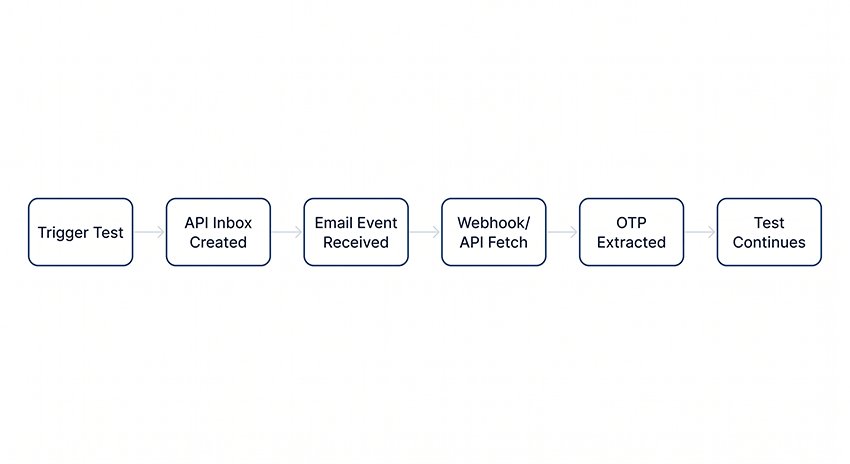
1. Playwright tabanlı OTP doğrulama akışı (E2E testleri)
Modern otomasyondaki en yaygın kullanım durumlarından biri, e-posta yoluyla OTP doğrulamasına dayanan kullanıcı kayıt akışlarının doğrulanmasıdır.
Geleneksel uygulamalar genellikle şunlara dayanır:
- sabit gecikmeler (
waitForTimeout) - oluşturulan e-posta içeriğinin DOM'undan veri çıkarma
- düzenli ifadeler (regex) tabanlı doğrulama kodu çıkarma
Bu yaklaşımlar kararsızdır çünkü e-posta teslimatı doğası gereği asenkron ve deterministik değildir.
Daha güvenilir bir model, e-posta kurtarmayı kullanıcı arayüzü etkileşimi yerine yapılandırılmış bir veri işlemi olarak ele alır.
Standart yürütme akışı:
- Kullanıcı kayıt isteğini tetikle
- API veya webhook aracılığıyla e-posta olayını bekle
- Yapılandırılmış e-posta yükünü al
- OTP'yi doğrudan JSON yanıtından çıkar
- Kimlik doğrulama akışına devam et
Bu yaklaşım şunları ortadan kaldırır:
- regex tabanlı HTML ayrıştırma
- kırılgan DOM seçicileri
- sabit bekleme/zaman aşımı mantığı
E-posta işlemini yapılandırılmış API yanıtlarına taşıyarak, test güvenilirliği kullanıcı arayüzü değişkenliğinden ve teslimat süresinden bağımsız hale gelir.
2. Yüksek eşzamanlılık senaryoları için e-posta tabanlı yük testleri
Yük testi ortamlarında sistemler genellikle dakikada yüzlerce veya binlerce eşzamanlı kullanıcı kaydı altında değerlendirilir.
Bu ölçekte, ana darboğazlar uygulama performansı değil, e-posta teslim katmanındaki dış bağımlılıklardır.
Yaygın hata noktaları şunları içerir:
- paylaşılan alan adlarında SMTP hız sınırlaması (rate limiting)
- yüksek eşzamanlılık altında gelen kutusu oluşturma darboğazları
- mesaj teslimat ve kuyruk gecikmeleri
- paralel çalışan testler arasında gelen kutusu çakışmaları
Bu sorunlar, yük testi sonuçlarının gerçek sistem davranışından önemli ölçüde farklı olmasına neden olur.
Kararlılığı sağlamak için e-posta test altyapısı şunları desteklemelidir:
- istek veya test başına gelen kutusu izolasyonu
- çalışanlar arasında durumsuz (stateless) mesaj kurtarma
- yatay olarak ölçeklenebilir API performansı
- eşzamanlılık için güvenli mesaj yönlendirme
Bu yetenekler olmadan, yük testleri güvenilmez hale gelir ve tutarsız sistem metrikleri üretir.
3. Üretim seviyesinde e-posta testleri için CI/CD entegrasyon gereksinimleri
E-posta testlerinin GitHub Actions, Jenkins veya GitLab CI gibi CI/CD hatları içinde güvenilir bir şekilde çalışması için katı altyapı gereksinimlerini karşılamaları gerekir.
Üretime hazır bir sistem şunları desteklemelidir:
- API tabanlı gelen kutusu yaşam döngüsü yönetimi
- olay tabanlı veya webhook tabanlı mesaj teslimatı
- test yürütme sonrası TTL tabanlı otomatik veri temizleme
- küresel olarak dağıtılmış düşük gecikmeli uç noktalar
Bu gereksinimler, e-posta davranışının otomatik hatların kısıtlamaları dahilinde gözlemlenebilir ve deterministik kalmasını sağlar.
Manuel gelen kutusu incelemesine veya tarayıcı tabanlı iş akışlarına dayanan sistemler, modern CI/CD mimarileriyle uyumlu değildir.
Temel yürütme ilkesi
CI/CD ortamlarında e-posta testleri, bir mesajlaşma yardımcı programından ziyade deterministik bir veri hattı olarak ele alınmalıdır.
Test yürütme güvenilirliği, e-posta teslimatının şu özelliklere sahip olup olmamasına bağlıdır:
- yapılandırılmış (API tabanlı)
- gözlemlenebilir (olay tabanlı)
- izole edilmiş (test başına kapsam)
- ölçeklenebilir (paralel yürütme için güvenli)
Yalnızca bu koşullar karşılandığında, e-posta doğrulama iş akışları üretim seviyesindeki otomasyon yükleri altında kararlı kalabilir.
CI/CD e-posta test sistemleri için karar çerçevesi (özetlenmiş) (2026)
Bir e-posta test çözümü seçmek, bir özellik karşılaştırma alıştırması değildir. E-posta tabanlı iş akışlarının CI/CD hatları içinde ne kadar güvenilir bir şekilde davrandığını belirleyen mimari bir karardır.
Modern mühendislik ekipleri, araçları kullanıcı arayüzüne veya fiyatlandırmaya göre değerlendirmek yerine, gerçekçilik, ölçeklenebilirlik ve entegrasyon derinliği gibi sistem düzeyindeki ödünleşimlere göre değerlendirir.
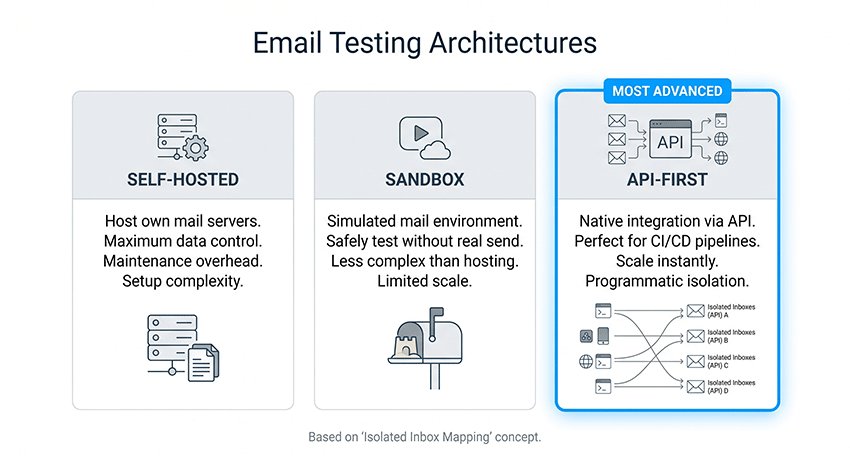
1. Kendi kendine barındırılan (self-hosted) e-posta test sistemleri (altyapı kontrollü model)
Kendi kendine barındırılan e-posta sistemleri (örneğin, Docker tabanlı e-posta sunucuları), altyapı üzerinde tam kontrol sağlar ve genellikle yerel geliştirme veya izole test ortamları için kullanılır.
Avantajlar:
- altyapının tam sahipliği
- dahili testler üzerinde tam kontrol
Sınırlamalar:
- gerçek dünya e-posta teslimat kapasitesinin zayıf olması
- yüksek operasyonel ve bakım maliyetleri
- davranış simülasyonunun yetersizliğiüretim e-postası
CI/CD perspektifinden bakıldığında, kendi kendine barındırılan (self-hosted) sistemler, itibar filtreleme ve greylisting gibi harici e-posta ekosistemi koşullarını genellikle taklit edemezler; bu da onları üretim düzeyindeki testler için yetersiz kılar.
2. Sandbox e-posta test araçları (Mailtrap / Mailosaur modeli)
Sandbox tabanlı araçlar, gerçek alıcılara mesaj göndermeden e-posta teslimatını yakalamak ve simüle etmek için tasarlanmıştır.
Genellikle güvenlik ve yalıtımın öncelikli olduğu kalite güvence (QA) ve geliştirme ortamlarında kullanılırlar.
Avantajlar:
- hızlı kurulum
- yalıtılmış ve güvenli test ortamı
- kullanıcı arayüzü (UI) tabanlı doğrulama iş akışları için güvenilir
Kısıtlamalar:
- sınırlı gerçek dünya teslimat sadakati
- sandbox davranışı üretim e-posta yönlendirmesini yansıtmaz
- yüksek eşzamanlılık veya yük testleri için uygun değildir
Bu sistemler kontrollü ortamlarda çalıştıkları için, spam filtreleme veya teslimat gecikmesi gibi harici e-posta altyapısı davranışlarını doğru bir şekilde simüle etmezler.
3. API tabanlı e-posta test sistemleri (üretim düzeyi mimarisi)
API öncelikli e-posta test sistemleri, CI/CD entegrasyonu ve otomatik test hatları için özel olarak tasarlanmıştır.
Sandbox veya kendi kendine barındırılan modellerin aksine, bu sistemler üretim benzeri e-posta davranışıyla mimari uyuma odaklanır.
Temel yetenekler şunları içerir:
- API aracılığıyla programatik gelen kutusu oluşturma
- yapılandırılmış mesaj kurtarma (JSON tabanlı)
- olay tabanlı veya webhook teslimatı
- yatay olarak ölçeklenebilir eşzamanlılık desteği
En uygun kullanım alanları:
- uçtan uca kimlik doğrulama testleri (OTP akışları)
- üretim benzeri e-posta doğrulama
- yüksek eşzamanlılığa sahip otomatik QA hatları
- dağıtık CI/CD yürütme ortamları
Bu mimari, e-posta testlerinin manuel doğrulama katmanı yerine deterministik ve gözlemlenebilir bir sistem bileşeni gibi davranmasını sağlar.
Mimari Karar İlkesi
E-posta test sistemleri özellik listelerine göre değil, CI/CD yürütme modelleriyle uyumlarına göre seçilmelidir.
Doğru değerlendirme hiyerarşisi şöyledir:
üretim gerçekçiliği → entegrasyon derinliği → eşzamanlılık güvenliği → operasyonel ölçeklenebilirlik
Şu değil:
kullanıcı arayüzü kolaylığı veya gelen kutusu sınırlamaları
CI/CD hatlarında e-posta testleri için güvenlik mimarisi
E-posta test sistemlerinin CI/CD hatlarına entegrasyonu, yalnızca işlevsel bağımlılıklar değil, aynı zamanda güvenlik hususlarını da beraberinde getirir; çünkü bu sistemler genellikle kimlik doğrulamayla ilgili hassas verileri işler.
Geleneksel uygulama güvenliği kaygılarının aksine, e-posta testi güvenliği; otomatik iş akışları içindeki geçici kimlik doğrulama yapılarının yaşam döngüsünü, görünürlüğünü ve maruziyetini kontrol etmeye odaklanır.
1. E-posta test sistemlerinde CI/CD saldırı yüzeyinin genişlemesi
E-posta testleri, OTP, doğrulama bağlantıları ve şifre sıfırlama belirteçleri gibi kimlik doğrulamayla ilgili hassas verileri işledikleri için CI/CD hatları içinde daha geniş bir saldırı yüzeyi oluşturur.
Temel risk vektörleri şunları içerir:
- CI/CD günlüklerinde OTP kodlarının açığa çıkması
- hata ayıklama yapılarında kimlik doğrulama belirteçlerinin sızması
- hassas e-posta yüklerine erişen paylaşımlı hat ortamları
- paralel çalışan işler arasında veri kirlenmesi
Bu riskler, birden fazla test işinin paylaşımlı altyapı katmanlarında eşzamanlı olarak çalıştığı dağıtık CI/CD sistemlerinde daha da artar.
Güvenlik mimarisi perspektifinden bakıldığında, e-posta testleri uygulamanın genişletilmiş güven sınırının bir parçası haline gelir.
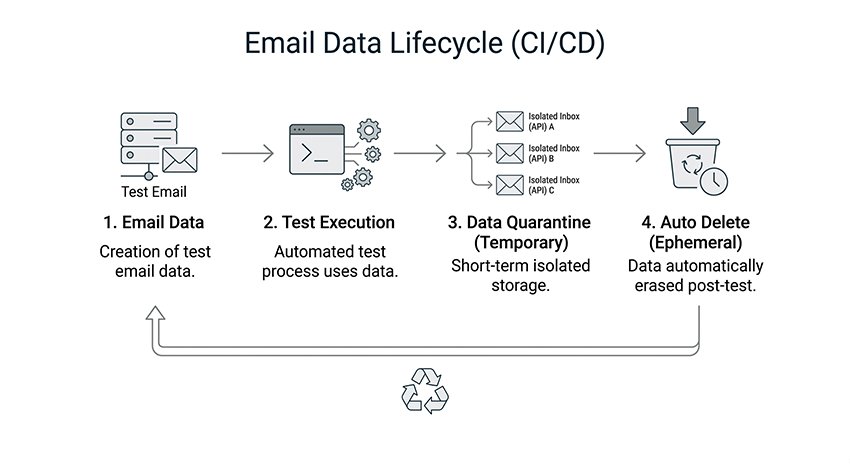
2. Geçici veri işleme modeli (sıfır kalıcılık tasarımı)
Güvenli bir e-posta test mimarisi, e-posta içeriğinin yalnızca aktif yürütme penceresi içinde var olduğu geçici bir veri yaşam döngüsü modeli uygulamalıdır.
Temel tasarım ilkeleri şunları içerir:
- test yürütme sırasında e-posta içeriğine zaman sınırlı erişim
- hassas e-posta yükleri için kalıcı depolamanın kaldırılması
- CI/CD'de kimlik doğrulama verilerinin günlüğe kaydedilmesinin en aza indirilmesi veya maskelenmesi
- test yürütme ile gözlemlenebilirlik katmanları arasında sıkı yalıtım
Bu yaklaşım, kimlik doğrulamayla ilgili verilerin test doğrulamasının hemen kapsamı dışında geniş çapta açığa çıkmamasını sağlar.
Amaç sadece verilerin silinmesi değil, yaşam döngüsünün CI/CD yürütme bağlamı içinde tamamen sınırlandırılmasıdır.
3. Veri yalıtımı için sentetik kimlik stratejisi
E-posta test sistemlerinde kritik bir güvenlik gereksinimi, gerçek kullanıcı verilerinin otomatik test ortamlarından kaldırılmasıdır.
Bu, aşağıdakileri içeren sentetik veri üretimi ile sağlanır:
- yapay olarak oluşturulmuş e-posta adresleri
- üretim dışı kullanıcı kimlikleri
- simüle edilmiş kimlik doğrulama iş akışları
Test sistemlerini gerçek kullanıcı verilerinden ayırarak, bir veri sızıntısının potansiyel etkisi önemli ölçüde azaltılır.
Bu yaklaşım, hattın ele geçirilmesi durumunda bile gerçek kullanıcıların kimlik bilgilerinin veya kişisel bilgilerinin etkilenmemesini sağlar.
Güvenlik tasarım ilkesi (sistem düzeyi modeli)
Sağlam bir e-posta test sistemi, katı bir güvenlik ilkesi altında çalışmalıdır:
Test ortamlarındaki kimlik doğrulama verileri yürütme sırasında gözlemlenebilir olmalı, ancak doğrulama sonrasında kalıcı veya kurtarılabilir olmamalıdır.
Bu ilke üç temel garanti getirir:
- yürütme kapsamı içinde kontrollü maruziyet
- doğrulama sonrası otomatik yaşam döngüsü sonlandırma
- test yürütme ile kalıcı depolama sistemleri arasında sıkı ayrım
Bu kısıtlamalar bir araya geldiğinde, CI/CD sistemleri için güvenli ve üretim düzeyinde bir e-posta test mimarisini tanımlar.
SSS: CI/CD hatlarında e-posta testlerindeki yaygın hatalar
Bu bölüm, geliştiricilerin otomatik CI/CD ortamlarında e-posta tabanlı testleri uygularken karşılaştıkları en yaygın ve kalıcı sorunları ele almaktadır.
Geleneksel belgelerin aksine, bu yanıtlar gerçek dünya hata ayıklama senaryoları ve deterministik test tasarımı için optimize edilmiştir.
CI/CD hatlarında e-posta testleri neden başarısız olur?
E-posta testleri CI/CD ortamlarında, test betiklerindeki hatalardan ziyade temel olarak deterministik olmayan teslimat davranışları nedeniyle başarısız olur.
Temel nedenler genellikle şunları içerir:
- itibar tabanlı e-posta filtreleme sistemleri (örn. Spamhaus, Firebase/Auth0 puanlaması)
- alıcı e-posta sunucuları tarafından uygulanan "greylisting" gecikmeleri
- bilinmeyen gönderen IP adresleri altında tutarsız SMTP yeniden deneme davranışı
Bu mekanizmalar, "başarıyla gönderilen e-posta" ile "gelen kutusuna ulaşan e-posta" arasında bir tutarsızlık yaratarak otomatik test paketlerinde yanlış negatiflere yol açar.
CI/CD sistemlerinde bu durum, e-postayı deterministik değil, olasılıksal bir bağımlılık haline getirir.
Otomasyonda OTP doğrulama akışları nasıl güvenilir bir şekilde test edilir?
En güvenilir yaklaşım, kullanıcı arayüzü (UI) tabanlı e-posta incelemesini tamamen ortadan kaldırmak ve yerine API tabanlı yapılandırılmış e-posta kurtarma yöntemini koymaktır.
Şunlara güvenmek yerine:
- e-posta içeriğinin DOM analizi
- OTP kodlarının düzenli ifadeler (regex) ile çıkarılması
- sabit zaman gecikmeleri (örn. sleep/wait fonksiyonları)
Modern test sistemleri şunları kullanmalıdır:
- API tabanlı e-posta kurtarma
- webhook veya olaylar aracılığıyla teslimat
- OTP alanlarını içeren yapılandırılmış JSON yanıtları
Bu, OTP doğrulamasını UI'ya bağımlı bir süreçten deterministik bir veri alma işlemine dönüştürerek CI/CD güvenilirliğini önemli ölçüde artırır.
Yoklama (polling) CI/CD sistemlerindeki e-posta testleri için neden verimsizdir?
Yoklama, yeni e-postaları tespit etmek için sabit aralıklarla sürekli API istekleri gerektirdiğinden verimsizliğe neden olur.
Bu durum şunlara yol açar:
- daha uzun CI/CD yürütme süresi
- gereksiz API isteği yükü
- tespit süreleritutarsız e-posta teslimatı
Buna karşılık, olay tabanlı veya webhook sistemleri, e-posta olaylarını doğrudan test ortamına göndererek yoklamayı (polling) tamamen ortadan kaldırır.
Bu değişiklik, hem yürütme verimliliğini hem de otomatik test iş akışlarındaki determinizmi artırır.
CI/CD pipeline'larında kararsız (flaky) e-posta testlerinden nasıl kaçınabilirim?
Kararsız e-posta testleri genellikle deterministik olmayan teslimat sürelerinden ve paralel yürütme ortamlarındaki paylaşılan durum çakışmalarından kaynaklanır.
Kararlılığı artırmak için üretim düzeyindeki sistemler şunları uygulamalıdır:
- gerçek zamanlı e-posta olayı işleme için webhook tabanlı teslimat
- testler arası kirlenmeyi önlemek için test yürütme başına gelen kutusu izolasyonu
- kırılgan HTML veya DOM ayrıştırmasından kaçınmak için yapılandırılmış API yanıtları
Bu mekanizmalar, yüksek eşzamanlılık ve dağıtılmış CI/CD yürütme koşullarında bile e-posta davranışının tutarlı kalmasını sağlar.
CI/CD altyapısı olarak e-posta testleri
CI/CD sistemleri tamamen otomatikleştirilmiş ve dağıtılmış yürütme modellerine doğru evrilmeye devam ettikçe, e-posta tabanlı testler artık bağımsız bir yardımcı program veya ikincil bir test aracı değildir.
Bunlar, modern yazılım teslimat pipeline'larının güvenilirliğini, determinizmini ve ölçeklenebilirliğini doğrudan etkileyen merkezi bir altyapı bağımlılığı haline gelmiştir.
Test yardımcı programlarından altyapı bağımlılıklarına
Modern kalite güvence (QA) sistemlerinde temel zorluk artık test senaryoları oluşturmak değil, harici bağımlılıkların öngörülebilir ve gözlemlenebilir bir şekilde davranmasını sağlamaktır.
E-posta teslimatı, aşağıdaki gibi faktörler nedeniyle bu yığındaki en kararsız harici sistemlerden biridir:
- itibar tabanlı filtreleme mekanizmaları
- gecikmeli SMTP işleme ve "greylisting"
- deterministik olmayan üçüncü taraf teslimat davranışı
- kullanıcı arayüzüne (UI) bağımlı inceleme iş akışları
E-posta doğrulaması bu kararsız katmanlara dayandığında, test komut dosyasının kalitesinden bağımsız olarak testin güvenilirliği düşer.
Bu durum yapısal bir sınırlama yaratır:
test sistemi, en zayıf harici bağımlılığı kadar güvenilirdir.
Mimari geçiş: UI tabanlı araçlardan API tabanlı sistemlere
Bu sınırlamayı çözmek için mühendislik ekipleri, UI'a bağımlı geçici e-posta araçlarından API tabanlı ve olay odaklı e-posta test mimarilerine geçiş yapmaktadır.
Bu sistemlerde:
- e-posta olayları yapılandırılmış veri akışları olarak ele alınır
- doğrulama iş akışları UI incelemesi yerine API'ler aracılığıyla yürütülür
- OTP'ler, aktivasyon bağlantıları ve sıfırlama belirteçleri programatik olarak ayrıştırılır
- e-posta teslimatı, CI/CD yürütme pipeline'ları içinde gözlemlenebilir hale gelir
Bu değişiklik, yapılandırılmamış UI içeriğine olan bağımlılığı ortadan kaldırır ve yerine makine tarafından okunabilir, deterministik bir sistem davranışı getirir.
E-posta test sistemlerinde güvenilirliği yeniden tanımlamak
Altyapı düzeyindeki CI/CD ortamlarında, e-posta testlerinin güvenilirliği artık bir e-postanın sadece teslim edilip edilmediğiyle tanımlanmaz.
Bunun yerine güvenilirlik, e-posta davranışının şu özelliklere sahip olup olmadığıyla ölçülür:
- gözlemlenebilir (gerçek zamanlı olarak izlenebilir)
- deterministik (yürütmeler arasında tutarlı)
- izlenebilir (yapılandırılmış ve API aracılığıyla sorgulanabilir)
- ölçeklenebilir (paralel yürütme ve yük koşullarında kararlı)
Bu yeniden tanımlama, e-posta testlerini çevresel bir QA yardımcı programından sistem mimarisinin temel bir bileşenine dönüştürür.
Nihai sistem modeli: CI/CD altyapısı olarak e-posta testleri
Modern yazılım teslimat pipeline'larında e-posta testleri, harici bir araçtan ziyade entegre bir altyapı katmanı olarak anlaşılmalıdır.
Bu model altında:
E-posta testleri kullandığınız bir şey değildir. CI/CD sisteminizin bağımlı olduğu bir şeydir.
Daha geniş test mimarisi içinde deterministik bir veri arayüzü olarak çalışırlar; kimlik doğrulama akışlarının, kullanıcı katılım süreçlerinin ve güvenlik doğrulama işlemlerinin gerçek dünya otomasyon iş yükleri altında kararlı kalmasını sağlarlar.
Bu değişiklik isteğe bağlı değildir: ölçeklenebilir ve güvenilir bir otomasyon için ön koşuldur.