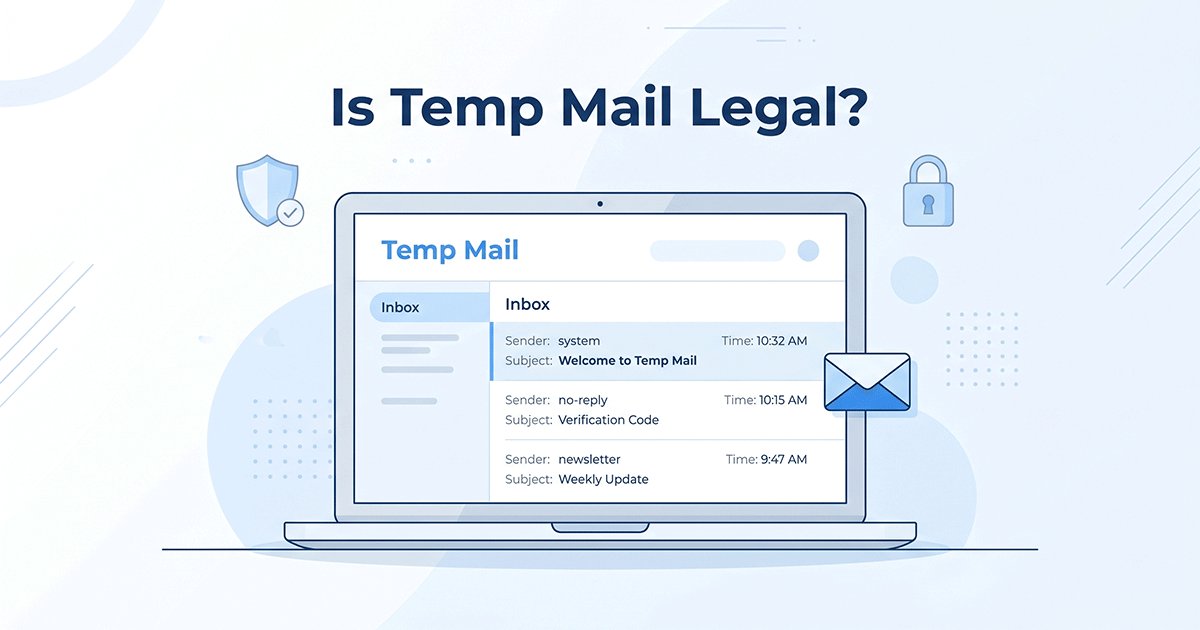
Adakah Temp Mail Sah di Sisi Undang-undang pada Tahun 2026?
Ya — penggunaan e-mel sementara adalah sah di kebanyakan negara, termasuk Amerika Syarikat, United Kingdom, dan Kesatuan Eropah, kerana tiada undang-undang yang melarang penggunaan alamat e-mel pakai buang atau tanpa nama.
- EU GDPR / rangka kerja perlindungan data
- Undang-undang jenayah siber AS/UK memfokuskan kepada tingkah laku, bukan alat
Ia biasanya digunakan sebagai alat privasi untuk mengurangkan spam dan mengehadkan pendedahan e-mel semasa pendaftaran dalam talian.
Walau bagaimanapun, kesahihannya bergantung kepada cara ia digunakan, terutamanya dalam kes yang melibatkan penyalahgunaan atau penipuan.
Ini menjadikan temp mail sebagai alat yang sah dengan sempadan yang bergantung kepada penggunaannya.
Artikel ini menjelaskan cara temp mail berfungsi dari segi undang-undang, di mana sempadannya, dan bila ia boleh membawa kepada sekatan atau akaun disekat.
Apakah Itu Temp Mail?
E-mel sementara (temp mail) ialah alamat e-mel pakai buang yang membolehkan anda menerima e-mel tanpa menggunakan peti masuk peribadi anda. Ia biasanya digunakan untuk situasi jangka pendek di mana pengguna tidak mahu mendedahkan alamat e-mel utama mereka.
Kes penggunaan biasa termasuk pendaftaran sekali sahaja, menerima kod pengesahan, dan mengelakkan spam daripada laman web atau perkhidmatan dalam talian.
Tidak seperti akaun e-mel kekal, temp mail direka untuk kegunaan sementara dan biasanya tamat tempoh selepas tempoh yang singkat, yang bermaksud sebarang mesej yang disimpan di dalamnya mungkin hilang selama-lamanya.
Secara ringkasnya, temp mail ialah alat komunikasi, bukan sistem identiti atau akaun jangka panjang.
Adakah Temp Mail Sah di Sisi Undang-undang pada Tahun 2026?
Ya — penggunaan e-mel sementara (temp mail) adalah sah di kebanyakan negara, termasuk Amerika Syarikat, United Kingdom, dan Kesatuan Eropah.
Ini kerana kebanyakan rangka kerja perundangan jenayah siber dan penipuan memfokuskan kepada tingkah laku dan niat pengguna dan bukannya alat komunikasi itu sendiri, yang bermaksud kesahihan ditentukan oleh cara sesuatu alat digunakan dan bukannya alat itu sendiri.
Dari segi undang-undang, temp mail dianggap sebagai kaedah komunikasi neutral. Ia hanya menjadi relevan apabila ia digunakan sebagai sebahagian daripada aktiviti yang menyalahi undang-undang.
Apakah yang menentukan kesahihan dalam amalan
Temp mail secara amnya dinilai di bawah tiga konteks undang-undang:
- Penggunaan sah: perlindungan privasi, mengelakkan spam, pendaftaran tanpa nama
- Penggunaan yang menyalahi: memintas sekatan, identiti palsu, percubaan penipuan berulang
- Penggunaan haram: pancingan data (phishing), kecurian identiti, penipuan, atau penipuan
Perbezaan utama bukanlah e-mel itu sendiri, tetapi tingkah laku yang dikaitkan dengannya.
Temp mail tidak dikawal selia sebagai perkhidmatan kendiri di kebanyakan bidang kuasa, tetapi ia dikawal secara tidak langsung melalui undang-undang jenayah siber dan penipuan am. Inilah sebabnya ia dianggap meluas sebagai sah, walaupun masih disekat atau dihalang dalam amalan oleh banyak platform berdasarkan polisi dan kawalan risiko mereka sendiri.
Model 3 Lapisan: Mengapa Temp Mail Boleh Menjadi Sah tetapi Masih Disekat
Sama ada e-mel sementara dibenarkan atau disekat bergantung kepada tiga sistem bebas yang tidak selalu selari: peraturan undang-undang, polisi platform, dan sistem penguatkuasaan automatik.
Memahami pemisahan ini adalah kunci untuk menyelesaikan kebanyakan kekeliruan mengenai temp mail.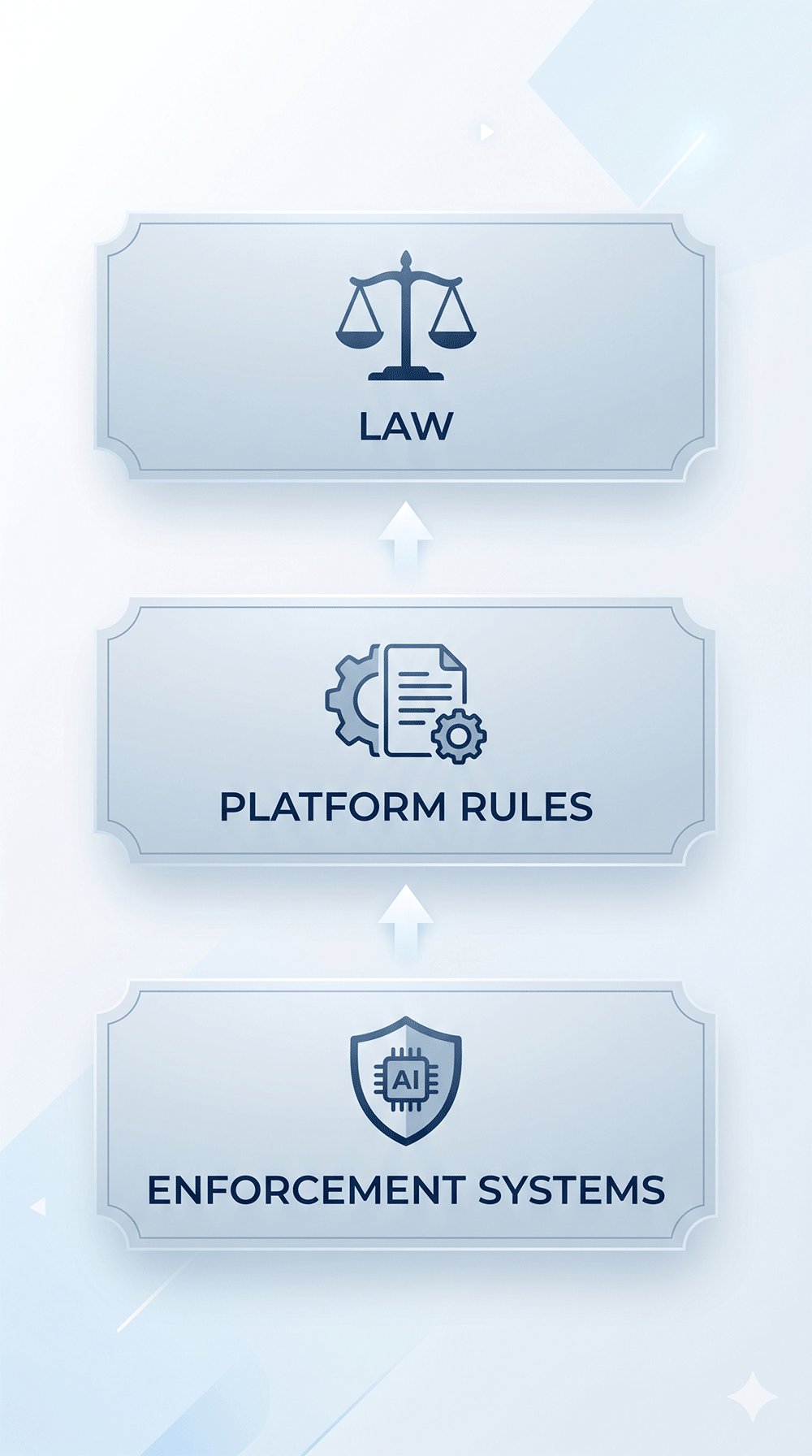
1. Undang-undang (Apa yang dibenarkan secara sah)
Pada peringkat undang-undang, penggunaan e-mel sementara secara amnya tidak dilarang di kebanyakan negara.
Undang-undang memfokuskan kepada tingkah laku, bukan alat.
Isu seperti penipuan, penyamaran, atau pancingan data mungkin menyalahi undang-undang, tetapi penggunaan temp mail itu sendiri biasanya neutral.
Dalam kebanyakan kes: temp mail adalah sah kecuali digunakan untuk aktiviti haram.
2. Syarat Perkhidmatan (Apa yang dibenarkan oleh platform)
Laman web boleh menetapkan peraturan mereka sendiri dalam sempadan undang-undang yang terpakai, walaupun peraturan tersebut melampaui apa yang diwajibkan oleh undang-undang.
Banyak platform menyekat:
- domain e-mel pakai buang
- identiti palsu atau tidak kekal
- penyalahgunaan percubaan percuma atau pendaftaran
Jadi, walaupun sesuatu itu sah, ia mungkin masih ditolak atau disekat oleh platform individu kerana polisi penggunaan mereka direka untuk mengawal penyalahgunaan, mengekalkan keselamatan, dan mengurus kepercayaan platform.
3. Sistem Penguatkuasaan (Apa yang sebenarnya berfungsi dalam amalan)
Dalam penggunaan dunia sebenar, keputusan mengenai e-mel sementara tidak berdasarkan kesahihan atau peraturan platform bertulis, tetapi pada sistem penilaian kepercayaan dan risiko automatik.
Sistem ini menilai sama ada e-mel harus diterima dengan menganalisis pelbagai isyarat, termasuk reputasi domain, sejarah penyalahgunaan, dan corak tingkah laku semasa pendaftaran.
Dalam amalan, ini bermakna platform tidak bertanya sama ada e-mel itu "dibenarkan" secara teori. Sebaliknya, mereka menilai satu hasil:
Sama ada pendaftaran kelihatan cukup dipercayai untuk diproses dan diaktifkan.
Akibatnya, walaupun temp mail tidak dilarang secara jelas, ia mungkin masih disekat, ditapis, atau ditolak secara senyap semasa pendaftaran atau pengesahan.
3.1 Infrastruktur Keselamatan Asas (Lapisan Pelaksanaan Industri)
Keputusan kepercayaan ini dikuasakan oleh sistem infrastruktur keselamatan internet dan e-mel yang digunakan secara meluas, yang beroperasi merentasi berjuta-juta laman web dan perkhidmatan.
Contoh utama termasuk:
- Spamhaus Domain Block List (DBL) — pangkalan data global yang digunakan untuk mengenal pasti dan menyekat domain e-mel pakai buang atau penyalahgunaan yang diketahui
- Google Postmaster Tools & sistem reputasi Gmail — digunakan untuk menilai kepercayaan domain berdasarkan tingkah laku e-mel dan isyarat penglibatan
- Cloudflare Bot Management — sistem keselamatan yang digunakan secara meluas yang mengesan pendaftaran automatik, corak penyalahgunaan, dan tingkah laku trafik yang mencurigakan
Sistem ini beroperasi pada lapisan infrastruktur internet yang berbeza, daripada penghantaran e-mel kepada keselamatan aplikasi web.
Ia tidak direka khusus untuk perkhidmatan e-mel sementara, tetapi untuk pencegahan penyalahgunaan am dan pemarkahan kepercayaan di seluruh web.
Wawasan Utama: Temp mail tidak dinilai sebagai satu kategori. Ia dinilai sebagai isyarat kepercayaan dalam sistem keselamatan global yang menentukan sama ada permintaan harus diterima, dicabar, atau disekat.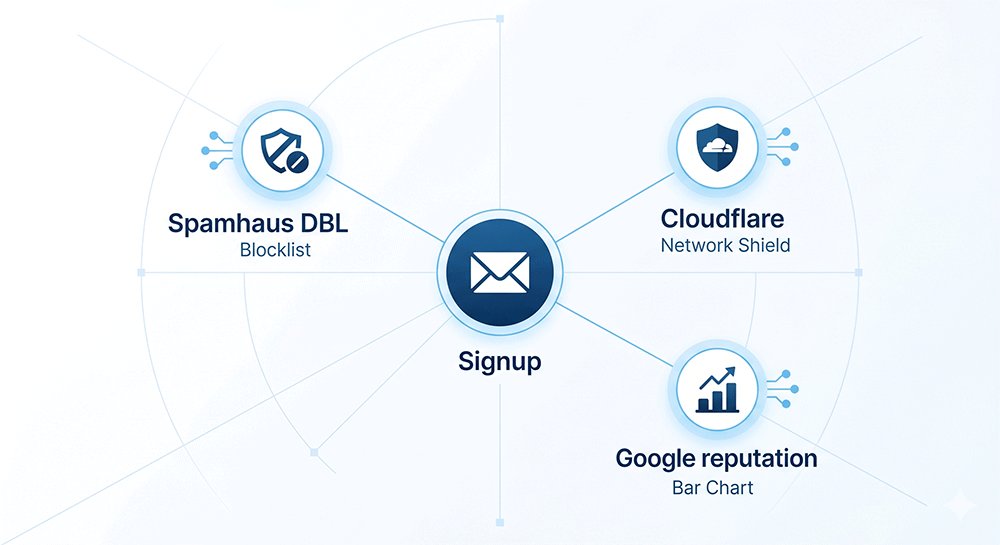
Mengapa Temp Mail Gagal dalam Amalan
Apabila temp mail tidak berfungsi, ia biasanya bukan isu penghantaran teknikal. Sebaliknya, kegagalan berlaku kerana kebanyakan laman web bergantung kepada sistem pencegahan penyalahgunaan dan kepercayaan e-mel untuk menapis domain pakai buang sebelum atau semasa penciptaan akaun.
Sistem ini digunakan secara meluas di seluruh internet, termasuk penyedia infrastruktur dan rangkaian anti-penyalahgunaan seperti Spamhaus DBL dan sistem keselamatan Cloudflare.
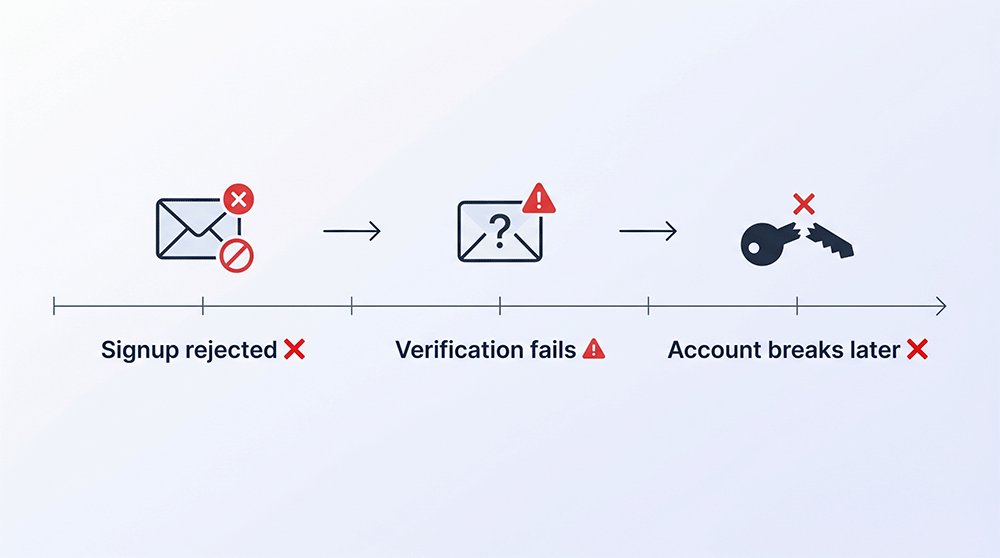
Dalam amalan, kegagalan temp mail biasanya berlaku pada tiga peringkat:
1. E-mel ditolak semasa pendaftaran
Banyak laman web menggunakan sistem penapisan domain dan senarai sekat e-mel pakai buang, termasuk pangkalan data seperti Spamhaus DBL (Domain Block List), untuk menghalang penyedia e-mel sementara yang diketahui daripada digunakan semasa pendaftaran.
Apabila domain ditandakan:
- e-mel ditolak sebelum penciptaan akaun
- permintaan pendaftaran mungkin tidak pernah sampai ke bahagian belakang aplikasi
- sistem mungkin menyekat permintaan secara senyap tanpa penjelasan
Dalam amalan, pendaftaran dihentikan sebelum akaun boleh wujud.
2. Akaun dicipta, tetapi pengesahan gagal
Sesetengah platform membenarkan pendaftaran tetapi bergantung kepada sistem penapisan kepercayaan dan penghantaran e-mel untuk memutuskan sama ada e-mel pengesahan harus dihantar.
Dalam peringkat ini, sistem seperti:
- Sistem penapisan spam dan pemarkahan reputasi
- Lapisan pengesanan bot dan penyalahgunaan Cloudflare (digunakan di pinggir aplikasi)
- enjin anti-penipuan dalaman yang disepadukan dengan penyedia e-mel
mungkin menyekat atau melambatkan e-mel pengesahan yang dihantar ke domain pakai buang.
Akibatnya, akaun wujud tetapi tidak boleh diaktifkan.
3. Akaun berfungsi pada mulanya, tetapi rosak kemudian
Walaupun temp mail melepasi pemeriksaan awal, platform sering terus memantau tingkah laku akaun menggunakan sistem keselamatan berasaskan risiko seperti lapisan pengesanan penyalahgunaan yang dilindungi Cloudflare atau alat pemantauan penipuan dalaman.
Sistem ini mungkin mencetuskan:
- sekatan tetapan semula kata laluan
- kegagalan pemulihan log masuk
- permintaan pengesahan semula paksa
Apabila e-mel tamat tempoh, aliran pemulihan ini menjadi tidak boleh digunakan.
Kegagalan temp mail bukanlah rawak atau disebabkan oleh isu penghantaran e-mel. Ia adalah hasil daripada sistem kepercayaan dan pencegahan penyalahgunaan berlapis yang digunakan merentasi infrastruktur web moden.
Sistem ini biasanya termasuk:
- Spamhaus DBL → mengenal pasti domain pakai buang dan penyalahgunaan
- Sistem keselamatan Cloudflare → mengesan tingkah laku pendaftaran seperti bot atau tidak normal
- Rangka kerja reputasi e-mel → menilai kebolehpercayaan domain sebelum penghantaran
Dalam amalan, sistem ini tidak menilai kesahihan atau niat.
Mereka hanya menilai satu soalan:
"Adakah e-mel ini cukup dipercayai untuk membenarkan penciptaan dan pemulihan akaun?"
Bolehkah Laman Web Mengesan atau Menyekat Temp Mail?
Ya — banyak laman web boleh mengesan dan menyekat perkhidmatan e-mel sementara (temp mail), dan ini adalah salah satu sebab paling biasa pengguna mengalami kegagalan pendaftaran atau pengesahan.
Kebanyakan platform tidak menyekat temp mail secara rawak. Sebaliknya, mereka menggunakan sistem pengesanan automatik untuk mengenal pasti domain e-mel pakai buang dan menghalangnya daripada digunakan semasa pendaftaran.
1. Pengesanan Senarai Hitam Domain (Kaedah Paling Biasa)
Kaedah paling biasa yang digunakan oleh laman web ialah penyekatan berasaskan domain.
Platform mengekalkan atau menyepadukan dengan pangkalan data e-mel pakai buang (sering dipanggil DEA atau senarai sekat) yang mengandungi domain temp mail yang diketahui.
Jika domain e-mel anda muncul dalam senarai ini, sistem mungkin:
- menolak e-mel serta-merta semasa pendaftaran
- menghalang penciptaan akaun
- mencetuskan tambahanlangkah pengesahan
Secara ringkasnya:
Jika domain tersebut dikenali sebagai "sementara", ia sering disekat secara automatik.
2. Pemarkahan Reputasi Domain
Selain senarai sekat statik, banyak platform menggunakan sistem reputasi domain.
Sistem ini menilai sejauh mana "boleh dipercayai" sesuatu domain berdasarkan:
- aktiviti spam atau penyalahgunaan sejarah
- kekerapan pendaftaran sementara
- corak akaun yang berumur pendek
Domain dengan skor reputasi rendah lebih cenderung untuk:
- gagal dalam pengesahan e-mel
- ditandakan sebagai mencurigakan
- mencetuskan CAPTCHA atau semakan manual
Ini bermakna walaupun alamat e-mel sementara yang sah mungkin masih ditolak.
3. Isyarat Tingkah Laku & Teknikal
Sesetengah platform juga menganalisis tingkah laku pengguna semasa mendaftar.
Isyarat pengesanan mungkin termasuk:
- pendaftaran berulang daripada peranti atau IP yang sama
- penyelesaian borang yang luar biasa pantas
- penggunaan alat automasi atau skrip
- tingkah laku melayari yang tidak konsisten
Apabila digabungkan dengan domain e-mel pakai buang, isyarat ini meningkatkan kemungkinan untuk disekat.
Ringkasan
Laman web boleh mengesan atau menyekat e-mel sementara menggunakan pelbagai lapisan perlindungan:
| Kaedah | Apa yang ia lakukan |
|---|---|
| Senarai sekat domain | Menolak serta-merta domain e-mel sementara yang diketahui |
| Pemarkahan reputasi | Mengenakan penalti kepada domain e-mel yang kurang dipercayai |
| Isyarat tingkah laku | Mengesan corak pendaftaran yang mencurigakan |
Inilah sebabnya e-mel sementara mungkin berfungsi pada satu tapak tetapi gagal pada tapak yang lain — pengesanan tidak bersifat universal.
Risiko Menggunakan E-mel Sementara
E-mel sementara tidak semestinya tidak selamat, tetapi ia boleh mewujudkan batasan yang serius apabila digunakan untuk akaun yang memerlukan akses jangka panjang atau kepercayaan.
Kebanyakan risiko bukanlah ancaman keselamatan serta-merta, tetapi akibat praktikal yang muncul dari masa ke masa.
1. Kehilangan pemulihan akaun
Risiko yang paling penting ialah kehilangan akses kepada akaun secara kekal.
Oleh kerana peti masuk sementara akan tamat tempoh, sebarang akaun yang dipautkan kepadanya mungkin menjadi mustahil untuk dipulihkan.
Ini boleh menyebabkan:
- kehilangan akses tetapan semula kata laluan
- akaun terkunci secara kekal
- ketidakupayaan untuk mengesahkan identiti kemudian hari
Ini adalah batasan jangka panjang yang paling kritikal bagi e-mel sementara.
2. Risiko pendedahan peti masuk dan mesej
Sesetengah perkhidmatan e-mel sementara menggunakan sistem peti masuk yang dikongsi atau boleh diakses secara umum.
Dalam kes sedemikian, mesej masuk mungkin boleh dilihat oleh orang lain, termasuk:
- kod pengesahan
- pautan log masuk
- e-mel tetapan semula kata laluan
Walaupun dalam sistem peribadi, e-mel sementara tidak direka untuk kerahsiaan jangka panjang.
Risiko adalah terhad dari segi masa, tetapi tinggi semasa penggunaan aktif.
3. Batasan kepercayaan platform
Banyak platform menganggap e-mel pakai buang sebagai isyarat kurang dipercayai.
Ini boleh mengakibatkan:
- pendaftaran gagal
- pengesahan CAPTCHA berulang
- pengurangan kepercayaan akaun atau sekatan
Ini adalah batasan peringkat sistem, bukan isu undang-undang.
Risiko sebenar bukanlah menggunakan e-mel sementara itu sendiri, tetapi bergantung kepadanya untuk akaun yang penting dalam jangka masa panjang.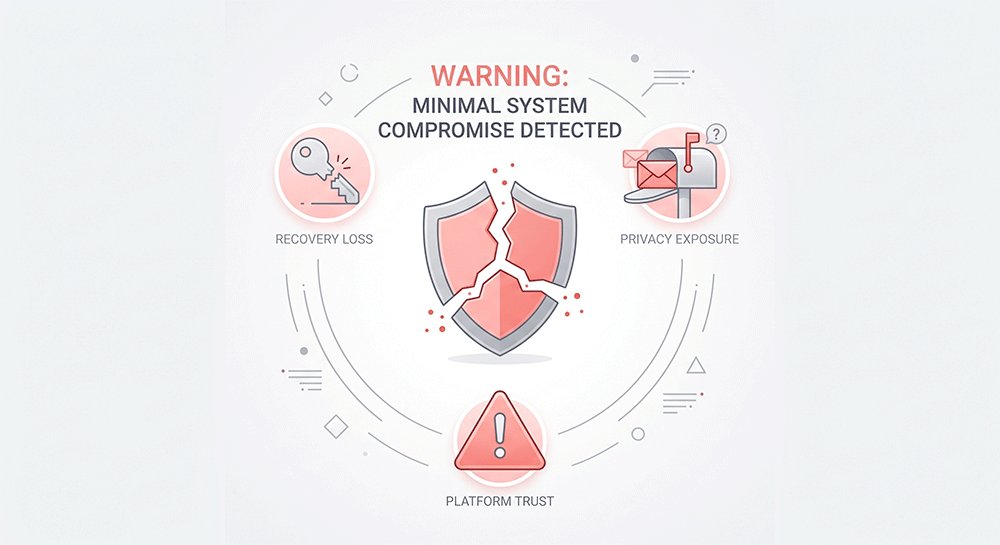
Bilakah Selamat Menggunakan E-mel Sementara?
E-mel sementara (temp mail) adalah selamat dalam situasi berisiko rendah yang khusus, tetapi ia tidak sepatutnya digunakan untuk akaun yang memerlukan akses atau pemulihan jangka panjang.
Faktor utamanya mudah: sama ada akaun itu penting selepas penggunaan awal.
Kes Penggunaan Selamat (Situasi Berisiko Rendah)
E-mel sementara secara amnya selamat apabila ia digunakan untuk aktiviti jangka pendek atau pakai buang di mana akses masa depan tidak diperlukan.
Contoh biasa termasuk:
- muat turun sekali sahaja (PDF, panduan, sumber)
- kod promosi atau tawaran terhad masa
- menguji aplikasi, alatan, atau perkhidmatan dalam talian
- mengakses kandungan tanpa pergantungan akaun
Idea utama:
Jika tiada apa-apa yang hilang selepas sesi berakhir, e-mel sementara adalah sesuai.
Kes Penggunaan Tidak Selamat (Situasi Berisiko Tinggi)
E-mel sementara harus dielakkan apabila akaun tersebut terikat dengan identiti, wang, atau penggunaan jangka panjang.
JANGAN gunakannya untuk:
- perbankan atau perkhidmatan kewangan
- dompet atau bursa mata wang kripto
- akaun kerja atau perniagaan
- akaun e-dagang atau langganan
- sebarang perkhidmatan yang memerlukan pemulihan kata laluan atau pengesahan identiti
Idea utama:
Jika pemulihan penting kemudian hari, e-mel sementara menjadi liabiliti.
Peraturan Keputusan (Semakan Pantas)
Jika anda tidak pasti, gunakan peraturan mudah ini:
Adakah saya akan memerlukan akaun ini lagi pada masa hadapan?
Ya → JANGAN gunakan e-mel sementara
Tidak → e-mel sementara selamat untuk digunakan
Ini adalah jalan pintas keputusan yang paling boleh dipercayai.
Jika anda masih mahukan kemudahan e-mel sementara tetapi dengan kestabilan yang lebih baik dan pengekalan yang lebih lama, anda juga boleh mempertimbangkan untuk menggunakan perkhidmatan e-mel sementara yang lebih berterusan seperti TempEmail.cc, yang direka untuk akses yang lebih lama dan mengurangkan risiko kehilangan mesej penting.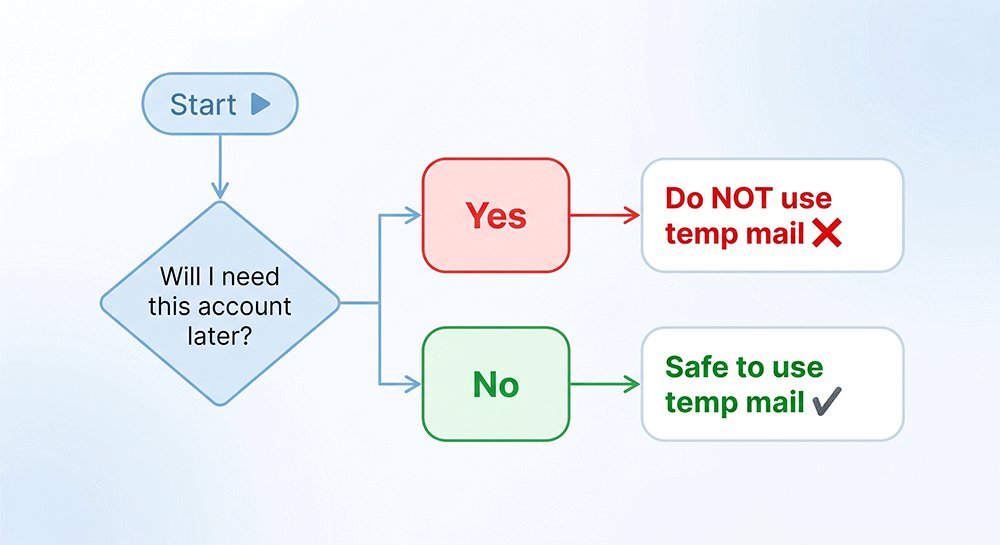
Ringkasan
Keselamatan e-mel sementara bergantung sepenuhnya pada cara ia digunakan.
Ia secara amnya selamat untuk aktiviti jangka pendek dan berisiko rendah di mana pemulihan akaun tidak diperlukan, seperti pendaftaran sekali sahaja atau perkhidmatan ujian.
Walau bagaimanapun, ia tidak sepatutnya digunakan untuk sebarang akaun yang terikat dengan identiti, wang, atau akses jangka panjang, kerana alamat e-mel sementara boleh tamat tempoh dan menjadikan pemulihan mustahil.
Dalam praktiknya, e-mel sementara harus dianggap sebagai alat akses sementara dan bukannya sistem identiti kekal.
Amalan Terbaik untuk Menggunakan E-mel Sementara dengan Selamat
E-mel sementara (temp mail) adalah selamat apabila digunakan dengan betul, tetapi kebanyakan masalah berlaku disebabkan oleh penyalahgunaan atau jangkaan yang tidak realistik. Mengikuti beberapa amalan terbaik yang mudah boleh membantu anda mengurangkan risiko dan mengelakkan isu biasa seperti kehilangan akaun atau kegagalan pengesahan.
1. Gunakan E-mel Sementara Hanya untuk Aktiviti Berisiko Rendah
Peraturan yang paling penting ialah hanya menggunakan e-mel sementara untuk situasi di mana kehilangan akses tidak akan menjadi masalah.
Kes penggunaan yang baik termasuk:
- muat turun atau pendaftaran sekali sahaja
- menguji laman web atau aplikasi
- menerima kod pengesahan untuk akses sementara
- mengelakkan spam pemasaran daripada laman web yang tidak dikenali
Jika akaun itu tidak penting untuk jangka masa panjang, e-mel sementara adalah sesuai.
2. Elakkan Menggunakannya untuk Akaun Kritikal
Jangan gunakan e-mel sementara untuk akaun yang memerlukan pemulihan atau akses jangka panjang.
Ini termasuk:
- platform perbankan dan kewangan
- bursa atau dompet kripto
- akaun berkaitan kerja atau perniagaan
- akaun e-dagang yang anda rancang untuk gunakan semula
- sebarang perkhidmatan yang terikat dengan pengesahan identiti
Sebaik sahaja peti masuk tamat tempoh, pemulihan menjadi mustahil.
3. Fahami Batasan Pengesanan Platform
Banyak laman web secara aktif mengesan domain e-mel pakai buang dan mungkin menyekat atau mengehadkannya. Walaupun e-mel sementara berfungsi sekali, ia mungkin tidak berfungsi secara konsisten merentas semua platform.
Untuk mengurangkan isu:
- elakkan pendaftaran yang pantas atau berulang
- jangan buat berbilang akaun dalam masa yang singkat
- jangkakan sesetengah platform akan menolak domain pakai buang sepenuhnya
Ini adalah tingkah laku platform yang normal, bukan ralat teknikal.
4. Anggap Setiap E-mel Sementara sebagai Pakai Buang
Salah satu anjakan minda yang paling penting ialah menganggap e-mel sementara sebagai tidak boleh dipulihkan secara reka bentuk.
Ini bermakna:
- jangan simpan data penting dalam akaun yang dibuat dengan e-mel sementara
- jangan bergantung kepadanya untuk pemulihan kata laluan
- anggap peti masuk akhirnya akan tamat tempoh atau hilang
Jika anda menganggapnya sebagai sementara dari awal, kebanyakan risiko dapat dielakkan.
Ringkasan
Penggunaan e-mel sementara yang selamat adalah kurang tentang pengetahuan teknikal dan lebih kepada mengamalkan tingkah laku penggunaan yang betul. Dalam praktiknya, ia berfungsi paling baik apabila ia dianggap secara tegas sebagai alat jangka pendek untuk tugas berisiko rendah, sambil mengelakkan sebarang perkhidmatan kritikal yang memerlukan pemulihan atau akses jangka panjang.
Adalah penting juga untuk memahami bahawa banyak batasan datang daripada sistem pengesanan peringkat platform, yang boleh menyekat atau mengehadkan e-mel pakai buang tanpa mengira cara ia digunakan. Atas sebab ini, pengguna harus sentiasa menganggap bahawa e-mel sementara adalah sementara secara reka bentuk dan mungkin tidak boleh dipercayai untuk akses masa depan.
Akhirnya, pendekatan yang paling selamat adalah mudah: gunakan e-mel sementara untuk kemudahan, bukan komitmen.
Soalan Lazim: Adakah E-mel Sementara Sah dan Selamat pada 2026?
Bahagian ini menjawab soalan praktikal yang paling biasa tentang menggunakan perkhidmatan e-mel sementara.
Apakah yang berlaku jika saya menggunakan e-mel sementara pada laman web penting?
Menggunakan e-mel sementara pada laman web penting sering membawa kepada masalah akses jangka panjang. Banyak platform memerlukan pengesahan e-mel untuk pemulihan kata laluan, makluman keselamatan, atau semakan identiti. Jika peti masuk sementara tamat tempoh, anda mungkin kehilangan akses kepada akaun secara kekal. Walaupun akaun berfungsi pada mulanya, permintaan log masuk atau pemulihan pada masa hadapan boleh gagal. Atas sebab ini, e-mel sementara hanya perlu digunakan untuk perkhidmatan berisiko rendah dan tidak penting di mana pemulihan akaun tidak diperlukan.
Mengapa sesetengah laman web menolak e-mel sementara sepenuhnya?
Banyak laman web secara aktif menyekat domain e-mel sementara menggunakan senarai sekat e-mel pakai buang dan sistem reputasi. Sistem ini menandakan domain yang biasanya dikaitkan dengan spam, penyalahgunaan, atau akaun yang berumur pendek. Akibatnya, borang pendaftaran mungkin menolak e-mel serta-merta sebelum akaun dibuat. Dalam sistem yang lebih ketat, domain e-mel sementara yang lebih baharu pun disekat berdasarkan corak tingkah laku, menjadikannya sukar untuk mendaftar tanpa mengira perkhidmatan khusus yang digunakan.
Bolehkah saya memulihkan akaun yang dibuat dengan e-mel sementara?
Dalam kebanyakan kes, tidak. Akaun yang dibuat dengan e-mel sementara sangat sukar untuk dipulihkan sebaik sahaja peti masuk e-mel tamat tempoh. Memandangkan tetapan semula kata laluan dan pautan pengesahan dihantar ke alamat e-mel asal, kehilangan akses kepada peti masuk itu bermakna kehilangan laluan pemulihan. Sesetengah platform mungkin menawarkan kaedah pemulihan alternatif, tetapi kebanyakan sangat bergantung pada pengesahan e-mel, menjadikan pemulihan kekal tidak mungkin berlaku.
Adakah e-mel sementara selamat untuk menerima kod pengesahan?
E-mel sementara boleh menjadi selamat untuk menerima kod pengesahan dalam situasi berisiko rendah, seperti perkhidmatan ujian atau pendaftaran sementara. Walau bagaimanapun, ia tidak disyorkan untuk akaun yang melibatkan data sensitif atau penggunaan jangka panjang. Sesetengah perkhidmatan e-mel sementarases menggunakan peti masuk kongsi, yang mungkin mendedahkan kod pengesahan kepada orang lain. Malah dalam sistem peribadi, masa tamat tempoh boleh menyebabkan kod menjadi tidak boleh diakses sebelum digunakan.
Mengapa e-mel pengesahan tidak dihantar ke e-mel sementara?
Ini biasanya berlaku disebabkan oleh penapisan di pihak platform dan bukannya kegagalan penghantaran. Banyak laman web menyekat domain pakai buang sebelum menghantar e-mel, yang bermaksud mesej tersebut sebenarnya tidak pernah dihantar. Dalam kes lain, peti masuk mungkin tamat tempoh dengan cepat, atau perkhidmatan tersebut mungkin menapis penyedia sementara yang dikenali. Ia bukanlah isu penghantaran e-mel, tetapi gabungan peraturan sekatan dan jangka hayat peti masuk yang terhad.
Adakah penggunaan e-mel sementara menjejaskan reputasi akaun saya?
Ya, secara tidak langsung. Banyak platform menggunakan sistem pemarkahan risiko yang menilai kualiti domain e-mel, tingkah laku pendaftaran dan isyarat peranti. Jika e-mel pakai buang dikesan, akaun tersebut mungkin diberikan skor kepercayaan yang lebih rendah. Ini boleh membawa kepada pemeriksaan CAPTCHA tambahan, ciri terhad atau keperluan pengesahan yang lebih ketat. Ia tidak menjejaskan status undang-undang anda, tetapi ia boleh memberi kesan kepada pengalaman dan kebolehgunaan platform.
Apakah cara paling selamat untuk menggunakan e-mel sementara dalam kehidupan seharian?
Cara paling selamat untuk menggunakan e-mel sementara adalah dengan menganggapnya sebagai alat jangka pendek semata-mata. Ia hanya perlu digunakan untuk situasi yang tidak mempunyai kesan jika anda kehilangan akses, seperti muat turun, alat ujian atau pendaftaran sementara. Ia tidak boleh digunakan untuk akaun kewangan, sistem kerja atau mana-mana perkhidmatan yang memerlukan pemulihan. Prinsip utamanya mudah: jika anda mungkin memerlukan akaun tersebut pada masa hadapan, jangan gunakan e-mel sementara.
Bolehkah e-mel sementara digunakan untuk percubaan percuma dengan selamat?
Secara teknikalnya ia boleh digunakan untuk percubaan percuma, tetapi banyak platform melarangnya secara jelas dalam syarat perkhidmatan mereka. Sesetengah perkhidmatan mengesan domain pakai buang dan menyekat pendaftaran serta-merta, manakala yang lain mungkin membenarkan akses tetapi kemudian menggantung akaun jika penyalahgunaan dikesan. Walaupun ia berfungsi pada mulanya, anda mungkin kehilangan akses kepada faedah percubaan atau akaun yang berkaitan. Adalah lebih baik jika ia hanya digunakan di tempat yang syarat percubaan tidak menyekat jenis e-mel.
Mengapa e-mel sementara berfungsi di sesetengah laman web tetapi tidak di laman web lain?
Banyak laman web menggunakan tahap sistem penapisan e-mel yang berbeza. Sesetengah hanya bergantung pada senarai sekatan domain asas seperti Spamhaus DBL, manakala yang lain menggunakan sistem reputasi dan tingkah laku lanjutan seperti Cloudflare atau enjin pengesanan penipuan dalaman. Ini bermakna e-mel sementara mungkin berfungsi pada platform keselamatan rendah tetapi gagal pada perkhidmatan dengan keperluan kepercayaan yang lebih ketat.
Adakah semua perkhidmatan e-mel sementara dilayan dengan cara yang sama?
Tidak. Penyedia e-mel sementara yang berbeza menggunakan domain, infrastruktur dan sejarah reputasi yang berbeza. Sesetengah domain diiktiraf secara meluas dan ditapis dengan ketat, manakala yang lain mempunyai kadar pengesanan yang lebih rendah. Walau bagaimanapun, kebanyakan platform utama sentiasa mengemas kini senarai sekatan mereka, jadi kejayaan tidak pernah dijamin.
Kesimpulan: Adakah E-mel Sementara Berbaloi Digunakan pada 2026?
Pada tahun 2026, e-mel sementara kekal sebagai alat yang sah dan praktikal untuk mengurangkan pendedahan dalam talian dan mengurus privasi digital.
Apabila digunakan dengan betul, ia membantu pengguna mengehadkan perkongsian data yang tidak perlu, mengelakkan spam dan berinteraksi dengan laman web tanpa mendedahkan alamat e-mel utama mereka.
Walau bagaimanapun, nilainya bergantung sepenuhnya pada konteks. Untuk aktiviti jangka pendek seperti menguji perkhidmatan, memuat turun sumber atau mengakses kandungan terhad, e-mel sementara boleh menjadi sangat berkesan. Untuk akaun jangka panjang atau perkhidmatan yang memerlukan pemulihan dan pengesahan, ia boleh mewujudkan batasan yang ketara.
Akhirnya, e-mel sementara bukanlah persoalan undang-undang tetapi keputusan pengurusan kepercayaan dan risiko yang ditentukan oleh betapa kritikalnya akaun tersebut.
Memilih Pendekatan E-mel Sementara yang Tepat
Tidak semua perkhidmatan e-mel sementara beroperasi dengan cara yang sama. Perbezaan dalam infrastruktur, reputasi domain dan privasi peti masuk boleh memberi kesan ketara kepada kebolehpercayaan dan kebolehgunaan.
Sesetengah perkhidmatan bergantung pada domain yang digunakan semula secara meluas, yang mungkin lebih cenderung untuk disekat oleh laman web. Yang lain memberi tumpuan untuk mengekalkan infrastruktur domain yang lebih bersih dan persekitaran penggunaan yang lebih terkawal, yang boleh meningkatkan kebolehpenghantaran dan mengurangkan kesukaran pendaftaran.
Memahami perbezaan ini boleh membantu pengguna memilih penyelesaian yang lebih sesuai dengan keperluan privasi mereka tanpa gangguan yang tidak perlu.