
“Temp Mail for Twitter (X)” खोजने वाले अधिकांश उपयोगकर्ता यह नहीं जानना चाहते कि अस्थायी ईमेल क्या है — वे एक बहुत ही विशिष्ट समस्या को हल करने की कोशिश कर रहे हैं: अपने वास्तविक ईमेल पते का उपयोग किए बिना जल्दी से Twitter/X खाता कैसे बनाया जाए।
पहली नज़र में, temp mail service का उपयोग करना सबसे आसान समाधान लगता है। यह तेज़ है, गुमनाम है, और इसमें किसी व्यक्तिगत जानकारी की आवश्यकता नहीं होती है। हालाँकि, कई उपयोगकर्ता जल्दी ही अप्रत्याशित समस्याओं का सामना करते हैं जैसे कि सत्यापन ईमेल का न आना, साइनअप त्रुटियां, या पंजीकरण के तुरंत बाद खाता निलंबित (suspend) हो जाना।
यह कोई यादृच्छिक व्यवहार नहीं है। Twitter (अब X) ने डिस्पोजेबल ईमेल प्रदाताओं के खिलाफ अपनी पहचान प्रणालियों को काफी मजबूत कर लिया है। नतीजतन, सभी temp mail सेवाएं एक ही तरह से काम नहीं करती हैं — और कुछ को सत्यापन प्रक्रिया के दौरान पूरी तरह से ब्लॉक कर दिया जाता है।
वास्तविक दुनिया के साइनअप परिदृश्यों में, यह व्यापक रूप से समझा जाता है कि X (Twitter) जैसे प्लेटफॉर्म बहु-स्तरीय दुरुपयोग-विरोधी प्रणालियों पर निर्भर करते हैं जो ईमेल डोमेन प्रतिष्ठा, व्यवहारिक स्थिरता और प्रारंभिक चरण की साइनअप गतिविधि जैसे जोखिम संकेतों का मूल्यांकन करते हैं। यह बड़े पैमाने पर ऑनलाइन प्लेटफॉर्म पर उपयोग किए जाने वाले आधुनिक धोखाधड़ी का पता लगाने और बॉट शमन (bot mitigation) दृष्टिकोणों के अनुरूप है।
इस गाइड में, हम निम्नलिखित बिंदुओं पर चर्चा करेंगे:
- Twitter/X अधिकांश अस्थायी ईमेल सेवाओं को क्यों अस्वीकार करता है
- किस प्रकार के temp mail के काम करने की अभी भी संभावना है
- सत्यापन विफल होने या खातों के फ्लैग होने के सामान्य कारण
- यदि आप अधिक स्थिर सेटअप चाहते हैं तो सुरक्षित विकल्प
यदि आपने पहले ही साइन अप करने का प्रयास किया है और सत्यापन विफलताओं या खाता प्रतिबंधों का अनुभव किया है, तो अंतर्निहित कारण अक्सर उन सामान्य गाइडों की तुलना में अधिक जटिल होते हैं जो आमतौर पर समझाए जाते हैं।

Twitter/X साइनअप के लिए Temp Mail क्यों विफल होता है
नए खातों और अस्थायी ईमेल प्रदाताओं पर हमारे द्वारा किए गए अधिकांश परीक्षणों में वास्तविक दुनिया के Twitter/X साइनअप परिदृश्यों में, Gmail या Outlook जैसी स्थापित ईमेल सेवाओं की तुलना में temp mail खातों की विश्वसनीयता कम होती है।
ऐसा इसलिए नहीं है कि अस्थायी ईमेल पते अमान्य हैं, बल्कि इसलिए है क्योंकि Twitter/X ईमेल को एक सरल संचार चैनल के रूप में मानने के बजाय एक व्यापक खाता विश्वास प्रणाली के भीतर जोखिम संकेत के रूप में मूल्यांकन करता है।
कई डिस्पोजेबल ईमेल डोमेन पर बार-बार किए गए अवलोकनों के आधार पर, कई मुख्य तंत्र यह प्रभावित करते हैं कि साइनअप प्रयास सफल होता है या विफल।
1. डोमेन प्रतिष्ठा प्रणाली
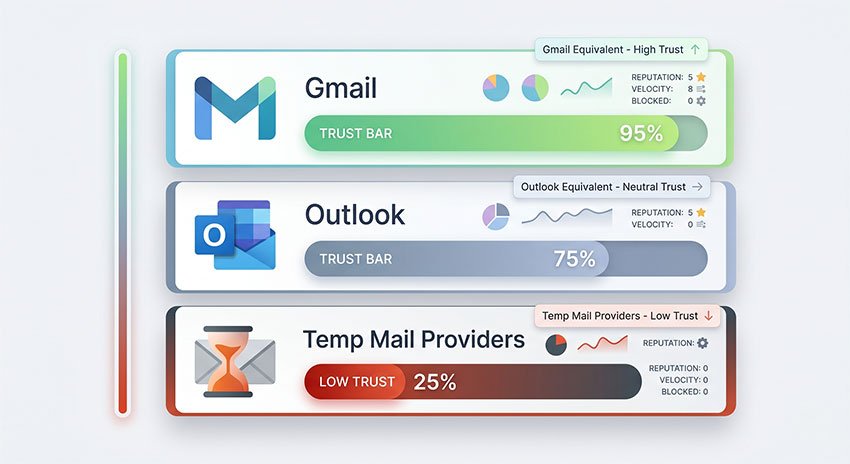
Twitter/X एक बहु-स्तरीय पहचान प्रणाली की तरह व्यवहार करता है जो साइनअप प्रयासों में देखे गए व्यवहार पैटर्न के आधार पर संकेतों का मूल्यांकन करती है। विभिन्न वातावरणों में हमारे परीक्षण में, यह एक डोमेन-स्तरीय विश्वास मूल्यांकन प्रणाली की तरह व्यवहार करता है, जहाँ प्रत्येक ईमेल प्रदाता को एक आंतरिक प्रतिष्ठा स्कोर सौंपा जाता है।
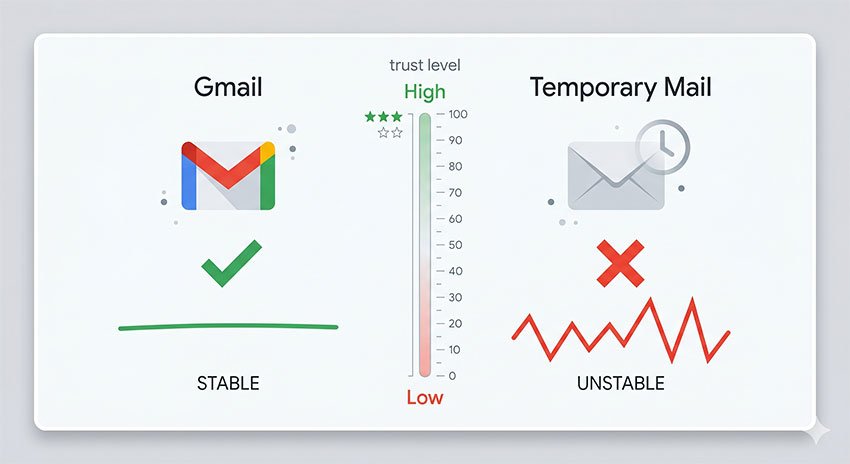
Twitter/X के लिए temp mail साइनअप परीक्षणों में हमारे अवलोकनों के आधार पर, Gmail जैसे सुस्थापित प्रदाता न्यूनतम घर्षण के साथ सत्यापन पास कर लेते हैं, जबकि अधिकांश अस्थायी ईमेल सेवाएं अस्थिर या कम डोमेन प्रतिष्ठा के कारण कम सफलता दर दिखाती हैं।
यह प्रणाली स्थिर नहीं है। हमारे परीक्षण में, डिस्पोजेबल ईमेल डोमेन समय के साथ विश्वसनीयता खो देते हैं, विशेष रूप से स्वचालित या अपमानजनक साइनअप व्यवहार के साथ बार-बार जुड़ने के बाद।
नतीजतन, भले ही कुछ मामलों में Twitter/X पंजीकरण के लिए temp mail काम करता है, इसकी सफलता दर असंगत है और अक्सर डोमेन के व्यापक रूप से पहचाने जाने या फ्लैग होने के बाद गिर जाती है।
Gmail की तुलना में, अस्थायी ईमेल डोमेन वास्तविक दुनिया के Twitter/X साइनअप सफलता में काफी कम स्थिरता दिखाते हैं।
2. डिस्पोजेबल ईमेल का पता लगाना
कई देखे गए साइनअप मामलों से, Twitter/X एक सरल ब्लैकलिस्ट दृष्टिकोण पर निर्भर नहीं दिखता है। इसके बजाय, विभिन्न Twitter/X के लिए temp mail प्रदाताओं पर हमारे परीक्षण में, यह एक पैटर्न-आधारित पहचान प्रणाली की तरह व्यवहार करता है जो व्यवहारिक संकेतों के माध्यम से डिस्पोजेबल ईमेल सेवाओं की पहचान करती है।
ये पैटर्न हमेशा स्पष्ट रूप से परिभाषित नहीं होते हैं, लेकिन व्यवहार में वे अक्सर इनसे संबंधित होते हैं:
- अल्पकालिक या क्षणिक इनबॉक्स संरचनाएं
- सार्वजनिक या आसानी से सुलभ ईमेल एंडपॉइंट्स
- स्वचालित या उच्च-मात्रा वाले साइनअप व्यवहार के साथ बार-बार जुड़ाव
जब कोई ईमेल डोमेन इन पैटर्नों में से कई से मेल खाता है, तो इसे डिस्पोजेबल ईमेल प्रदाता के रूप में माने जाने की अधिक संभावना होती है, जो यह प्रभावित कर सकता है कि सत्यापन ईमेल सफलतापूर्वक वितरित किए जाते हैं या फ़िल्टर किए जाते हैं।
वास्तविक दुनिया के Twitter/X पंजीकरण के लिए temp mail प्रयासों में, इसे अक्सर तत्काल साइनअप विफलता या गायब OTP डिलीवरी के रूप में अनुभव किया जाता है, भले ही ईमेल पता स्वयं मान्य दिखाई दे।
3. दुरुपयोग रोकथाम फ़िल्टरिंग
Twitter/X बहु-संकेत दुरुपयोग रोकथाम फ़िल्टरिंग भी लागू करता है, जहाँ ईमेल व्यापक मूल्यांकन प्रक्रिया का केवल एक हिस्सा है।
विभिन्न Twitter/X के लिए temp mail साइनअप परिदृश्यों में हमारे परीक्षण में, हमने देखा कि खाते की सफलता कई जोखिम संकेतों के संयोजन से प्रभावित होती है, जिनमें शामिल हैं:
- ईमेल डोमेन विश्वास स्तर
- IP प्रतिष्ठा और भौगोलिक स्थिरता
- डिवाइस और ब्राउज़र फ़िंगरप्रिंट संकेत
- साइनअप गति और इंटरैक्शन पैटर्न
जब कई कम-विश्वास वाले संकेत एक साथ दिखाई देते हैं — उदाहरण के लिए, डिस्पोजेबल ईमेल के साथ पहले से फ्लैग किया गया IP पता या स्वचालित साइनअप गतिविधि जैसा व्यवहार — तो सिस्टम के खाते को ब्लॉक या निलंबित करने की संभावना अधिक होती है।
हमारे एक परीक्षण मामले में, temp mail का उपयोग करके पहले कुछ पंजीकरण सामान्य रूप से सफल रहे। हालाँकि, एक ही नेटवर्क वातावरण से बार-बार प्रयास करने के बाद, हमने व्यवहार में बदलाव देखा: एक बार जब एक IP पता पहले से प्रतिबंधित या संदिग्ध खाते से जुड़ गया, तो उसी वातावरण से बाद के Twitter/X पंजीकरण के लिए temp mail को उच्च जोखिम वाला माना गया, भले ही अलग-अलग ईमेल पतों का उपयोग किया गया हो।
यह बताता है कि Twitter/X न केवल नए साइनअप प्रयासों का व्यक्तिगत रूप से मूल्यांकन कर सकता है, बल्कि उसी नेटवर्क या डिवाइस वातावरण से जुड़े ऐतिहासिक संकेतों पर भी विचार कर सकता है, विशेष रूप से जब प्लेटफॉर्म प्रतिबंधों को दरकिनार करने के संभावित प्रयासों का पता लगाया जाता है।
Twitter/X अस्थायी ईमेल का पता कैसे लगाता है
विभिन्न साइनअप वातावरणों में बार-बार परीक्षण करने से, यह स्पष्ट हो जाता है कि Twitter/X केवल ईमेल प्रदाताओं को "ब्लॉक" या "अनुमति" नहीं देता है। इसके बजाय, यह एक बहु-स्तरीय जोखिम मूल्यांकन प्रणाली संचालित करता है जो वास्तविक समय में प्रत्येक साइनअप प्रयास का आकलन करती है।
अधिकांश मामलों में, Twitter/X खातों के लिए temp mail का पता किसी एक कारक से नहीं, बल्कि उन संकेतों के संयोजन से लगाया जाता है जो सामूहिक रूप से सत्यापन से पहले और बाद में खाते के विश्वास स्तर को निर्धारित करते हैं।
ईमेल को संचार चैनल के रूप में मानने के बजाय, Twitter/X इसे व्यापक पहचान सत्यापन और दुरुपयोग रोकथाम ढांचे के हिस्से के रूप में मूल्यांकन करता है।
1. ईमेल विश्वास स्कोरिंग प्रणाली (डोमेन-स्तरीय मूल्यांकन)
विभिन्न परिस्थितियों में Twitter/X खाता निर्माण प्रयासों में बार-बार किए गए अवलोकनों के आधार पर, Twitter/X खाता निर्माण में शामिल प्रत्येक ईमेल डोमेन को एक विश्वास स्कोर सौंपता हुआ प्रतीत होता है।
यह स्कोरिंग प्रणाली निम्नलिखित का मूल्यांकन करती है:
- डोमेन से जुड़ी ऐतिहासिक दुरुपयोग आवृत्ति
- डोमेन की आयु और स्थिरता
- डिस्पोजेबल ईमेल सेवाओं के साथ जुड़ाव
- पूर्व सत्यापन सफलता या विफलता दर
व्यवहार में, इसका मतलब है कि Twitter/X पंजीकरण के लिए temp mail को अक्सर पूर्व-वर्गीकृत (pre-classified) कम-विश्वास वाला माना जाता है, इससे पहले कि कोई सत्यापन ईमेल भेजा जाए।
Gmail या Outlook की तुलना में, डिस्पोजेबल ईमेल डोमेन लगातार कम विश्वास स्तरों में आते हैं, जो सीधे प्रभावित करता है कि सत्यापन ईमेल वितरित किए जाते हैं, विलंबित होते हैं, या फ़िल्टर किए जाते हैं।
यह एक बाइनरी ब्लॉक सिस्टम नहीं है, बल्कि एक संभाव्यता विश्वास मूल्यांकन मॉडल (probabilistic trust evaluation model) है।
2. साइनअप व्यवहार मूल्यांकन (वास्तविक समय जोखिम स्कोरिंग)
ईमेल प्रतिष्ठा के अलावा, Twitter/X साइनअप प्रक्रिया के दौरान उपयोगकर्ता व्यवहार का भी मूल्यांकन करता है।
कई देखे गए मामलों से, जोखिम स्कोरिंग निम्नलिखित से प्रभावित हो सकती है:
- फॉर्म भरने की गति
- समान वातावरण से बार-बार साइनअप प्रयास
- कॉपी-पेस्ट या स्वचालन-जैसे इनपुट पैटर्न
- साइनअप से उच्च-गतिविधि कार्यों में तत्काल संक्रमण
जब Twitter/X साइनअप के लिए temp mail को अप्राकृतिक या दोहराव वाले व्यवहार पैटर्न के साथ जोड़ा जाता है, तो सिस्टम खाता सक्रियण पूरा होने से पहले ही जोखिम स्कोरिंग बढ़ा सकता है।
यह बताता है कि पहचान न केवल ईमेल-आधारित है, बल्कि वास्तविक समय में व्यवहार-संचालित भी है।
3. फ़िंगरप्रिंट सहसंबंध तर्क (क्रॉस-सिग्नल मिलान)
एक और महत्वपूर्ण तंत्र फ़िंगरप्रिंट सहसंबंध (fingerprint correlation) प्रतीत होता है, जहाँ Twitter/X कई तकनीकी संकेतों में स्थिरता का मूल्यांकन करता है।
इनमें शामिल हो सकते हैं:
- IP पता और भौगोलिक स्थिरता
- ब्राउज़र और डिवाइस फ़िंगरप्रिंट स्थिरता
- भाषा और समय क्षेत्र संरेखण
- सत्र-स्तरीय व्यवहार पैटर्न
जब ये संकेत संरेखित नहीं होते हैं — उदाहरण के लिए, एक नया या असंगत डिवाइस वातावरण के साथ डिस्पोजेबल ईमेल — तो सिस्टम साइनअप को उच्च-जोखिम के रूप में व्याख्या कर सकता है।
ऐसे मामलों में, भले ही ईमेल प्रारंभिक जांच पास कर ले, फिर भी सत्यापन के दौरान या बाद में खाते को फ्लैग किया जा सकता है।
यह बताता है कि क्यों कुछ Twitter/X खाते सफल OTP सत्यापन के बाद विफल हो जाते हैं, न कि ईमेल चरण पर।
देखे गए सिस्टम व्यवहार पैटर्न के आधार पर, Twitter/X किसी एक पहचान विधि पर निर्भर नहीं करता है।
इसके बजाय, यह एक बहु-संकेत विश्वास मूल्यांकन मॉडल का उपयोग करता है, जहाँ खाते की वैधता का आकलन करने के लिए ईमेल, व्यवहार और डिवाइस संकेतों को लगातार जोड़ा जाता है।
यह Twitter/X साइनअप के लिए temp mail की पहचान को एक सरल ईमेल ब्लैकलिस्ट तंत्र के बजाय एक सिस्टम-स्तरीय प्रक्रिया बनाता है।
जब आप Twitter/X पर Temp Mail का उपयोग करते हैं तो क्या होता है
वास्तविक दुनिया के साइनअप परिदृश्यों मेंiOS पर, हमने देखा है कि Twitter/X खातों के लिए अस्थायी ईमेल (temp mail) की सफलता दर अत्यधिक असंगत है और उपयोग किए जा रहे ईमेल प्रदाता के आधार पर काफी भिन्न होती है।
विभिन्न अस्थायी ईमेल सेवाओं पर हमारे द्वारा किए गए परीक्षणों से, ऐसा कोई एक अस्थायी ईमेल प्रदाता नहीं दिखता जो सभी Twitter/X सत्यापन परिदृश्यों में लगातार विश्वसनीय हो। इसके बजाय, हम प्रदर्शन को एक स्पेक्ट्रम में फैला हुआ देखते हैं, जो कभी-कभार सफल साइनअप से लेकर बार-बार सत्यापन विफलताओं तक होता है।
हमारी दृष्टि में, यह बताता है कि Twitter/X पंजीकरण के लिए अस्थायी ईमेल को सिस्टम द्वारा एक स्थिर इनपुट के रूप में नहीं, बल्कि एक व्यापक और परिवर्तनशील विश्वास वातावरण के हिस्से के रूप में मूल्यांकन किया जाता है, जहाँ परिणाम आसपास की जोखिम स्थितियों के आधार पर बदल सकते हैं।
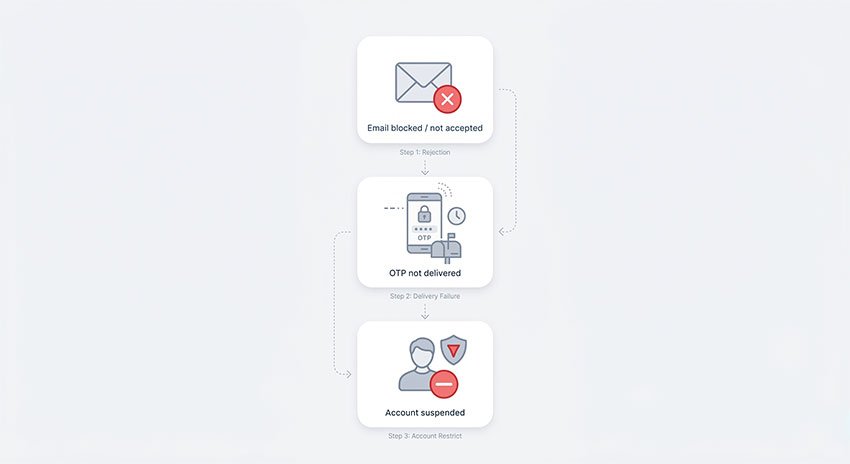
1. OTP सत्यापन ईमेल कभी नहीं आता
Twitter/X पंजीकरण के लिए अस्थायी ईमेल का उपयोग करते समय सबसे आम परिणामों में से एक यह है कि सत्यापन ईमेल (OTP) इनबॉक्स में नहीं आता है।
उपयोगकर्ता के दृष्टिकोण से, साइनअप प्रक्रिया सामान्य दिखती है, लेकिन अपेक्षित सत्यापन संदेश कभी नहीं आता या इसमें काफी देरी हो जाती है।
ज्यादातर मामलों में, यह एक अटके हुए साइनअप प्रवाह की ओर ले जाता है जहाँ खाता सक्रिय नहीं किया जा सकता है, भले ही कोई स्पष्ट त्रुटि संदेश न दिखाया गया हो।
इसे अक्सर सत्यापन के दौरान "मूक विफलता" (silent failure) के रूप में अनुभव किया जाता है।
2. पूरा होने से पहले ईमेल अस्वीकृति या साइनअप ब्लॉक
कुछ मामलों में, उपयोगकर्ता पंजीकरण प्रक्रिया को बिल्कुल भी पूरा करने में असमर्थ होते हैं।
जब Twitter/X साइनअप के लिए अस्थायी ईमेल दर्ज किया जाता है, तो सिस्टम तुरंत अगले चरण पर जाने से रोक सकता है।
यह आमतौर पर इस प्रकार दिखाई देता है:
- साइनअप के दौरान ईमेल स्वीकार नहीं किया गया
- जारी रखने से रोकने वाली सामान्य त्रुटि
- सत्यापन ट्रिगर के बिना साइनअप लूप
उपयोगकर्ता के दृष्टिकोण से, प्रक्रिया आगे नहीं बढ़ती है, भले ही ईमेल प्रारूप तकनीकी रूप से मान्य हो।
यह "सत्यापन से पहले अवरुद्ध" (blocked before verification) अनुभव बनाता है।
3. सत्यापन के बाद तत्काल खाता निलंबन
अन्य मामलों में, उपयोगकर्ता सफलतापूर्वक OTP प्राप्त करते हैं, सत्यापन पूरा करते हैं, और खाते तक पहुंच प्राप्त करते हैं—केवल यह पता लगाने के लिए कि खाता बनाने के तुरंत बाद प्रतिबंधित या निलंबित कर दिया गया है।
यह एक अधिक उन्नत परिणाम है जो अक्सर Twitter/X उपयोग के लिए अस्थायी ईमेल और साइनअप वातावरण में उच्च-जोखिम संकेतों के संयोजन से जुड़ा होता है।
खाता:
- मिनटों के भीतर निलंबित हो सकता है
- तुरंत अतिरिक्त सत्यापन की आवश्यकता हो सकती है
- या किसी उपयोगकर्ता गतिविधि के बिना सीमित हो सकता है
यह "सफल साइनअप के बाद तत्काल उलटफेर" की धारणा बनाता है।
कौन सा अस्थायी ईमेल काम करता है (यदि कोई हो)
व्यावहारिक दृष्टिकोण से, Twitter/X खातों के लिए अस्थायी ईमेल की विश्वसनीयता उपयोग किए जा रहे ईमेल प्रदाता और साइनअप वातावरण के आधार पर काफी भिन्न हो सकती है।
हमारे द्वारा परीक्षण की गई विभिन्न अस्थायी ईमेल सेवाओं में, परिणाम आम तौर पर मिश्रित होते हैं। कुछ प्रदाता कुछ मामलों में काम कर सकते हैं, लेकिन ऐसा कोई विकल्प नहीं है जो सभी Twitter/X सत्यापन परिदृश्यों में लगातार अच्छा प्रदर्शन करे। अधिकांश स्थितियों में, परिणाम कभी-कभार सफलता से लेकर बार-बार सत्यापन विफलता तक होते हैं।
अस्थायी ईमेल: सीमित और अस्थिर सफलता
कुछ अस्थायी ईमेल सेवाएं कभी-कभार Twitter/X सत्यापन पास कर सकती हैं, लेकिन ये मामले आमतौर पर असंगत और अप्रत्याशित होते हैं।
व्यावहारिक रूप से, Twitter/X साइनअप के लिए अस्थायी ईमेल अलग-थलग परिदृश्यों में काम कर सकता है, विशेष रूप से जब:
- डोमेन को अभी तक व्यापक रूप से फ्लैग नहीं किया गया है
- साइनअप वातावरण में कम जोखिम वाले संकेत हैं
- उस समय सत्यापन अनुरोधों को भारी रूप से फ़िल्टर नहीं किया जा रहा है
हालाँकि, भले ही कोई अस्थायी ईमेल सेवा पहली बार में काम करती है, परिणाम अक्सर सुसंगत नहीं होता है। वही प्रदाता अचानक बाद के प्रयासों में काम करना बंद कर सकता है, यही कारण है कि उपयोगकर्ता अक्सर temp mail not working जैसी समस्याओं की रिपोर्ट करते हैं, भले ही उन्होंने अपने साइनअप व्यवहार में कुछ भी नहीं बदला हो।
यह अस्थायी ईमेल को दोहराने योग्य खाता निर्माण के लिए एक गैर-विश्वसनीय विकल्प बनाता है।
Gmail: लगातार उच्च सफलता दर
अस्थायी ईमेल सेवाओं की तुलना में, Gmail Twitter/X सत्यापन परिदृश्यों में काफी अधिक और अधिक स्थिर सफलता दर दिखाता है।
बार-बार वास्तविक दुनिया के अवलोकनों से, Gmail खाते आमतौर पर:
- ईमेल सत्यापन को अधिक लगातार पास करते हैं
- OTP के लिए कम डिलीवरी विफलताएं अनुभव करते हैं
- अधिकांश मामलों में पूर्व-सत्यापन अस्वीकृति से बचते हैं
यह अंतर कार्यक्षमता से संबंधित नहीं है, बल्कि Twitter/X की मूल्यांकन प्रणाली के भीतर डोमेन ट्रस्ट स्तर और दीर्घकालिक प्रतिष्ठा से संबंधित है।
अधिकांश व्यावहारिक परिदृश्यों में, Gmail Twitter/X साइनअप में "बेसलाइन विश्वसनीय पहचान प्रदाता" के रूप में व्यवहार करता है।
सफलता का पैटर्न वातावरण पर निर्भर है, ईमेल पर नहीं
कई साइनअप प्रयासों में एक प्रमुख अवलोकन यह है कि सफलता केवल ईमेल प्रदाता द्वारा निर्धारित नहीं होती है।
इसके बजाय, Twitter/X पंजीकरण के लिए अस्थायी ईमेल का परिणाम स्थितियों के संयोजन पर निर्भर करता है, जिसमें शामिल हैं:
- ईमेल डोमेन ट्रस्ट स्तर
- IP और डिवाइस वातावरण की स्थिरता
- साइनअप व्यवहार पैटर्न
इसका मतलब है कि एक ही ईमेल प्रकार भी साइनअप के समय आसपास की स्थितियों के आधार पर अलग-अलग परिणाम दे सकता है।
परिणामस्वरूप, सफलता को एक निश्चित नियम के बजाय एक संभावित परिणाम के रूप में बेहतर समझा जाता है।
क्या आपको Twitter/X के लिए अस्थायी ईमेल का उपयोग करना चाहिए?
Twitter/X पंजीकरण के लिए अस्थायी ईमेल का उपयोग करना है या नहीं, यह तय करना हां या ना का सरल विकल्प नहीं है। देखे गए साइनअप व्यवहार पैटर्न के आधार पर, निर्णय काफी हद तक इस बात पर निर्भर करता है कि आप खाते के उद्देश्य और अपेक्षित जीवनकाल को कैसे परिभाषित करते हैं।
अधिकांश वास्तविक दुनिया के सोशल मीडिया उपयोग के मामलों में, मुख्य अंतर यह नहीं है कि अस्थायी ईमेल काम करता है या नहीं, बल्कि यह है कि क्या खाता अल्पकालिक उपयोग या दीर्घकालिक विश्वसनीयता के लिए है।
अल्पकालिक उपयोग का मामला: जब अस्थायी ईमेल स्वीकार्य है
व्यावहारिक दृष्टिकोण से, Twitter/X के लिए अस्थायी ईमेल अभी भी सीमित, कम जोखिम वाले परिदृश्यों में उपयुक्त हो सकता है, विशेष रूप से जब खाता दीर्घकालिक उपयोग के लिए नहीं है।
इसमें आमतौर पर शामिल हैं:
- अस्थायी परीक्षण या सैंडबॉक्स खाते
- फीचर परीक्षण या UI अन्वेषण
- पहचान निरंतरता के बिना अल्पकालिक पहुंच
इन मामलों में, खाता स्थिरता प्राथमिकता नहीं है, और कभी-कभार विफलता या निलंबन जोखिम को स्वीकार्य माना जाता है।
इस संदर्भ में, अस्थायी ईमेल एक स्थिर पहचान परत के बजाय एक डिस्पोजेबल एक्सेस टूल के रूप में कार्य करता है।
दीर्घकालिक उपयोग का मामला: जब अस्थायी ईमेल जोखिम भरा हो जाता है
उन खातों के लिए जिन्हें निरंतरता, विश्वसनीयता, या पुनर्प्राप्ति विकल्पों की आवश्यकता होती है, Twitter/X पंजीकरण के लिए अस्थायी ईमेल का उपयोग करने से महत्वपूर्ण दीर्घकालिक अस्थिरता जोखिम पैदा होते हैं।
कई Twitter/X साइनअप मूल्यांकनों के दौरान पहचाने गए सुसंगत व्यवहार संबंधी रुझानों के आधार पर, डिस्पोजेबल ईमेल सेवाओं के साथ बनाए गए खातों में निम्नलिखित होने की अधिक संभावना है:
- पुनर्प्राप्ति के दौरान सत्यापन समस्याएं
- ट्रस्ट स्कोरिंग परिवर्तनों के प्रति उच्च संवेदनशीलता
- अचानक प्रतिबंध या निलंबन का बढ़ा हुआ जोखिम
यह तब विशेष रूप से प्रासंगिक हो जाता है जब खाता सामग्री निर्माण, ब्रांडिंग, या दर्शकों की वृद्धि से जुड़ा हो।
दीर्घकालिक परिदृश्यों में, ईमेल केवल एक साइनअप टूल नहीं है, बल्कि खाते की पहचान नींव का हिस्सा है।
जोखिम सहनशीलता बनाम खाता मूल्य
Twitter/X उपयोग के लिए अस्थायी ईमेल का मूल्यांकन करने का एक अधिक व्यावहारिक तरीका दो कारकों पर आधारित एक सरल निर्णय ढांचा है:
✔ जोखिम सहनशीलता
आप कितनी अस्थिरता स्वीकार करने को तैयार हैं?
- उच्च सहनशीलता → अस्थायी खाते स्वीकार्य हैं
- कम सहनशीलता → स्थिर ईमेल की आवश्यकता है
✔ खाता मूल्य
खाते का दीर्घकालिक महत्व क्या है?
- कम मूल्य वाला खाता → डिस्पोजेबल ईमेल पर्याप्त हो सकता है
- उच्च मूल्य वाला खाता → स्थिर, पुनर्प्राप्त करने योग्य ईमेल पहचान की आवश्यकता है
खाते का मूल्य जितना अधिक होगा, अस्थायी ईमेल उतना ही कम उपयुक्त होगा।
Twitter/X खातों के लिए अस्थायी ईमेल के सर्वोत्तम विकल्प
जिन उपयोगकर्ताओं ने Twitter/X पंजीकरण के लिए अस्थायी ईमेल के साथ समस्याओं का अनुभव किया है, उनके लिए अधिक स्थिर विकल्प हैं जो सत्यापन सफलता दर और खाता विश्वसनीयता में काफी सुधार करते हैं।
देखे गए वास्तविक दुनिया के साइनअप पैटर्न से, ये विकल्प केवल "अलग ईमेल विकल्प" नहीं हैं, बल्कि Twitter/X की सत्यापन प्रणाली के भीतर मौलिक रूप से उच्च-विश्वास पहचान समाधान हैं।
Gmail उपनाम विधि (कम प्रयास, उच्च स्थिरता)
Gmail उपनाम विधि Twitter/X साइनअप के लिए अस्थायी ईमेल के सबसे सरल विकल्पों में से एक है, जबकि अभी भी मजबूत डिलीवरी विश्वसनीयता बनाए रखती है।
डिस्पोजेबल ईमेल प्रदाताओं का उपयोग करने के बजाय, उपयोगकर्ता "+" टैगिंग का उपयोग करके एक ही Gmail पते के रूपांतर बना सकते हैं।
उदाहरण:
✔ यह सुरक्षित क्यों है
- Gmail को उच्च-विश्वास डोमेन के रूप में माना जाता है
- उपनाम डिस्पोजेबल ईमेल पहचान को ट्रिगर नहीं करते हैं
- OTP डिलीवरी विश्वसनीयता पर कोई प्रभाव नहीं पड़ता है
✔ इसका उपयोग कब करें
- एकाधिक खाता परीक्षण
- पहचान का हल्का पृथक्करण
- कम सेटअप जटिलता की आवश्यकता वाली स्थितियां
अधिकांश मामलों में, Gmail उपनाम लचीलेपन और विश्वास स्थिरता के बीच संतुलन प्रदान करते हैं।
कस्टम डोमेन ईमेल (उच्चतम विश्वास विकल्प)
कस्टम डोमेन ईमेल Twitter/X खातों के लिए अस्थायी ईमेल का सबसे विश्वसनीय दीर्घकालिक विकल्प है, विशेष रूप से उन उपयोगकर्ताओं के लिए जिन्हें पूर्ण नियंत्रण और पहचान निरंतरता की आवश्यकता है।
सार्वजनिक प्रदाताओं का उपयोग करने के बजाय, उपयोगकर्ता अपने स्वयं के डोमेन-आधारित ईमेल पतों का संचालन करते हैं।
✔ यह सुरक्षित क्यों है
- स्वतंत्र डोमेन प्रतिष्ठा
- डिस्पोजेबल ईमेल पारिस्थितिकी तंत्र के साथ कोई संबंध नहीं
- ईमेल जीवनचक्र और पुनर्प्राप्ति पर पूर्ण नियंत्रण
✔ इसका उपयोग कब करें
- ब्रांडिंग या पेशेवर Twitter/X खाते
- दीर्घकालिक पहचान निर्माण
- पुनर्प्राप्ति और निरंतरता की आवश्यकता वाले खाते
विभिन्न Twitter/X साइनअप वातावरणों और स्थितियों में देखे गए पैटर्न के आधार पर, कस्टम डोमेन ईमेल लगातार सTwitter/X सत्यापन प्रणालियों में उच्चतम स्थिरता कैसे प्राप्त करें।
ईमेल फॉरवर्डिंग सिस्टम (गोपनीयता + स्थिरता का संतुलन)
ईमेल फॉरवर्डिंग सेवाएँ गुमनामी और विश्वसनीयता के बीच एक मध्य परत के रूप में कार्य करती हैं, जो उन्हें Twitter/X साइनअप परिदृश्यों के लिए अस्थायी ईमेल (temp mail) का एक व्यावहारिक विकल्प बनाती हैं, जहाँ गोपनीयता अभी भी महत्वपूर्ण है।
इस सेटअप में, उपयोगकर्ता अपने वास्तविक इनबॉक्स को छिपाए रखते हुए एक फॉरवर्डिंग उपनाम (alias) के माध्यम से ईमेल प्राप्त करते हैं।
✔ यह अधिक सुरक्षित क्यों है
- विश्वसनीय बैकएंड डोमेन का उपयोग करता है
- प्राथमिक ईमेल के उजागर होने के जोखिम को कम करता है
- डिस्पोजेबल ईमेल वर्गीकरण से बचता है
✔ इसका उपयोग कब करें
- गोपनीयता-संवेदनशील पंजीकरण
- मध्यम अवधि का खाता उपयोग
- वे उपयोगकर्ता जो अस्थिरता के बिना अलगाव चाहते हैं
यह विकल्प अक्सर Gmail और पूर्ण कस्टम डोमेन के बीच एक संतुलित समझौता के रूप में उपयोग किया जाता है।

Twitter/X के लिए अस्थायी ईमेल का उपयोग करते समय जोखिम कैसे कम करें
Twitter/X पंजीकरण के लिए अस्थायी ईमेल (temp mail) का उपयोग करते समय, खाते की सुरक्षा केवल ईमेल द्वारा निर्धारित नहीं होती है। समय के साथ कई साइनअप प्रयासों में Twitter/X साइनअप प्रयासों में लगातार देखे गए व्यवहार पैटर्न के आधार पर, अधिकांश निलंबन या सत्यापन समस्याएँ किसी एक कारक के बजाय जोखिम संकेतों (risk signals) के संयोजन के कारण होती हैं।
जोखिम कम करने को अलग-अलग युक्तियों के समूह के रूप में मानने के बजाय, इसे बहु-स्तरीय जोखिम संकेत प्रणाली के रूप में मूल्यांकन करना अधिक सटीक है।
जोखिम संकेत ढांचा (कोर मूल्यांकन मॉडल)
वास्तविक दुनिया के साइनअप वातावरण में, Twitter/X तीन मुख्य संकेत श्रेणियों के संयोजन का उपयोग करके खाते की वैधता का मूल्यांकन करता है:
- IP संकेत
- डिवाइस फिंगरप्रिंट संकेत
- व्यवहार संबंधी संकेत
इनमें से प्रत्येक एक समग्र खाता विश्वास स्कोर (account trust score) में योगदान देता है, जो यह निर्धारित करता है कि साइनअप स्वीकार किया जाएगा, फ्लैग किया जाएगा, या प्रतिबंधित किया जाएगा।
1. IP संकेत (नेटवर्क ट्रस्ट निरंतरता)
IP परत साइनअप प्रयास के नेटवर्क पहचान संदर्भ का प्रतिनिधित्व करती है।
Twitter/X के लिए अस्थायी ईमेल (temp mail) के उपयोग से जुड़े देखे गए मामलों से, असंगत या कम-विश्वास वाला IP व्यवहार अक्सर उच्च अस्वीकृति या निलंबन दरों से संबंधित होता है।
प्रमुख जोखिम संकेतकों में शामिल हैं:
- साइनअप के दौरान बार-बार IP परिवर्तन
- कम-प्रतिष्ठा या फ्लैग की गई नेटवर्क श्रेणियों का उपयोग
- सत्रों के बीच भौगोलिक असंगति
ज्यादातर मामलों में, स्थिर IP व्यवहार प्रारंभिक चरण के खाते के जोखिम को काफी कम कर देता है।
2. फिंगरप्रिंट संकेत (डिवाइस पहचान स्थिरता)
फिंगरप्रिंट परत खाता निर्माण के दौरान डिवाइस और ब्राउज़र की निरंतरता का मूल्यांकन करती है।
वास्तविक दुनिया के Twitter/X साइनअप परिदृश्यों में देखे गए बार-बार के व्यवहार पैटर्न के आधार पर, अस्थिर या अत्यधिक संशोधित वातावरण कथित जोखिम को बढ़ाते हैं।
प्रमुख संकेतकों में शामिल हैं:
- बेमेल ब्राउज़र और OS कॉन्फ़िगरेशन
- साइनअप के दौरान बार-बार डिवाइस बदलना
- असंगत समय क्षेत्र या भाषा सेटिंग्स
स्थिर वातावरण की तुलना में, खंडित फिंगरप्रिंट के उच्च जोखिम स्कोरिंग को ट्रिगर करने की संभावना अधिक होती है।
3. व्यवहार संबंधी संकेत (मानव-समान इंटरैक्शन पैटर्न)
व्यवहार संबंधी परत यह मूल्यांकन करती है कि उपयोगकर्ता स्वयं साइनअप प्रवाह के साथ कैसे इंटरैक्ट करता है।
Twitter/X पंजीकरण के लिए अस्थायी ईमेल (temp mail) का उपयोग करते समय, अप्राकृतिक व्यवहार पैटर्न जोखिम को बढ़ा सकते हैं, भले ही अन्य संकेत साफ हों।
सामान्य जोखिम संकेतकों में शामिल हैं:
- बहुत तेजी से फॉर्म पूरा करना
- कम समय में बार-बार साइनअप के प्रयास
- ऑटोमेशन जैसा इनपुट व्यवहार
- साइनअप के तुरंत बाद उच्च गतिविधि का विस्फोट
सिस्टम के दृष्टिकोण से, व्यवहार की निरंतरता अक्सर एक अंतिम सत्यापन परत के रूप में कार्य करती है।

FAQ: Twitter/X अस्थायी ईमेल प्रश्न (खोज इरादे के लिए अनुकूलित)
यह अनुभाग उन सबसे अधिक पूछे जाने वाले वास्तविक दुनिया के प्रश्नों को संबोधित करता है जिन्हें उपयोगकर्ता Twitter/X पंजीकरण समस्याओं के लिए अस्थायी ईमेल (temp mail) से निपटते समय Google पर खोजते हैं।
Twitter/X मेरे ईमेल पते को अस्वीकार क्यों करता है?
Twitter/X किसी ईमेल पते को तब अस्वीकार कर सकता है जब डोमेन की पहचान कम-विश्वास या डिस्पोजेबल ईमेल सेवाओं से जुड़े के रूप में की जाती है।
Twitter/X साइनअप के लिए अस्थायी ईमेल (temp mail) से जुड़े अधिकांश देखे गए मामलों में, अस्वीकृति उपयोगकर्ता की त्रुटि के बजाय डोमेन-स्तरीय फ़िल्टरिंग के कारण सत्यापन से पहले होती है।
यदि ऐसा होता है, तो Gmail जैसे उच्च-विश्वास वाले प्रदाता पर स्विच करने से आमतौर पर समस्या हल हो जाती है।
मुझे Twitter/X से OTP क्यों नहीं मिला?
Twitter/X सत्यापन के लिए अस्थायी ईमेल का उपयोग करते समय OTP वितरण विफलता एक सामान्य समस्या है।
देखे गए वितरण पैटर्न के आधार पर, सबसे सामान्य कारणों में शामिल हैं:
- इनबॉक्स में डिलीवरी से पहले ईमेल फ़िल्टरिंग
- अस्थायी इनबॉक्स में देरी या अस्थिरता
- सत्यापन संदेशों की डोमेन-स्तरीय ब्लॉकिंग
कई मामलों में, ईमेल केवल देरी के बजाय पूरी तरह से डिलीवर ही नहीं होता है।
क्या Twitter/X अस्थायी ईमेल सेवाओं का पता लगा सकता है?
हाँ। Twitter/X डोमेन प्रतिष्ठा संकेतों और ज्ञात डिस्पोजेबल ईमेल पैटर्न का उपयोग करके कई Twitter/X प्रदाताओं के लिए अस्थायी ईमेल (temp mail) की पहचान कर सकता है।
हालाँकि, पता लगाना हमेशा तत्काल या समान नहीं होता है। कुछ कम ज्ञात डोमेन तब तक अस्थायी रूप से काम कर सकते हैं जब तक कि उन्हें आंतरिक जोखिम प्रणालियों में नहीं जोड़ा जाता है।
यही कारण है कि प्रदाताओं के बीच सफलता दर काफी भिन्न होती है।
नए Twitter/X खाते तुरंत निलंबित क्यों हो जाते हैं?
तत्काल निलंबन आमतौर पर तब होता है जब साइनअप के दौरान एक साथ कई जोखिम संकेतों का पता चलता है।
सामान्य ट्रिगर्स में शामिल हैं:
- डिस्पोजेबल ईमेल डोमेन का उपयोग (Twitter/X के लिए अस्थायी ईमेल)
- कम-प्रतिष्ठा वाले IP पते
- स्वचालित साइनअप के समान व्यवहार पैटर्न
ज्यादातर मामलों में, निलंबन किसी एक कारक के कारण नहीं, बल्कि संयुक्त जोखिम स्कोरिंग के कारण होता है।
क्या अस्थायी ईमेल Twitter/X खातों के लिए सुरक्षित है?
अस्थायी ईमेल स्वाभाविक रूप से असुरक्षित नहीं है, लेकिन यह स्थिर या दीर्घकालिक Twitter/X खातों के लिए विश्वसनीय नहीं है।
वास्तविक दुनिया के उपयोग के पैटर्न के आधार पर, यह इनके लिए अधिक उपयुक्त है:
- अस्थायी परीक्षण खाते
- अल्पकालिक एक्सेस परिदृश्य
स्थिरता या पुनर्प्राप्ति विकल्पों की आवश्यकता वाले खातों के लिए, उच्च-विश्वास वाले ईमेल प्रदाता काफी अधिक विश्वसनीय होते हैं।
निष्कर्ष
वास्तविकता की जाँच (देखा गया सिस्टम व्यवहार)
विभिन्न वातावरणों में वास्तविक दुनिया के साइनअप व्यवहार पैटर्न के आधार पर, Twitter/X के लिए अस्थायी ईमेल (temp mail) अब खाता निर्माण के लिए लगातार विश्वसनीय समाधान नहीं है।
हालाँकि यह अलग-थलग मामलों में सत्यापन पास कर सकता है, लेकिन Twitter/X द्वारा वास्तविक समय में खाता विश्वास संकेतों का मूल्यांकन करने के तरीके के कारण समग्र परिणाम अत्यधिक अस्थिर है।
व्यवहार में, समान परिस्थितियों में भी परिणाम भिन्न होते हैं:
- कुछ साइनअप सफलतापूर्वक सत्यापन पास कर लेते हैं
- अन्य OTP वितरण में विफल हो जाते हैं या तुरंत फ्लैग कर दिए जाते हैं
यह असंगति एक बहु-स्तरीय जोखिम मूल्यांकन प्रणाली को दर्शाती है, न कि यादृच्छिक व्यवहार को।
रणनीतिक निर्णय (आपको वास्तव में क्या करना चाहिए)
Twitter/X पंजीकरण के लिए अस्थायी ईमेल (temp mail) का उपयोग करने का निर्णय सुविधा पर नहीं, बल्कि खाते के उद्देश्य पर आधारित होना चाहिए।
एक अधिक सटीक निर्णय मॉडल है:
- अस्थायी परीक्षण / डिस्पोजेबल खाते → अस्थायी ईमेल स्वीकार्य है
- ब्रांडिंग, मार्केटिंग, या पहचान-आधारित खाते → Gmail या कस्टम डोमेन की दृढ़ता से अनुशंसा की जाती है
- उच्च-मूल्य या पुनर्प्राप्त करने योग्य खाते → डिस्पोजेबल ईमेल से पूरी तरह बचना चाहिए
वास्तविक दुनिया के उपयोग में, खाते की स्थिरता साइनअप गति या गुमनामी शॉर्टकट से अधिक मायने रखती है।
अंतिम निर्णय (सिस्टम-स्तरीय निष्कर्ष)
मूल मुद्दा यह नहीं है कि अस्थायी ईमेल तकनीकी स्तर पर काम करता है या विफल रहता है।
वास्तविक कारक यह है कि Twitter/X पूरे साइनअप वातावरण का मूल्यांकन एक एकीकृत विश्वास प्रणाली के रूप में कैसे करता है, जहाँ ईमेल केवल कई जोखिम संकेतों में से एक है।
सिस्टम-स्तरीय दृष्टिकोण से:
खाते का परिणाम ईमेल विश्वास, नेटवर्क निरंतरता और व्यवहार संबंधी संकेतों के संरेखण द्वारा निर्धारित किया जाता है—न कि केवल ईमेल द्वारा।
यही वह जगह है जहाँ अधिकांश अस्थायी ईमेल सेवाएँ सीमाओं में आ जाती हैं। कई डिस्पोजेबल डोमेन अल्पकालिक होते हैं या बार-बार पुन: उपयोग किए जाते हैं, जिससे प्लेटफॉर्म के लिए समय के साथ उन्हें कम-विश्वास के रूप में वर्गीकृत करना आसान हो जाता है।
कुछ नई अस्थायी ईमेल प्रणालियाँ (जिनमें TempEmail.cc शामिल है) लंबे समय तक चलने वाले इनबॉक्स सत्रों को बनाए रखकर और डोमेन पूल को घुमाकर इस सीमा को संबोधित करने का प्रयास करती हैं, जो कुछ मामलों में पैटर्न-आधारित पहचान को कम कर सकती हैं।
हालाँकि, इन सुधारों के बावजूद, परिणाम अभी भी प्लेटफॉर्म के विकसित हो रहे जोखिम मॉडल पर बहुत अधिक निर्भर करते हैं।