受信トレイ
ブログAPIFAQプライバシーフィードバックお問い合わせ
/
© TempEmail.cc
Temp Mail ブログTemp Mail for Telegram: Why It Barely Improves Anonymity in 2026

Temp Mail for Telegram: Why It Barely Improves Anonymity in 2026

Telegram identities are tied far more to phone numbers than email addresses.

Harsel GiveshPost by Harsel Givesh |2026年5月26日
Temp Mail for Telegram: Why It Barely Improves Anonymity in 2026

Most users searching for “temp mail for Telegram” assume disposable email can improve anonymity or reduce traceability on the platform.

However, this assumption is based on email-centered platforms rather than Telegram’s actual identity architecture.

Telegram does not use email as part of its identity or authentication system. Instead, accounts are created and verified using a phone number-based model.

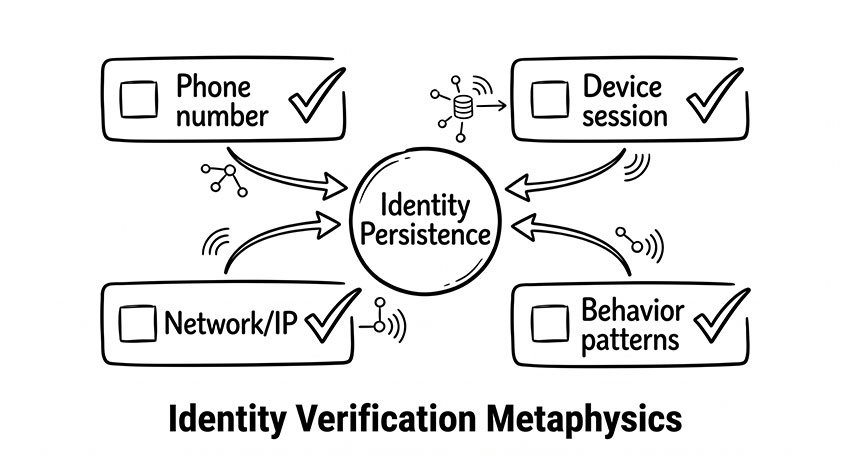
Beyond registration, Telegram’s identity structure is primarily built around phone numbers, device sessions, and behavioral continuity rather than inbox-based credentials.

Because of this design, changing or hiding an email has little to no impact on how Telegram accounts are identified or tracked.

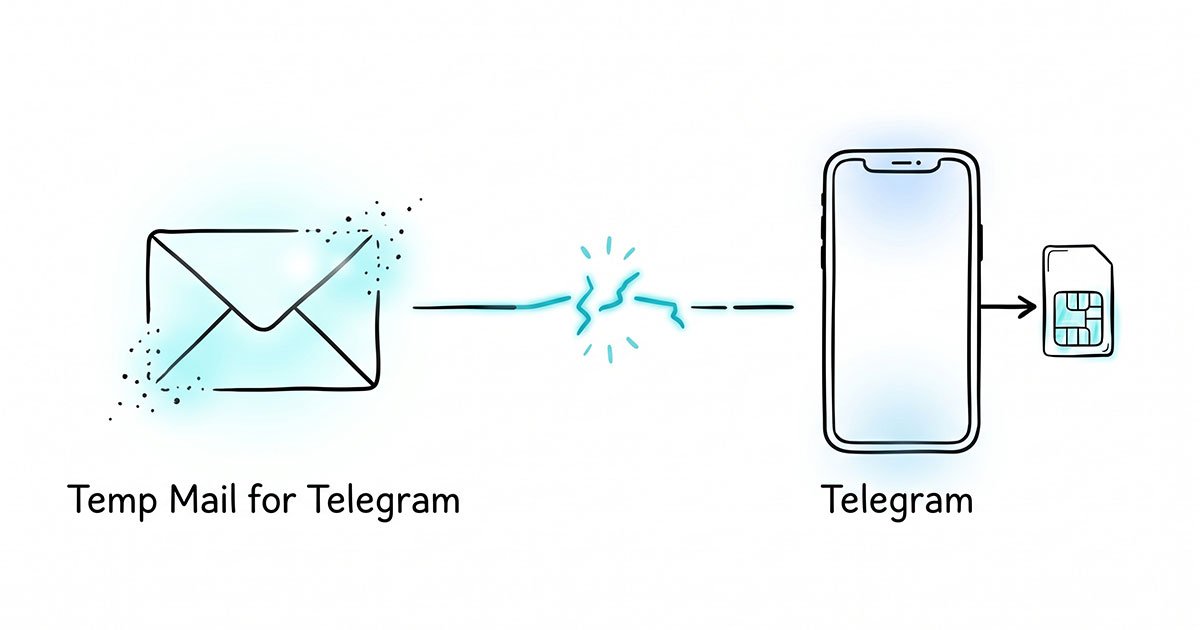
Telegram operates on a phone-first identity system, while most privacy tools like temp mail are designed for email-based platforms, creating a structural mismatch between user expectations and system design.

This article explains why that mismatch happens — and what actually affects Telegram anonymity instead.

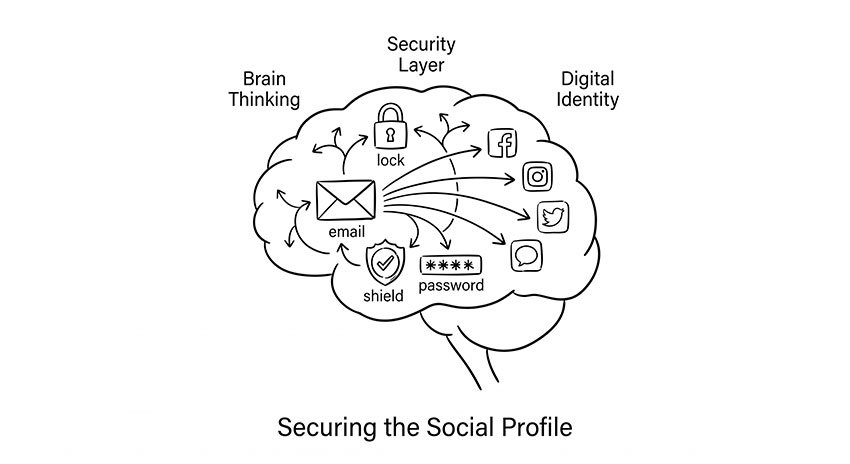
Why People Think Temp Mail Improves Telegram Privacy

Most users assume disposable email improves privacy because they are used to platforms where email is a core part of identity and account security.
On traditional email-driven platforms, email is tightly integrated into the entire account lifecycle:

  • email = account identity
  • email = recovery system
  • email = trust and verification signal

Because of this structure, users naturally develop a mental model:

If I hide or replace my email, I reduce my identity footprint.

However, this assumption does not apply to Telegram’s architecture.
Telegram does not rely on email as an identity, verification, or recovery layer.
As a result, the expectation of “email-based anonymity improvement” creates a fundamental mismatch between user intuition and Telegram’s actual identity system design.

Why Telegram Feels Anonymous (But Isn’t Email-Based)

Telegram feels anonymous mainly because it minimizes visible identity signals in everyday interactions.
This creates an impression of anonymity at the user interface level, even though the underlying identity system remains fully persistent.
There are three key reasons for this perception:

1. Minimal visible identity requirements

Users are not required to use real names, and profile information is optional. This reduces direct personal identification in most interactions.

2. Context-based communication

Much of Telegram activity happens in large groups or channels, where individual identity is less visible and interactions feel more anonymous by default.

3. Controlled identity exposure

Features like usernames and privacy settings allow users to hide phone numbers and limit visible personal information, further reducing surface-level identity signals.

Core distinction

This creates interface-level anonymity, not system-level anonymity.
Telegram reduces what other users can see — not what the system uses to identify accounts.
Because of this gap, users often assume that additional tools like disposable email (temp mail) can further reduce identity linkage.
However, this assumption is incorrect because email is not part of Telegram’s identity system at all.

Why Telegram Doesn’t Use Email for Identity

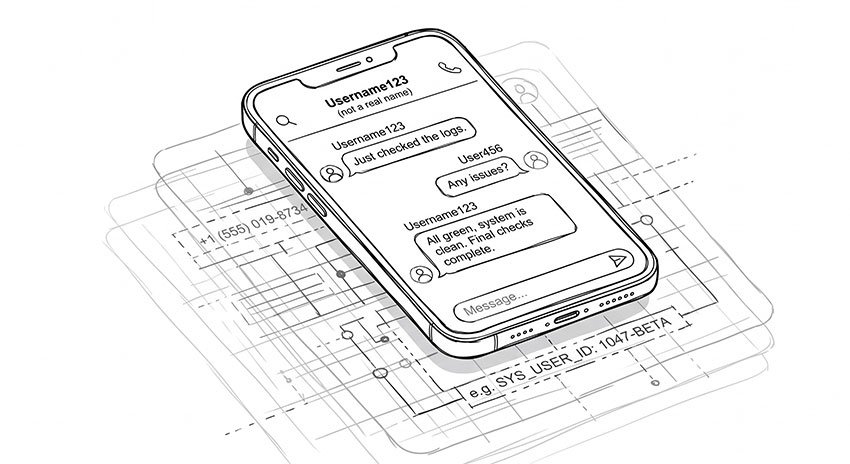
Telegram is a phone-first messaging system where identity is anchored to phone numbers rather than email credentials.Telegram is built on a fundamentally different identity architecture compared to email-based platforms.
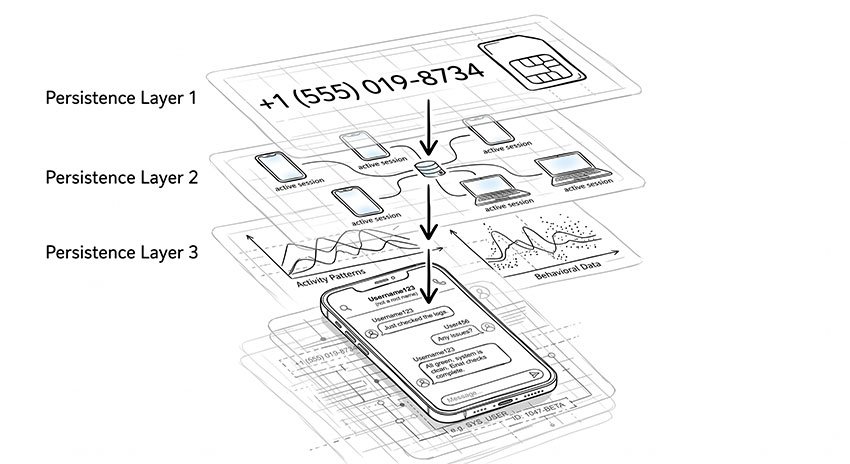
Instead of relying on inbox-based credentials, Telegram defines identity through a multi-layer system centered on phone verification and persistent device sessions.
To understand the difference more clearly, it helps to compare how identity is structured across platforms:

Platform Primary Identity Anchor Role of Email Does Temp Mail Add Privacy?
Telegram Phone Number (SIM) Optional (2FA Recovery Only) No (Dangerous for account recovery)
Discord Email Address Core Identity & Login Yes (Hides real email footprint)
Reddit Email Address Core Identity & Login Yes (Hides real email footprint)

Unlike email-centric platforms, Telegram does not anchor identity to an inbox. Instead, the system starts from phone verification and extends through device-level persistence.

Phone Number as the Core Identity Layer

The phone number acts as the initial identity anchor in Telegram.
Accounts are created and verified through SMS authentication, which makes the SIM-based phone number the first trust signal in the system.

Device Session as the Persistence Layer

After registration, Telegram maintains long-lived sessions across devices.
These sessions allow users to stay logged in without depending on email-based login, recovery, or re-authentication flows.

Behavioral Signals as the Continuity Layer

Over time, Telegram can infer account continuity through usage patterns such as:

  • device consistency
  • login environments
  • session stability
  • interaction patterns

These signals help maintain identity continuity without relying on email as a linking factor.

What this actually means

Put simply, Telegram’s identity system is structured around phone verification and session continuity, not inbox ownership.
This is why email does not play a meaningful role in how accounts are created or maintained.
Because of this structure, disposable email tools (like temp mail) do not interact with any core identity mechanism inside Telegram.

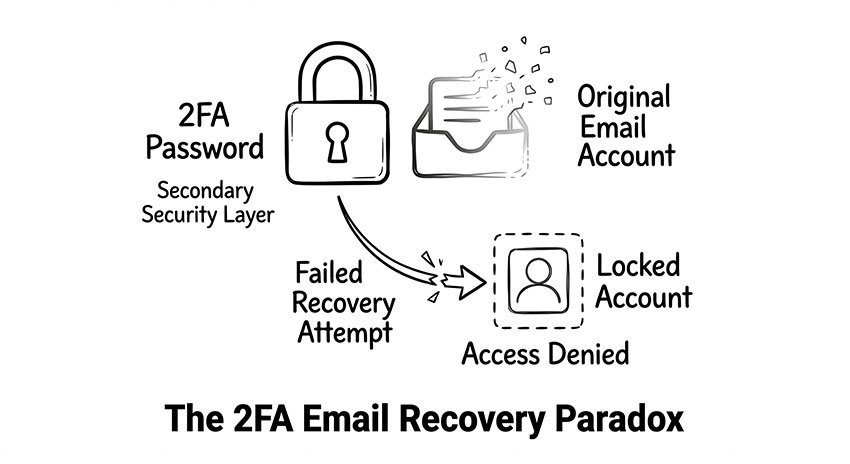
The Hidden Danger: Using Temp Mail for Telegram 2FA

While Telegram does not use email for primary account creation, it does allow users to link an email address for Two-Step Verification (Cloud Password) recovery. If you use a disposable email for this feature, you are creating a massive security risk. Because temp mail inboxes expire, you will be permanently locked out of your Telegram account if you ever forget your Cloud Password. In this context, temp mail doesn't make you anonymous—it just makes your account disposable.

Where Temp Mail Actually Has Limited Use

Temp mail is not entirely useless — it operates outside Telegram’s identity system rather than within it.
Its role becomes clearer when you separate Telegram’s internal identity mechanisms from the external tools built around the platform.

External and platform-adjacent use cases

In practice, temp mail is mainly useful when interacting with third-party tools in the broader Telegram ecosystem, such as:

  • Telegram bot platforms
  • SaaS tools that integrate with Telegram APIs
  • automation dashboards and workflow tools
  • testing or sandbox environments
  • external development or integration systems

In these scenarios, email is only used for registering or accessing the external service itself, not anything related to Telegram identity.

Temporary and operational usage

It is also commonly used for short-term or non-critical registrations, especially where inbox separation is preferred:

  • avoiding spam from external services
  • one-time or temporary account creation
  • trial access to tools or platforms
  • isolated testing workflows

These use cases are mainly about email hygiene and operational separation, not identity or security inside Telegram.

Final clarification

Outside of these scenarios, temp mail does not interact with Telegram’s identity system, session model, or user continuity mechanisms.
Its value is limited to external convenience and inbox isolation, not anything that affects how Telegram accounts are created, verified, or maintained.

What Actually Affects Telegram Anonymity

If the goal is to understand real anonymity in Telegram, it is important to focus on the identity signals that actually contribute to account persistence and linkage, rather than email-based assumptions.
Telegram anonymity is shaped by a set of underlying system-level factors.

Phone Number Exposure

The phone number is the strongest and most persistent identity anchor in Telegram.This is the single most important identity signal in Telegram’s system.
It is tied to SIM registration, carrier records, and regional identifiers, making it the foundational trust signal for account creation and recovery.

Device Correlation

Telegram maintains long-term session continuity across devices.
Repeated logins from the same or similar device environments can create stable correlation patterns over time, even without any changes to account-level information.


Contact Graph Syncing

When enabled, Telegram can map relationships through address book data and mutual contacts.
This creates a social graph layer that connects accounts based on real-world or imported contact relationships, independent of email usage.

Behavioral Patterns

Usage behavior also contributes to identity continuity.
This includes factors such as:

  • login frequency and timing
  • interaction patterns in groups and channels
  • session consistency across devices
  • long-term activity stability

These behavioral signals help maintain account recognizability over time.

Core Insight

Telegram anonymity is determined by identity persistence signals across phone, device, and behavior layers — not email-based identifiers.
Email plays no meaningful role in any of these systems, which is why disposable email has no measurable impact on Telegram anonymity.

How to Actually Stay Anonymous on Telegram in 2026

Since temporary email won't hide your identity, you must target Telegram’s actual identity anchors: phone numbers and device sessions.
If your goal is true system-level anonymity, the real options are not email-based tools, but controls over identity and network exposure.
Below are the practical methods that actually impact Telegram anonymity:

Use Blockchain-Based Numbers (Fragment)

Telegram's official Fragment platform allows users to purchase anonymous +888 numbers using TON cryptocurrency. Because these numbers are decentralized, this is the most secure way to use Telegram without tying your account to a physical SIM card or telecom provider.

Get a Burner SIM Card

If you prefer traditional methods, buy a prepaid SIM card using cash. As long as the SIM is completely unlinked from your real-world identity, bank accounts, and primary device, it acts as a strong physical anonymity shield.

Lock Down Your Phone Number Settings

If you must use your personal number, restrict its visibility immediately.
Navigate to:
Settings > Privacy and Security > Phone Number
Then:

  • Set "Who can see my phone number?" → Nobody
  • Set "Who can find me by my number?" → My Contacts

This reduces exposure without changing your underlying identity.

Mask Your IP and Device Session

Because Telegram tracks session persistence for security, always route your connection through a trusted no-log VPN or a Telegram-specific proxy (MTProxy).
This helps prevent the system from linking your activity to a stable real-world network identity.

The Bottom Line on True Anonymity

True anonymity on Telegram is not achieved through a single tool or setting.
It depends on how well you control the underlying identity anchors:

  • phone number
  • device session
  • network exposure

Most users misunderstand this system because they come from email-based platforms and assume inbox privacy equals identity privacy.
In Telegram’s case, identity is not email-based at all — it is system-level and persistent.

Common Misconceptions About Temp Mail for Telegram

Many assumptions about Telegram privacy come from applying email-based logic to a phone-based identity system. This leads to several common misconceptions.

❌ “Telegram is fully anonymous”

This is incorrect.
Telegram is pseudonymous, not fully anonymous.
While users can hide their real names and limit profile visibility, the system still relies on phone-based authentication and persistent session identity.

❌ “Temp mail hides identity”

This is a misunderstanding of how Telegram works.
Disposable email has no role in Telegram’s identity or authentication system, so it cannot hide or alter account-level identity signals.

❌ “Username replaces phone number”

Usernames only affect public visibility and discoverability.
They do not replace or disconnect the underlying phone number, which remains the core authentication anchor.

❌ “Email prevents tracking”

Tracking inside Telegram is not email-based.
Account continuity is primarily influenced by:

  • phone number verification
  • device and session persistence
  • behavioral patterns over time

Email changes do not affect any of these identity signals.

Most privacy misconceptions about Telegram come from applying email-centric identity logic to a phone-centric system architecture.

Does Temp Mail Improve Telegram Anonymity?

Temp mail does not improve anonymity or reduce traceability in Telegram in any meaningful way. In fact, attempting to use it for internal security features—like 2FA recovery—creates a massive risk of permanent account loss rather than adding privacy.
Telegram is simply not built on an email-based identity model. Instead, it relies on a phone-first authentication system combined with persistent device sessions and long-term behavioral continuity.
In this structure, your system-level identity is determined by:

  • Phone number authentication
  • Device session persistence
  • Behavioral consistency over time

Because these signals operate independently of an inbox, disposable email services have no structural influence on how Telegram accounts are created, verified, tracked, or maintained. The common confusion comes from applying traditional, email-based privacy logic to a platform that does not care about your email address.
Once that distinction is clear, the takeaway is simple: temp mail is only useful as an external tool for testing APIs, avoiding spam from third-party bots, and separating your inboxes. It has no meaningful role in Telegram’s internal anonymity system.
If you want true anonymity on Telegram in 2026, you must stop worrying about your email and start targeting the actual identity anchors. Secure a decentralized +888 Fragment number or a cash-bought burner SIM, lock down your visibility settings, and mask your IP session. That is how real privacy is achieved on a phone-centric platform.

最新記事

Temp Mail for Telegram: Why It Barely Improves Anonymity in 2026
2026年5月26日

Temp Mail for Telegram: Why It Barely Improves Anonymity in 2026

Can You Use Temp Mail for Canva? Risks, Limits & Alternatives (2026 Guide)
2026年5月20日

Can You Use Temp Mail for Canva? Risks, Limits & Alternatives (2026 Guide)

Why Temp Mail for Amazon Can Cause Problems Later (2026 Guide)
2026年5月19日

Why Temp Mail for Amazon Can Cause Problems Later (2026 Guide)

Temp Mail for WhatsApp: Is It Useful in 2026? Real Privacy Facts
2026年5月14日

Temp Mail for WhatsApp: Is It Useful in 2026? Real Privacy Facts

仮メールツール

5 Minute Email10 Minute Mail15 minute mail20 Minute Mail30 Minute Email60 Minute Email AddressBurner EmailFake Mail Generator

目次

  • Why People Think Temp Mail Improves Telegram Privacy
  • Why Telegram Feels Anonymous (But Isn’t Email-Based)
  • Why Telegram Doesn’t Use Email for Identity
  • Where Temp Mail Actually Has Limited Use
  • What Actually Affects Telegram Anonymity
  • How to Actually Stay Anonymous on Telegram in 2026
  • Common Misconceptions About Temp Mail for Telegram
  • Does Temp Mail Improve Telegram Anonymity?
Temp mailに戻る