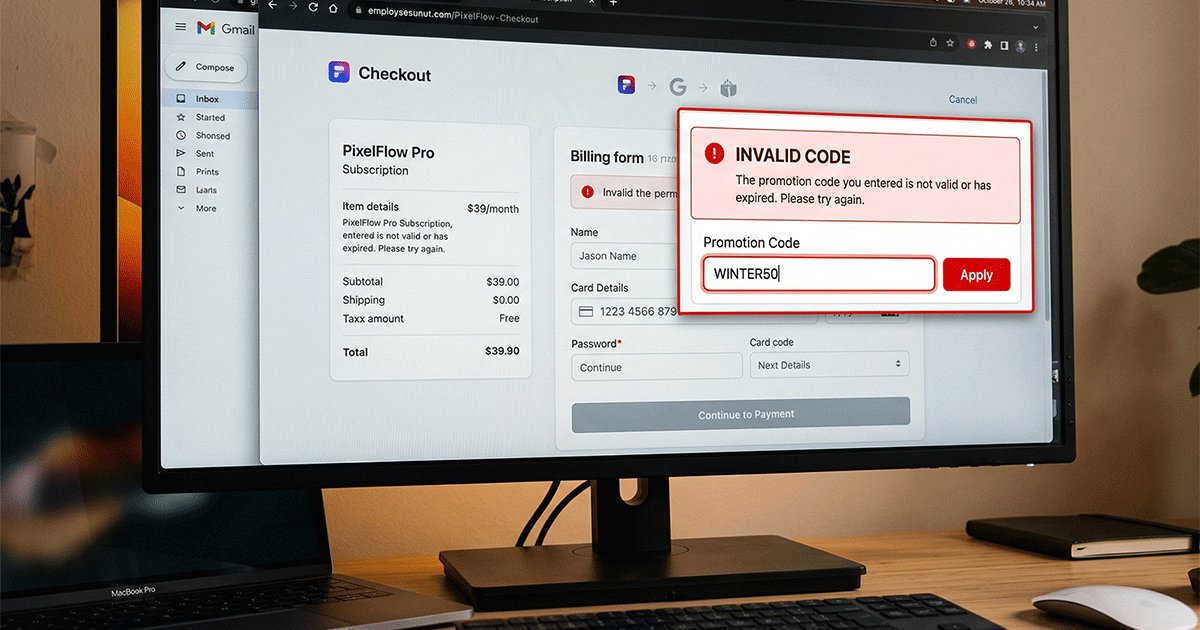
Every Black Friday, users search for Black Friday coupon codes—only to find that most of them simply don’t work. But it's more than just a minor inconvenience.
According to Statista, global e-commerce fraud losses continue to grow year over year, affecting millions of online shoppers. While not all cases involve coupon misuse, invalid or misleading discount codes remain a common source of frustration during major sales events like Black Friday.
You finally add that SaaS tool you've been eyeing—whether it's an AI writing assistant, an SEO crawler, or a website builder—to your cart. Staring at that hefty annual subscription fee, your first instinct is to open Google and quickly search for Black Friday Coupon Codes. You find a promising code like SAVE90 or BF2026VIP on a top-ranking discount site, eagerly click "Apply," and are immediately hit with a glaring red message: "Invalid or Expired Promo Code."
You try multiple sites and test several codes. Nothing works. You've wasted an hour and start wondering if you just missed the real deals.
This isn’t random—there’s a system behind it.
As a Director of Operations, I analyze traffic, conversions, and tracking systems daily. I know exactly how this game is played. Today, I'm not going to throw another useless, expired discount list at you, and I will absolutely not include a single affiliate link in this guide to earn a commission off your clicks.
Instead, I’m giving you an insider's playbook. I’ll show you how to hunt down the actual rock-bottom SaaS deals in 2026—safely, effectively, and without sacrificing an ounce of your personal privacy.
Author’s Note: The Hidden Mechanics of Coupon Aggregators (Why Trust This Guide)
Before I teach you how to "hunt" for real codes, you need to understand the opaque ecosystem of coupon aggregators you're navigating. Why do promo codes on major coupon sites often fail?
The answer lies in their business model: Their primary metric isn't code validity—it's click-through rates.
In the world of web traffic monetization, this model relies on affiliate tracking mechanisms.
Major affiliate networks such as CJ Affiliate and Rakuten Advertising publicly document how tracking cookies are used to attribute conversions, which explains why click behavior is often prioritized over code accuracy.
When you browse these sites, the promo codes are usually hidden behind a massive button that says "Click to Reveal Code." You think you're clicking to see the text, but the moment your mouse clicks, a hidden tracking script (a cookie) is quietly planted in your browser.
Their business model is brutally simple: As long as that cookie is in your browser, if you buy anything from that SaaS website within the next 30 to 90 days, the coupon site gets a 20% (or higher) commission cut. Whether the code they showed you actually worked is often not their primary concern. Flooding their pages with thousands of fake or expired Black Friday Coupon Codes is simply a wide-net strategy to attribute future sales to their platform.
Beyond the fake codes, the SaaS industry has its own unique trap: the Bait-and-Switch.
Unlike physical goods where a 50% discount means you simply pay half, SaaS profitability relies heavily on long-term retention. Because of this, you might see a “90% OFF” headline.
It’s only when you enter your credit card details that you notice the fine print: "Only applies to the first billing cycle" or "Enterprise Plan required."
If you don’t cancel, the subscription may renew at full price.
The truth is, the most genuine, no-strings-attached SaaS bottom prices (like an extra 30% off a Lifetime Deal or a flat 70% off an annual plan) are often not publicly indexed on search engines. Vendors guard these deals closely, reserving them for a place that requires a steep hidden cost to enter. And that cost is your primary email inbox.
The Hidden Cost of Hunting Deals: Your Primary Inbox
If the real, high-value Black Friday Coupon Codes aren't listed on public aggregator sites, where are they?
The answer lies in direct-to-consumer marketing. SaaS vendors know that their most qualified leads are the users who have already shown interest in their product. Therefore, they reserve their absolute best SaaS software deals—such as exclusive lifetime deals (LTDs) or unadvertised 70% off annual plans—for their own "VIP Early Bird" mailing lists.
To access these hidden tiers of discounts, you are required to make a trade. The currency isn't money; it's your contact information.
Imagine you are evaluating 10 or 15 different tools for your tech stack this year—from AI content generators and CRM platforms to SEO crawlers. To ensure you don't miss out on their holiday pricing, you sign up for every single waitlist and newsletter.
The hidden cost of that potential $50 discount is your long-term digital focus. By trading your real email address for a promo code, you are willingly feeding your primary workspace into dozens of aggressive marketing funnels.
Reports from Federal Trade Commission also highlight that aggressive email marketing and promotional spam are among the most common consumer complaints in digital commerce.
For the next two to three years, your inbox may become cluttered with SaaS marketing emails: ongoing onboarding emails, feature updates, webinars, and upsell campaigns.
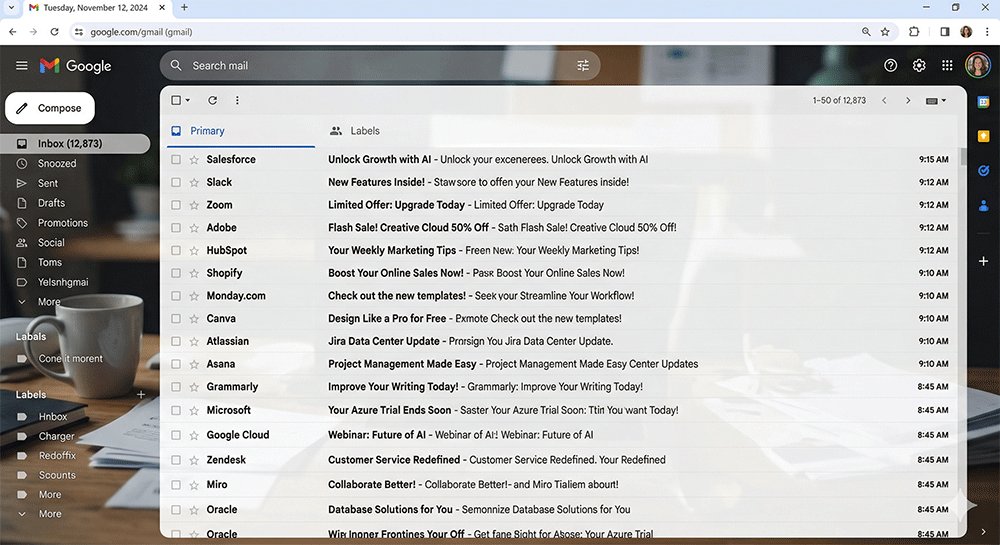
You shouldn't have to sacrifice your privacy and inbox zero just to get a fair price on software. And you don't have to.
The 2026 "Burner Inbox" Playbook: Safely Securing VIP Codes
As of right now, it is April 2026. We are months away from the actual Black Friday rush. From an operations standpoint, this timeline is actually your biggest strategic advantage. The most effective way to secure genuine discounts isn't to frantically search for codes on the day of the sale, but to set up a digital "ambush" months in advance.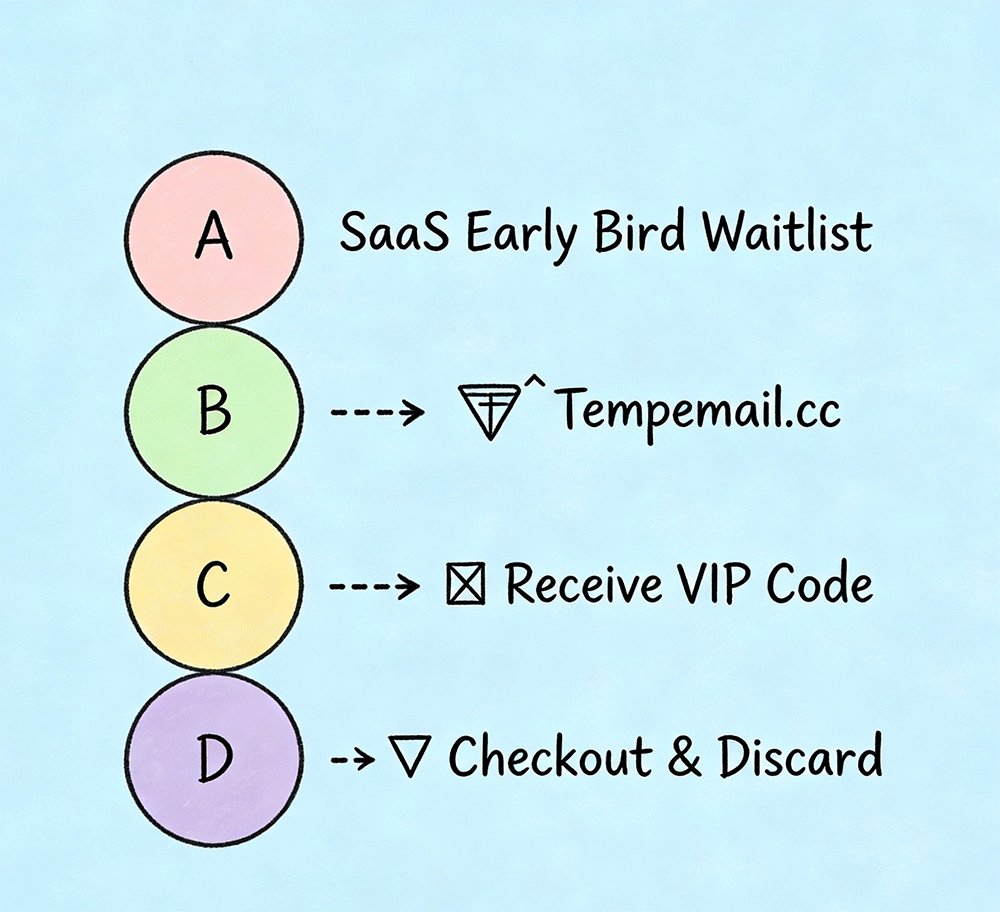
Here is the exact zero-spam playbook I use to capture bottom-dollar pricing without compromising my privacy.
Step 1: Stop Using Your Real Email Address
The first rule of hunting for software discounts is treating your primary inbox as a highly restricted environment. Never use your personal or work email to sign up for a SaaS waitlist or marketing newsletter just to see if they might offer a discount later this year.
Step 2: Generate a Burner Address with Tempemail.cc
Instead of exposing your real identity, you need a disposable layer of defense. Use a temporary email service (such as Tempemail.cc). With one click, you can generate a clean, anonymous temporary email address. It requires no registration, leaves no tracking footprint, and gives you a fully functional, temporary inbox to receive incoming promotional mail.
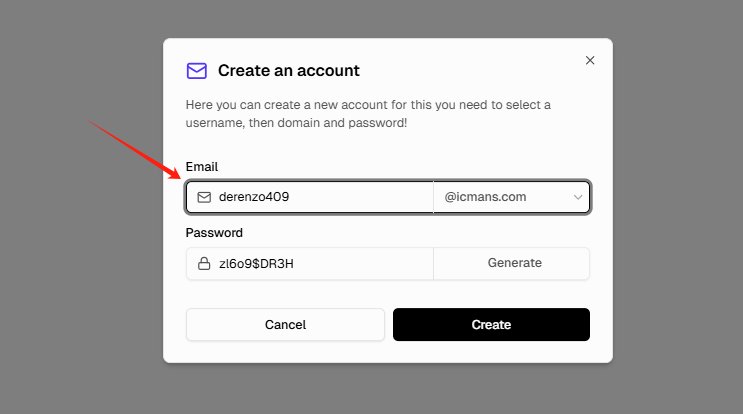
Step 3: Join the Waitlists Anonymously (April – October)
Over the next few months, whenever you come across an AI tool or productivity software you want to test or potentially buy, use your newly generated Tempemail.cc address to join their early access list. You are effectively planting seeds across the SaaS ecosystem. The vendors get an email for their metrics, and you get a placeholder in line for the VIP discounts—without risking your actual inbox.
Step 4: Collect Codes in November and Disappear
When late November rolls around, the marketing floodgates will open. Instead of dealing with the chaos in your main inbox, simply check your temporary addresses. You will find the exclusive, unlisted Black Friday Coupon Codes sent directly from the vendors.
Copy the VIP code, apply it at checkout using your actual, permanent account, and then completely abandon the temporary email. You secure the absolute lowest price, the vendor gets a paying customer, and your main inbox remains 100% spam-free.
The "Try Before You Buy" Strategy (April – October)
Black Friday deals are designed to trigger FOMO (Fear Of Missing Out). Vendors want you to make an impulse purchase based solely on the discount percentage. However, from an operations and procurement standpoint, buying software you haven’t thoroughly tested is a guaranteed waste of budget, no matter how cheap it is.
Since we are currently in April, you have a massive window of opportunity to run your own "Proof of Concept" before the November sales hit. This is your designated testing phase.
Almost every platform offers SaaS free trials—typically 7 or 14 days. But if you are trying to figure out which workflow automation platform or AI content generator fits your specific needs, two weeks is rarely enough time to build a proper habit and evaluate the ROI (Return on Investment).
Instead of rushing, you can strategically extend this evaluation period. When your initial trial expires, reuse the temporary email strategy mentioned above, and register for another trial cycle. This allows you to completely test AI tools for free over several weeks or even months.
By the time the Black Friday campaigns launch, you won't be guessing which software is worth your money. You will have a validated, narrowed-down list of tools that actually improve your productivity, allowing you to confidently purchase annual licenses with your main account.
How to Verify Black Friday Coupon Codes Before Checkout
During the holiday rush, you might stumble upon a discount code shared on a forum, in a Reddit thread, or passed along by a colleague. Your immediate reflex might be to log into your main account, load up your cart, and enter the code to see if it works.
As a rule of thumb in tech operations: Never test in your production environment.
If you apply an unverified code to your logged-in account, several things can go wrong. If the code is invalid, the site's backend might tag your account and automatically enroll you in an aggressive "cart abandonment" email sequence to pressure you into buying at full price. Worse, if it's a restricted code meant for a specific affiliate tier, it could alter the default pricing structure attached to your profile.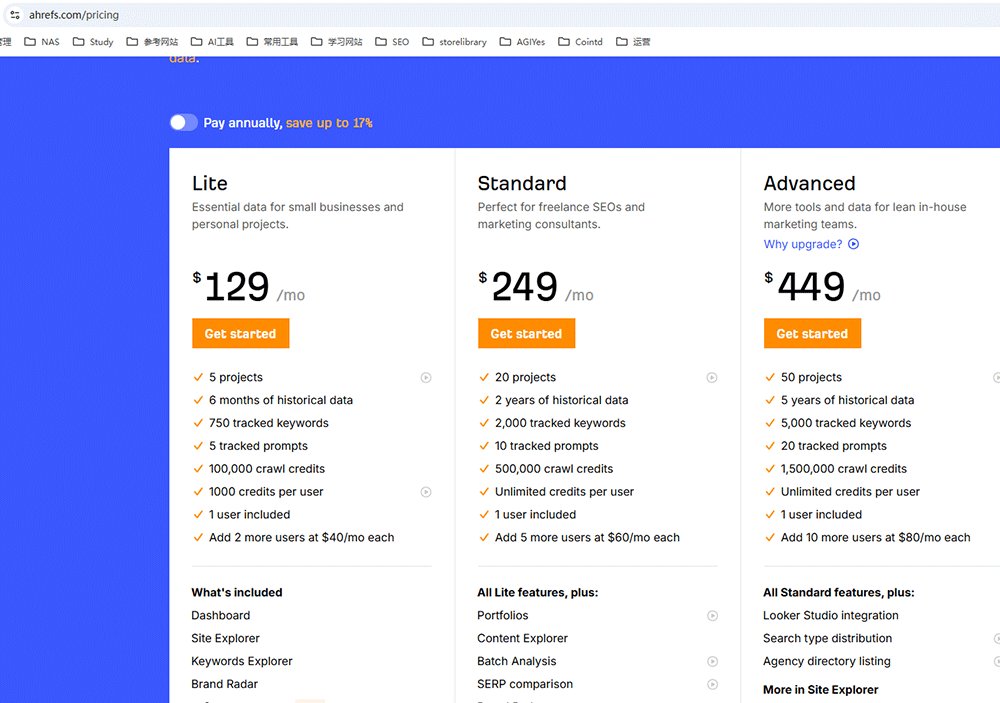
To protect your account and verify the discount safely, you should run a "sandbox test":
- Isolate the Session: Open a new Incognito or Private Browsing window. This ensures there are no existing cookies or account data tied to your session.
- Create a Dummy Account: Go to the SaaS vendor’s pricing page and select the plan you want. When prompted to create an account to proceed to checkout, do not use your real email. use a disposable email address.
- Test the Code: Proceed to the payment gateway and enter the promo code.
- Analyze the Final Price: If the code applies successfully, review the fine print on the checkout page carefully. Does the discount apply to the annual total, or just the first month? Are there any hidden setup fees?
Once you have verified that the code is legitimate and the final price matches your expectations, simply close the Incognito window, abandon the dummy account, and return to your main browser to complete the purchase safely with your real credentials.
Frequently Asked Questions About Black Friday Coupon Codes
Why are most Black Friday coupon codes on Reddit invalid?
When you search for deals on subreddits like r/SaaS or r/Entrepreneur, you will often find threads filled with promo codes. However, most of these fail at checkout. Why? Because they are typically single-use codes bound to a specific user's account, or expired affiliate links posted by users trying to farm commissions. By the time a code reaches the top of a Reddit thread, the vendor's backend anti-fraud system has already flagged the abnormal usage spike and deactivated it.
Can I stack multiple Black Friday coupon codes for SaaS?
Generally, no. Most modern SaaS billing infrastructure (like Stripe or Chargebee) is explicitly configured to prevent promotion stacking. If you attempt to combine a Black Friday code with a student discount or a referral code, the system will usually reject both or default to the single highest discount. Your operational strategy should focus on finding the single best absolute discount (like an unadvertised annual deal) rather than attempting to stack smaller ones.
Do Black Friday SaaS coupon codes apply to subscription renewals?
Rarely. SaaS companies use Black Friday almost exclusively for Customer Acquisition. Their goal is to acquire "new logos," not to reduce the revenue they are already generating from existing customers. If you try to apply a holiday promo code to an active subscription, the billing dashboard will almost certainly block it.
Can I use a temporary email to claim "New User Only" Black Friday deals?
Yes, and this is actually the most effective workaround for the renewal restriction mentioned above. Because many SaaS deals are limited to "New Users Only," the safest way to secure that pricing is to start fresh. By using a new temp mail address, you bypass the vendor's existing-account filters. You can claim the "New User" discount with your temporary email, set up your new workspace, and enjoy the bottom-tier pricing without tying it to your primary identity.
What should I do if a SaaS Black Friday code says "Expired" at checkout?
If a code expires while you are in the middle of checking out (which happens frequently as Black Friday transitions into Cyber Monday), do not immediately close the tab. SaaS sales teams heavily monitor "cart abandonment" metrics. Look for the live chat widget (usually in the bottom right corner). Message the support team, explain that you were trying to use the code but experienced a checkout glitch. Sales representatives are highly incentivized to close deals before the end of the holiday quarter and will often manually generate a fresh, one-time-use code for you on the spot.
What is the difference between an AppSumo Lifetime Deal and a Black Friday discount?
A: A Lifetime Deal (LTD), commonly found on platforms like AppSumo, means you pay a single flat fee and own access to the software forever. A standard Black Friday discount usually applies to a recurring subscription (e.g., "50% off your first year"). LTDs are incredible for managing your tech stack budget, but they are typically offered by early-stage startups looking for quick cash flow. Established SaaS giants (like Ahrefs, Notion, or Jasper) rarely offer LTDs and will only offer Black Friday discounts on their annual subscriptions.
Take Back Control of Your Inbox This Black Friday
Hunting for SaaS discounts shouldn't feel like a data hostage situation. The true cost of a generic Black Friday Coupon Code is often paid over the next three years in the form of relentless, distracting inbox spam.
This year, it's time to change your operational strategy. You can secure the absolute lowest prices on the software you need without sacrificing your digital privacy or cluttering your workspace.
Stop handing over your primary email address to aggressive marketing funnels. Equip yourself with a temporary email tool like Tempemail.cc, create a separate inbox for deal tracking, and start building your defensive perimeter for the 2026 holiday sales. Secure the deals while keeping your primary inbox clean.